Inherit the Wind
A tense, claustrophobic courtroom drama of blistering intellectual warfare. Under the oppressive heat of Southern fanaticism, two titans clash, striking a desperate balance between the divine and the scientific.
Inherit the Wind

Inherit the Wind

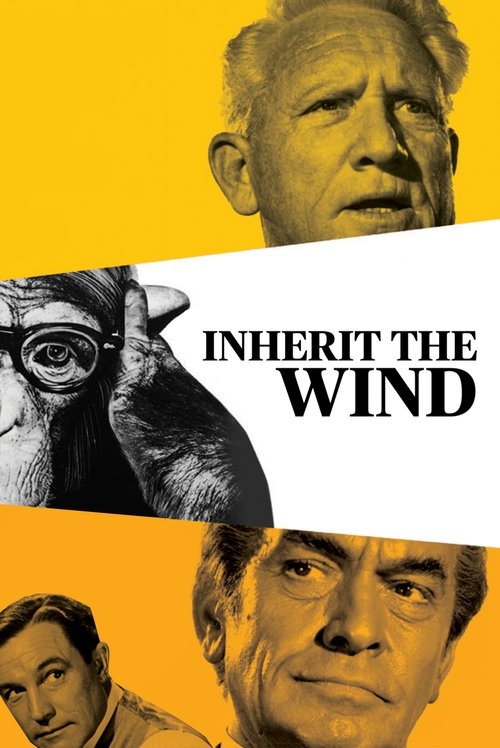
"It’s all about the fabulous “Monkey Trial” that rocked America!"

07 July 1960 United States of America 128 min ⭐ 7.7 (456)
Director: Stanley Kramer
Cast: Spencer Tracy, Fredric March, Gene Kelly, Dick York, Donna Anderson
Drama
Freedom of Thought Religion vs. Reason The Danger of Mob Mentality Pride and Hubris
Budget: $2,000,000
Box Office: $2,000,000

Overview

Set in the sweltering Southern town of Hillsboro, Inherit the Wind centers on the sensational trial of Bertram Cates, a young high school science teacher. Cates is arrested for teaching Charles Darwin's theory of evolution, violating a state law that forbids any instruction contrary to the biblical account of creation. The town eagerly anticipates the trial, which quickly transforms into a media circus.

Two towering legal minds arrive to do battle in the stifling courtroom: the fundamentalist politician Matthew Harrison Brady, who leads the prosecution and basks in the town's fervent adoration, and the renowned defense attorney Henry Drummond, an agnostic who stands as an unwelcome pariah. Accompanying the spectacle is the cynical journalist E.K. Hornbeck, who mocks the town's provincialism while broadcasting the trial to the nation.

As the legal proceedings unfold, the courtroom becomes a battleground not just for Cates's fate, but for the fundamental American right to think freely. Facing a biased judge who repeatedly blocks his scientific experts, the defense is forced to take a radical and unprecedented approach to crack the prosecution's case.
Core Meaning

While ostensibly about the 1925 Scopes "Monkey" Trial and the debate between evolution and creationism, Inherit the Wind serves as a profound allegory for McCarthyism and the anti-Communist hysteria of the 1950s. Director Stanley Kramer and the original playwrights utilized the historical event to mount a passionate defense of intellectual freedom, tolerance, and the right to dissent.

The central message is that the freedom to think, to question, and to hold unpopular beliefs is a sacred human right. Henry Drummond explicitly states that he is not fighting to destroy religion, but to protect the individual's right to think. The film warns against the dangers of mob mentality, anti-intellectualism, and the destructive nature of absolute dogma, suggesting that a society that suppresses ideas ultimately destroys itself.

Thematic DNA

Freedom of Thought 40%
Religion vs. Reason 30%
The Danger of Mob Mentality 20%
Pride and Hubris 10%

Freedom of Thought

The central conflict of the film is not merely science versus religion, but the right of the individual to think freely. Drummond champions the human mind, arguing that the right to think is on trial, while the townspeople and Brady represent a conservative force demanding rigid adherence to dogma.

Religion vs. Reason

The film dramatizes the collision between fundamentalist religious beliefs and modern scientific reasoning. It explores how blind faith can foster intolerance, while also questioning whether pure cynicism is a valid alternative.

The Danger of Mob Mentality

Hillsboro's citizens act as a monolith, burning Cates in effigy and mindlessly cheering for Brady. The film portrays how groupthink and mass hysteria can be weaponized to crush dissenting individuals, drawing clear parallels to the McCarthy era.

Pride and Hubris

Brady's tragic flaw is his immense pride and need for adulation. He conflates his own opinions with the will of God. When the crowd ultimately turns away from him, his inability to accept his diminished status leads to his physical and emotional collapse.

Character Analysis

Henry Drummond

Spencer Tracy

Archetype: Hero / Mentor
Key Trait: Pragmatic, fiercely intelligent, deeply principled

Motivation

To defend the fundamental human right to think, speak, and question, and to protect the vulnerable from the tyranny of the majority.

Character Arc

Drummond arrives as a despised outsider, faces impossible odds and a biased court, yet manages to expose the hypocrisy of the prosecution. Though he loses the verdict, he wins the moral and intellectual victory.

Matthew Harrison Brady

Fredric March

Archetype: Antagonist / Tragic Figure
Key Trait: Charismatic, pompous, deeply proud

Motivation

To defend his literal interpretation of the Bible, maintain his status as a beloved public figure, and crush the threat of modernism.

Character Arc

Brady enters Hillsboro as a beloved savior and conquering hero. However, his desperate need for adulation and his rigid fundamentalism lead to his public humiliation on the witness stand, culminating in his tragic death when the crowd ignores him.

E.K. Hornbeck

Gene Kelly

Archetype: Cynic / Observer
Key Trait: Acerbic, witty, coldly cynical

Motivation

To mock the ignorance of the fundamentalists, sell newspapers, and act as a detached critic of society's foolishness.

Character Arc

Hornbeck remains static in his cynical worldview. He observes the trial with detachment and mockery. In the end, his heartlessness is condemned by Drummond, leaving him isolated in his own bitterness.

Bertram Cates

Dick York

Archetype: The Everyman / The Accused
Key Trait: Earnest, anxious, courageous

Motivation

To teach his students the truth and to stand up for his right to share scientific knowledge without facing persecution.

Character Arc

Initially terrified by the town's hatred and the magnitude of his trial, Cates finds the courage to stand by his actions, ultimately paving the way for future intellectual freedom despite a guilty verdict.

Symbols & Motifs

Golden Dancer

Meaning:

Drummond's childhood rocking horse symbolizes the deceptive nature of surface-level perfection, illusions, and dogmas that look beautiful on the outside but are rotten and hollow on the inside.

Context:

Drummond tells Cates the story of a brightly painted rocking horse he received as a child, which split in two the first time he rode it. He uses it as a metaphor to encourage Cates to look past the "bright, shining, perfect-seeming" lies of society.

The Heat and Sweat

Meaning:

The oppressive physical atmosphere symbolizes the intense ideological fervor, claustrophobia, and the overwhelming pressure of public opinion bearing down on the characters.

Context:

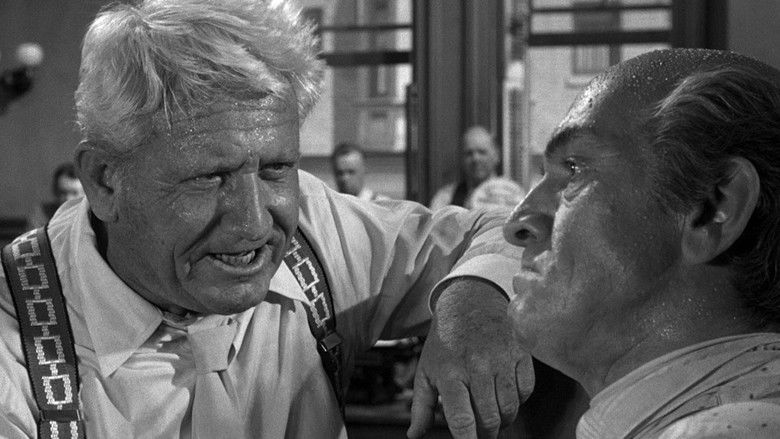
Throughout the courtroom scenes, the temperature is frequently mentioned (reaching 97 degrees), and characters are constantly mopping their sweating faces, heightening the tension of the intellectual battle.

The Bible and The Origin of Species

Meaning:

These two books represent the two opposing ideologies of the trial: religious fundamentalism and scientific evolution. Their handling at the end symbolizes balance, coexistence, and intellectual tolerance.

Context:

In the final scene, Drummond picks up both Darwin's Origin of Species and the Bible. He weighs them in his hands, claps them together, and places both side-by-side into his briefcase before walking out.

The Title "Inherit the Wind"

Meaning:

Originating from Proverbs 11:29, it symbolizes the empty, destructive consequences of causing strife, intolerance, and driving away one's own people.

Context:

Brady quotes this to Reverend Brown when the Reverend damns his own daughter, Rachel, for supporting Cates. Ultimately, Brady himself "inherits the wind" by alienating his followers through his own rigid hubris.

Memorable Quotes

He that troubleth his own house shall inherit the wind.

— Matthew Harrison Brady

Context:

Brady uses it to scold Reverend Brown for publicly damning his own daughter to hell, foreshadowing Brady's own fate.

Meaning:

The titular quote from Proverbs serves as a warning against dogmatic fanaticism that alienates loved ones and destroys communities, leaving the instigator with nothing.

I do not think about things that... I do not think about!

— Matthew Harrison Brady

Context:

Spoken during the climax of Drummond's intense cross-examination of Brady on the witness stand, when Drummond presses him on matters outside the Bible.

Meaning:

This line perfectly encapsulates the willful ignorance and closed-mindedness of fundamentalist dogma, highlighting the refusal to entertain alternative perspectives.

It is the duty of a newspaper to comfort the afflicted and afflict the comfortable.

— E.K. Hornbeck

Context:

Hornbeck says this to Brady upon arriving in Hillsboro, establishing his antagonistic and cynical role as a reporter.

Meaning:

A classic summary of the role of a free press in a democratic society, asserting that journalism must challenge the status quo and powerful institutions.

Fanaticism and ignorance is forever busy, and needs feeding.

— Henry Drummond

Context:

Drummond says this to Cates to explain why they cannot simply back down and plead guilty, as the battle for human freedom is ongoing.

Meaning:

A poignant warning that the suppression of thought does not end with one trial; if unchecked, bigotry will continually seek out new targets to destroy.

All motion is relative, Matt. Maybe it's you who've moved away by standing still.

— Henry Drummond

Context:

Drummond says this privately to Brady when the prosecutor asks why Drummond has moved so far away from him over the years.

Meaning:

A brilliant reflection on progress and conservatism. Drummond points out that refusing to evolve intellectually is, in itself, an act of abandoning the progressive ideals they once shared.

Philosophical Questions

Does social stability require dogma?

The town of Hillsboro relies on absolute religious certainty to maintain its peaceful, cohesive community. The film asks whether introducing complex, challenging truths is worth the societal disruption and personal existential crises it causes.

Is it ever justified to suppress the truth to protect the vulnerable?

Reverend Brown believes he is saving souls from eternal damnation by banning evolutionary theory. The film challenges viewers to consider the moral boundary between protecting a community's values and violating individual intellectual freedom.

Can pure cynicism be as dangerous as blind fanaticism?

While the film condemns fundamentalism, it also critiques Hornbeck's soulless cynicism. By the end, Drummond defends the dead Brady against Hornbeck's mockery, raising the question of whether a life without belief or compassion is truly superior to one of misguided faith.

Alternative Interpretations

The most common alternative interpretation revolves around the film's historical accuracy. Some modern historians and religious critics argue that the film unfairly caricatures William Jennings Bryan as a buffoonish, fanatical monster, when in reality he was a progressive populist who opposed social Darwinism's cruel societal implications. From this perspective, the film is seen less as a defense of open-mindedness and more as a liberal propaganda piece that creates its own dogmatic, one-sided narrative.

Another poignant interpretation views the film not merely as a battle of ideologies, but as a tragic story of a lost friendship. Brady and Drummond were once close allies in progressive causes. From this angle, the courtroom battle is an intimate mourning of their fractured relationship, where Drummond attacks Brady not out of hatred, but out of a desperate attempt to wake up an old friend who 'moved away by standing still.'

Cultural Impact

Released in 1960, Inherit the Wind arrived at the tail end of the McCarthy era, serving as a powerful cinematic rebuke of the anti-Communist witch hunts and the Hollywood blacklist. Director Stanley Kramer masterfully used the 1925 Scopes Monkey Trial as a historical shield to critique contemporary censorship, creating one of cinema's most famous 'message movies.'

While initially struggling at the box office due to its controversial subject matter and protests from religious fundamentalist groups, the film was a massive critical success, earning four Academy Award nominations, including Best Actor for Spencer Tracy. Over the decades, it has become a staple in educational settings, frequently used to teach students about the First Amendment, the evolution-creationism debate, and the dangers of McCarthyism.

The film's impact on pop culture is profound; it established the definitive cinematic archetype of the heroic, crusading defense attorney facing a hostile courtroom. Its balanced ending—with Drummond weighing both Darwin and the Bible—has been widely praised as a masterful visual plea for intellectual tolerance, cementing the film's legacy as a timeless defense of the human mind.

Audience Reception

Upon its release, critics universally praised the film, particularly the tour-de-force performances of Spencer Tracy and Fredric March, whose courtroom duels were hailed as acting masterclasses. Audiences appreciated Stanley Kramer's tight direction and the script's sharp, literate dialogue. However, the film polarized general audiences; liberal viewers championed it as a bold defense of civil liberties, while religious and conservative viewers felt attacked by its portrayal of Southern Christians as ignorant, sweating zealots.

Today, the film holds a highly favorable rating on platforms like Rotten Tomatoes and IMDb. Modern audiences often praise its continued relevance in the ongoing 'culture wars' regarding science and education, though some contemporary critiques point out that its theatrical roots sometimes make the acting and dialogue feel slightly melodramatic or heavy-handed.

Interesting Facts

  • Fredric March wore a bald cap and padding to closely resemble the real-life William Jennings Bryan, while Spencer Tracy opted not to alter his appearance for his role based on Clarence Darrow.
  • Spencer Tracy and Fredric March were great friends off-screen, but they were highly competitive on set, constantly trying to steal scenes from one another through subtle acting techniques.
  • The film was protested by various fundamentalist Christian groups upon its release due to its critical portrayal of religious literalism.
  • Gene Kelly took on a rare, completely dramatic, non-dancing role as the cynical reporter E.K. Hornbeck to prove his acting range.
  • In 1960, the film became the world's first 'in-flight' movie when Trans World Airlines used it to entertain first-class passengers.
  • The screenplay adaptation involved blacklisted writer Nedrick Young, who was forced to use the pseudonym Nathan E. Douglas due to the McCarthy-era Hollywood blacklist—ironic given the film's anti-McCarthyism themes.

Easter Eggs

The town of 'Hillsboro' vs. Dayton, TN

The film changes the names of all historical figures and locations (e.g., John Scopes becomes Bertram Cates, Clarence Darrow becomes Henry Drummond) to frame the story not just as history, but as a universal parable for the McCarthy era.

References to 'Chautauqua meetings'

The film features references to Chautauqua tents. This is a nod to the popular late 19th and early 20th-century adult education movement where the real William Jennings Bryan was a highly prominent and beloved speaker.

The Mayor granting Drummond the title of 'Colonel'

When Brady is referred to as 'Colonel' (an honorary title), Drummond objects to the bias. The Mayor then makes Drummond a 'temporary honorary colonel.' In real life, Bryan was an actual Colonel in the US Army during the Spanish-American War, though Darrow did not object to the title in court.

⚠️ Spoiler Analysis

Click to reveal detailed analysis with spoilers

Frequently Asked Questions

Explore More About This Movie

Dive deeper into specific aspects of the movie with our detailed analysis pages

Comments (0)

Leave a comment

No comments yet. Be the first to share your thoughts!