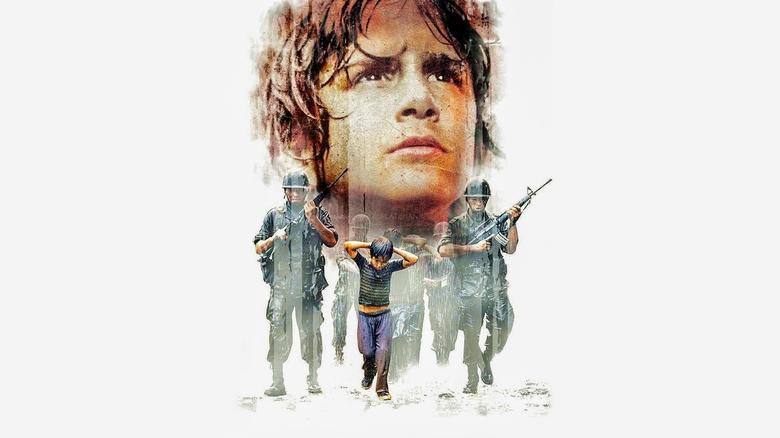
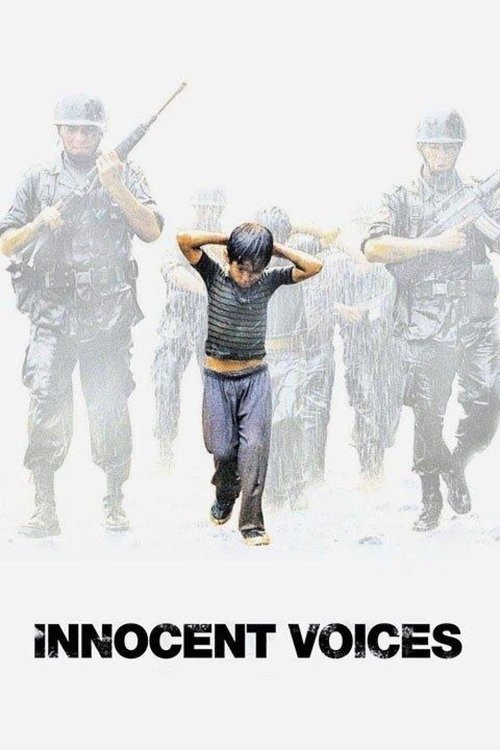
In the final act of "Innocent Voices," the escalating violence and the imminent threat of recruitment force Chava and his friends to flee and attempt to join the guerrillas. However, their camp is ambushed by the army, and the boys are captured. This leads back to the film's opening scene, where they are marched to a riverside execution ground littered with the bodies of other victims, including their mentally handicapped friend, Ancha.
Two of Chava's friends are executed at point-blank range. As Chava is next in line, the guerrillas, led by his Uncle Beto, launch a surprise attack, saving him. In the ensuing firefight, Chava picks up a rifle and aims at a government soldier, only to realize it is another young boy from his school. In a pivotal moment of shared humanity, Chava cannot bring himself to shoot, and the other boy, equally terrified, allows him to escape. Chava flees and finds his family's home burned to the ground. He is eventually reunited with his mother, who uses her life savings to send him to the United States to live with his father, away from the war. A concluding epilogue reveals that Chava, the real-life Oscar Torres, was able to bring the rest of his family to the U.S. years later, after the war had ended.