Innocent Voices
A heart-wrenching war drama that captures the harrowing loss of childhood innocence against the backdrop of the Salvadoran Civil War, seen through the eyes of a young boy.
Innocent Voices

Innocent Voices

Voces inocentes

28 January 2005 Mexico 120 min ⭐ 8.2 (507)
Director: Luis Mandoki
Cast: Carlos Padilla, Xuna Primus, Leonor Varela, José María Yázpik, Gustavo Muñoz
Drama War
The Loss of Innocence Child Soldiers The Resilience of Family and Community The Absurdity and Inhumanity of War
Box Office: $837,000

Overview

"Innocent Voices" (Voces inocentes) is a poignant 2005 film directed by Luis Mandoki, based on the true story of screenwriter Oscar Torres's childhood in El Salvador during the 1980s civil war. The story follows Chava (Carlos Padilla), an eleven-year-old boy who becomes the "man of the house" after his father flees to the United States. Chava's life is a daily struggle for survival, not only from the crossfire between the Salvadoran army and the FMLN guerrillas but also from the imminent threat of being forcibly recruited into the army upon his twelfth birthday.

The film paints a vivid and terrifying picture of a childhood interrupted by violence, where school and play are constantly overshadowed by the brutalities of war. Chava navigates the dangers of his war-torn village, experiences his first love with a classmate named Cristina Maria, and witnesses the devastating impact of the conflict on his family and community. The narrative provides a deeply personal and humanizing perspective on the plight of civilians, particularly children, caught in the midst of armed conflict.
Core Meaning

The core meaning of "Innocent Voices" is a powerful indictment of war and its devastating impact on childhood. Director Luis Mandoki and screenwriter Oscar Torres aimed to put a human face on the statistics of child soldiers, illustrating how conflict robs children of their innocence and forces them into a world of violence and premature adulthood. The film serves as a testament to the resilience of the human spirit, the enduring power of family, and the moral choices faced by individuals in the most harrowing of circumstances. Ultimately, "Innocent Voices" is a plea for peace and a remembrance of the countless young lives forever altered by war.

Thematic DNA

The Loss of Innocence 35%
Child Soldiers 30%
The Resilience of Family and Community 20%
The Absurdity and Inhumanity of War 15%

The Loss of Innocence

This is the central theme of the film, as Chava is thrust into the role of the head of his family and must confront the brutal realities of war. His childhood games are replaced by the sounds of gunfire, and his schoolyard becomes a battleground. The impending threat of his twelfth birthday, the age of military conscription, hangs over him as a stark deadline for the end of his innocence. The film poignantly captures moments of fleeting childhood joy juxtaposed with the ever-present danger, highlighting the tragedy of a generation forced to grow up too soon.

Child Soldiers

"Innocent Voices" directly confronts the horrific practice of using children in armed conflict. The film depicts the Salvadoran army's forced recruitment of boys as young as twelve from their schools and homes. This theme is explored through Chava's fear and the experiences of his friends who are taken. The narrative also shows the guerrillas recruiting children, presenting a grim reality where both sides contribute to the exploitation of youth. The film's ending dedication underscores the global prevalence of this issue.

The Resilience of Family and Community

Amidst the chaos and violence, the film emphasizes the strength of familial and community bonds. Chava's mother, Kella, is a fierce protector of her children, making immense sacrifices to keep them safe. The community comes together to warn each other of impending recruitment drives, hiding their children on rooftops. These acts of solidarity and love serve as a powerful counterpoint to the dehumanizing forces of war.

The Absurdity and Inhumanity of War

The film portrays the civil war not as a glorious conflict but as a senseless and brutal intrusion into the lives of ordinary people. The violence is often random and chaotic, with civilians caught in the crossfire. The political ideologies of the warring factions remain in the background, with the focus instead on the immediate human cost of the conflict. The film questions the very nature of a war where children are forced to kill other children.

Character Analysis

Chava

Carlos Padilla

Archetype: The Innocent Hero
Key Trait: Resilient

Motivation

Chava's primary motivation is to protect his family and survive. He is also driven by a desire to live a normal childhood, to play with his friends, and to experience his first love. As the film progresses, his motivations become more complex as he is torn between his responsibility to his family and the desire for self-preservation.

Character Arc

Chava begins the film as a playful and carefree boy, despite the surrounding conflict. As his twelfth birthday approaches and the war intensifies, he is forced to mature rapidly, taking on the responsibility of providing for and protecting his family. His journey is a tragic arc from innocence to a grim understanding of the world, culminating in his decision to flee to save his life while grappling with the moral complexities of the war.

Kella

Leonor Varela

Archetype: The Protector/Mother Figure
Key Trait: Protective

Motivation

Kella's sole motivation is the safety and well-being of her children. She works tirelessly as a seamstress and constantly shields them from the horrors of the war, even at great personal risk.

Character Arc

Kella's arc is one of increasing desperation and fierce determination. Initially, she tries to maintain a semblance of normalcy for her children. As the war encroaches on their lives, she becomes a resolute protector, making difficult and heart-wrenching decisions to ensure their survival, culminating in the ultimate sacrifice of sending her son away.

Uncle Beto

José María Yázpik

Archetype: The Rebel/Mentor
Key Trait: Idealistic

Motivation

Beto is motivated by his belief in the guerrilla cause and a desire to fight against the oppressive government. He is also driven by a love for his family and a desire to protect his nephew, Chava, from being drafted into the army he is fighting against.

Character Arc

Uncle Beto represents the path of armed resistance. He is a caring and charismatic figure in Chava's life, but his involvement with the guerrillas brings both hope and increased danger to the family. He offers Chava a potential escape from military conscription but also exposes him to the realities of the rebel cause.

The Priest

Daniel Giménez Cacho

Archetype: The Moral Compass
Key Trait: Courageous

Motivation

The priest is motivated by his faith and a deep-seated sense of justice. He feels a profound responsibility to protect the innocent members of his community, even if it means defying the military and putting his own life in danger.

Character Arc

The priest initially offers spiritual comfort and a message of peace. However, as he witnesses the army's escalating brutality, his stance shifts towards active, non-violent resistance. He uses his position to protect his community, ultimately sacrificing himself for his beliefs.

Symbols & Motifs

Rain

Meaning:

Rain in "Innocent Voices" often symbolizes the impending danger and the overwhelming sadness of the war. Many of the most terrifying scenes, including the opening sequence and the nightly firefights, are accompanied by heavy downpours. The rain creates a sense of foreboding and amplifies the bleak and oppressive atmosphere of life in a war zone.

Context:

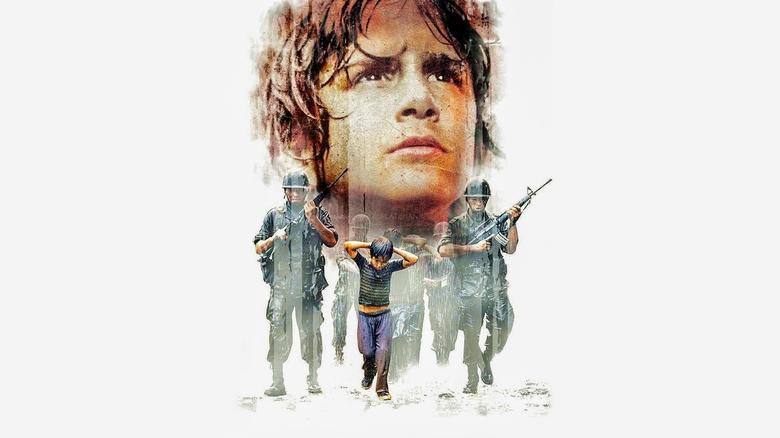
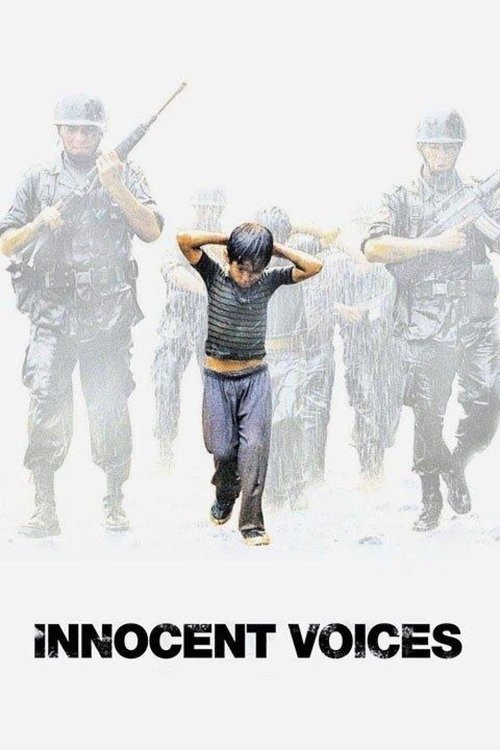
The film opens with a scene of Chava and other boys being marched through the rain by soldiers. Throughout the movie, rain frequently precedes or accompanies attacks by the army or the guerrillas, turning the familiar sound of a storm into a trigger for fear.

The Song 'Casas de Cartón' (Cardboard Houses)

Meaning:

The folk song "Casas de Cartón" symbolizes the voice of the oppressed and the spirit of resistance. The lyrics speak of the poverty and sadness of people living in cardboard houses, reflecting the characters' reality. The song was banned by the military, so singing or listening to it becomes an act of defiance against the oppressive regime.

Context:

Chava's uncle Beto, a guerrilla fighter, plays the song on his guitar to comfort the children after a firefight. Later, Chava's mother warns Beto not to sing it for fear of repercussions. The priest also plays the song over the church loudspeakers to protect Chava from being singled out by soldiers for listening to it on his radio.

The Rooftops

Meaning:

The rooftops represent a temporary sanctuary and a place of childhood amidst the chaos. They are where the boys hide from the army's recruitment sweeps, transforming a desperate act of survival into a shared experience of quiet defiance. The rooftops are also a place for dreams and quiet contemplation, as the boys lie on their backs and count the stars.

Context:

During recruitment drives, the mothers of the village send their sons to hide on the corrugated tin roofs of their homes. In a poignant scene, the camera pans across the rooftops to reveal all the young boys lying silently, waiting for the soldiers to leave.

Memorable Quotes

Why do they want to kill us if we haven't done anything?

— Chava

Context:

This line is heard as Chava and his friends are being marched at gunpoint by soldiers in the pouring rain, a scene that bookends the film.

Meaning:

This quote, spoken in the opening narration, encapsulates the central theme of the film: the senselessness of war and its impact on innocent civilians. It is a child's simple yet profound question that highlights the injustice of the conflict.

I'm the man of the house.

— Chava

Context:

Chava says this at various points in the film, particularly when he is trying to assert his role in protecting his mother and siblings or when he is earning money to support them.

Meaning:

This repeated line signifies Chava's acceptance of his premature responsibilities after his father's departure. It reflects his attempt to be strong for his family while also highlighting the tragic loss of his childhood.

I assure you, when one lives in the grace of God, war does not exist.

— The Priest

Context:

The priest says this to his congregation as he tries to offer them comfort and guidance amidst the escalating violence in their village.

Meaning:

This quote represents the priest's initial message of faith and hope in the face of despair. It suggests that spiritual peace can transcend the physical violence of war, a belief that is tested as the conflict intensifies.

Philosophical Questions

At what point is innocence irrevocably lost in the face of extreme violence?

The film explores this question through Chava's journey. It presents a world where the traditional markers of childhood are systematically destroyed. The question is not whether Chava's innocence will be lost, but when and how. The film suggests that while external innocence can be shattered by trauma, an internal moral compass can endure, as seen when Chava hesitates to shoot another child soldier.

Can violence be justified in the fight against injustice?

"Innocent Voices" presents this question through the opposing choices of the priest, who initially advocates for peace but is driven to support resistance, and Uncle Beto, who has fully embraced armed struggle. The film does not offer an easy answer, instead showing the devastating human cost of the conflict and the desperate circumstances that lead people to take up arms.

What is the moral responsibility of a child forced to participate in war?

The film implicitly raises questions about the culpability of child soldiers. While Chava and his friends are victims, they are also on the verge of becoming perpetrators. The narrative forces the audience to consider the psychological and moral trauma of children who are both innocent and, in some cases, killers. It challenges the viewer to look beyond simplistic labels of good and evil in the context of child conscription.

Alternative Interpretations

While the film's central message about the tragedy of war and its impact on children is widely agreed upon, some alternative interpretations and criticisms have been raised, primarily concerning its political perspective. Some critics have noted a "leftist bias" in the film's portrayal of the conflict, where the U.S.-backed government soldiers are depicted as unequivocally brutal, while the FMLN guerrillas are shown in a more sympathetic light. This interpretation suggests that the film, while emotionally powerful, may oversimplify the complex political realities of the Salvadoran Civil War, where atrocities were committed by both sides.

Another interpretation could focus on the film as a critique of American foreign policy during the Cold War. The presence of American military advisors and the mention of U.S. support for the Salvadoran army implicitly condemn the role of the United States in fueling the conflict. From this perspective, the film is not just a story about a distant civil war but also a commentary on the far-reaching and often devastating consequences of international political interventions.

Cultural Impact

"Innocent Voices" had a significant cultural impact by bringing a deeply personal and humanizing perspective to the Salvadoran Civil War, a conflict often depicted in Western media through a political or journalistic lens, such as in Oliver Stone's "Salvador". The film's power lies in its child's-eye view, which resonated with audiences and critics alike for its emotional honesty and unflinching portrayal of the horrors of war.

Released in the early 2000s, the film served as a timely reminder of the ongoing issue of child soldiers worldwide, a fact explicitly stated in the film's closing text. It sparked dialogue about the lasting trauma of war on children and the complex reasons behind migration from Central America. For the Salvadoran diaspora, the film was a painful but important reflection of their history. The movie was generally well-received by critics for its powerful storytelling and the compelling performance of its young lead, Carlos Padilla. While it did not achieve mainstream box office success, it has become an important educational tool and a touchstone in Latin American cinema for its courageous and impactful storytelling.

Audience Reception

Audiences have generally responded to "Innocent Voices" with deep emotion, praising its powerful and heartbreaking story. Many viewers have lauded the film for its authentic and moving portrayal of the Salvadoran Civil War from a child's perspective, a point of view not often seen in cinema. The performance of Carlos Padilla as Chava is frequently singled out for its emotional depth and realism. The film's ability to create a strong sense of empathy for its characters and to shed light on the tragic issue of child soldiers has been a key point of praise. However, some viewers have found the relentless depiction of violence and suffering to be emotionally overwhelming. There has also been some criticism from Salvadoran audiences regarding the casting of non-Salvadoran actors and the filming location being in Mexico, which some felt detracted from the film's authenticity.

Interesting Facts

  • The film is based on the true story of screenwriter Oscar Orlando Torres, who grew up in El Salvador during the civil war and escaped to the United States.
  • The movie was filmed in Mexico, and none of the main actors are from El Salvador. This was a point of contention for some Salvadoran audiences.
  • Carlos Padilla, the child actor who played Chava, was discovered just two weeks before filming began.
  • "Innocent Voices" was Mexico's official submission for the Best Foreign Language Film at the 77th Academy Awards, though it was not nominated.
  • The film's producer, Lawrence Bender, is known for his collaborations with Quentin Tarantino.
  • The title of the film in Spanish, "Voces inocentes," directly translates to "Innocent Voices."

⚠️ Spoiler Analysis

Click to reveal detailed analysis with spoilers

Frequently Asked Questions

Explore More About This Movie

Dive deeper into specific aspects of the movie with our detailed analysis pages

Comments (0)

Leave a comment

No comments yet. Be the first to share your thoughts!