Voces inocentes
Innocent Voices - Symbolism & Philosophy
Symbols & Motifs
Rain
Rain in "Innocent Voices" often symbolizes the impending danger and the overwhelming sadness of the war. Many of the most terrifying scenes, including the opening sequence and the nightly firefights, are accompanied by heavy downpours. The rain creates a sense of foreboding and amplifies the bleak and oppressive atmosphere of life in a war zone.
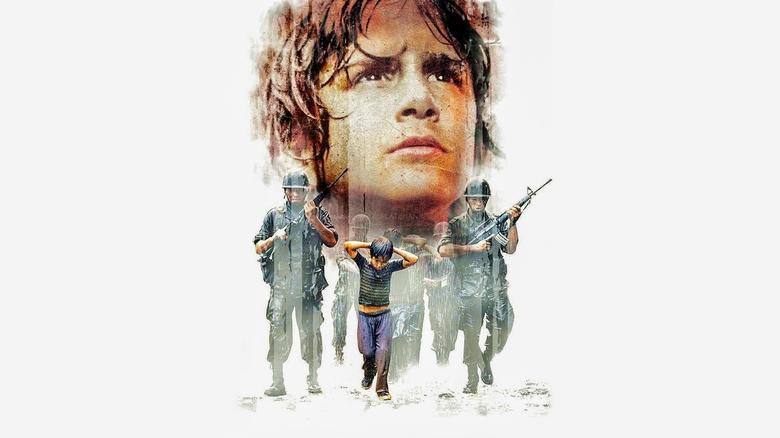
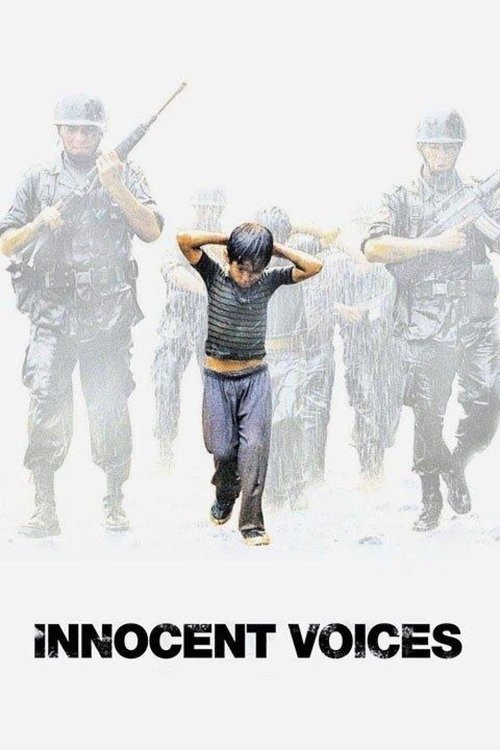
The film opens with a scene of Chava and other boys being marched through the rain by soldiers. Throughout the movie, rain frequently precedes or accompanies attacks by the army or the guerrillas, turning the familiar sound of a storm into a trigger for fear.
The Song 'Casas de Cartón' (Cardboard Houses)
The folk song "Casas de Cartón" symbolizes the voice of the oppressed and the spirit of resistance. The lyrics speak of the poverty and sadness of people living in cardboard houses, reflecting the characters' reality. The song was banned by the military, so singing or listening to it becomes an act of defiance against the oppressive regime.
Chava's uncle Beto, a guerrilla fighter, plays the song on his guitar to comfort the children after a firefight. Later, Chava's mother warns Beto not to sing it for fear of repercussions. The priest also plays the song over the church loudspeakers to protect Chava from being singled out by soldiers for listening to it on his radio.
The Rooftops
The rooftops represent a temporary sanctuary and a place of childhood amidst the chaos. They are where the boys hide from the army's recruitment sweeps, transforming a desperate act of survival into a shared experience of quiet defiance. The rooftops are also a place for dreams and quiet contemplation, as the boys lie on their backs and count the stars.
During recruitment drives, the mothers of the village send their sons to hide on the corrugated tin roofs of their homes. In a poignant scene, the camera pans across the rooftops to reveal all the young boys lying silently, waiting for the soldiers to leave.
Philosophical Questions
At what point is innocence irrevocably lost in the face of extreme violence?
The film explores this question through Chava's journey. It presents a world where the traditional markers of childhood are systematically destroyed. The question is not whether Chava's innocence will be lost, but when and how. The film suggests that while external innocence can be shattered by trauma, an internal moral compass can endure, as seen when Chava hesitates to shoot another child soldier.
Can violence be justified in the fight against injustice?
"Innocent Voices" presents this question through the opposing choices of the priest, who initially advocates for peace but is driven to support resistance, and Uncle Beto, who has fully embraced armed struggle. The film does not offer an easy answer, instead showing the devastating human cost of the conflict and the desperate circumstances that lead people to take up arms.
What is the moral responsibility of a child forced to participate in war?
The film implicitly raises questions about the culpability of child soldiers. While Chava and his friends are victims, they are also on the verge of becoming perpetrators. The narrative forces the audience to consider the psychological and moral trauma of children who are both innocent and, in some cases, killers. It challenges the viewer to look beyond simplistic labels of good and evil in the context of child conscription.
Core Meaning
The core meaning of "Innocent Voices" is a powerful indictment of war and its devastating impact on childhood. Director Luis Mandoki and screenwriter Oscar Torres aimed to put a human face on the statistics of child soldiers, illustrating how conflict robs children of their innocence and forces them into a world of violence and premature adulthood. The film serves as a testament to the resilience of the human spirit, the enduring power of family, and the moral choices faced by individuals in the most harrowing of circumstances. Ultimately, "Innocent Voices" is a plea for peace and a remembrance of the countless young lives forever altered by war.