Inside Out
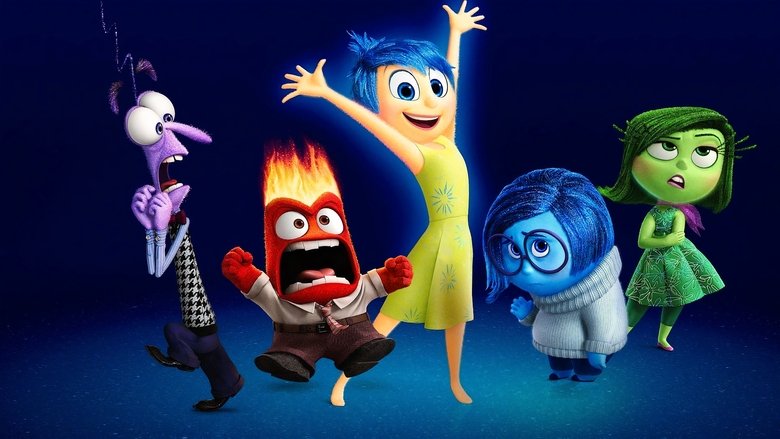
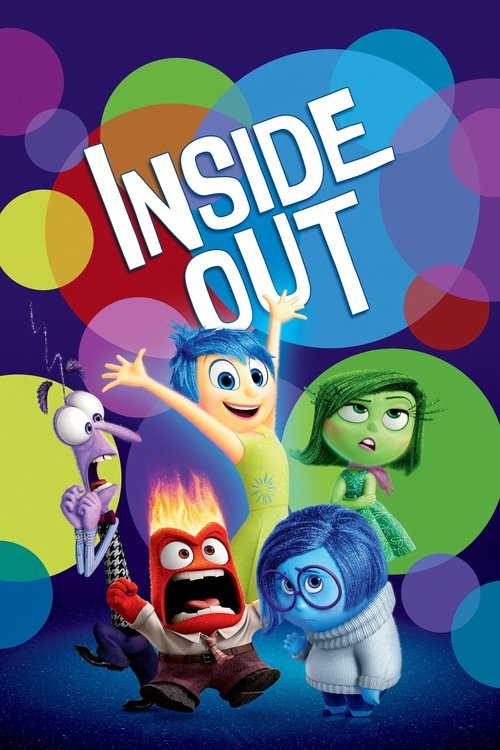
A vibrant, heartfelt animated odyssey into the mind, where emotions are radiant characters navigating the bittersweet turbulence of growing up, visually manifesting thoughts as a sprawling, luminous landscape.
Inside Out
Inside Out

"Meet the little voices inside your head."

17 June 2015 United States of America 95 min ⭐ 7.9 (22,875)
Director: Pete Docter
Cast: Amy Poehler, Phyllis Smith, Richard Kind, Bill Hader, Lewis Black
Drama Animation Family Comedy Adventure
The Necessity of Sadness Coming of Age and Identity The Nature of Memory Family and Connection
Budget: $175,000,000
Box Office: $857,611,174

Inside Out - Ending Explained

⚠️ Spoiler Analysis

The central twist of "Inside Out" is the re-framing of Sadness from a problematic emotion into the story's hero. For most of the film, Joy's goal is to prevent Sadness from 'contaminating' Riley's memories and experiences. The turning point occurs when Joy, trapped in the Memory Dump, realizes that one of Riley's happiest core memories—being cheered up by her family and friends after a devastating hockey loss—was only possible because of the sadness she felt first. Sadness created an opportunity for connection and empathy that led to a deeper, more meaningful joy.

This understanding fundamentally changes the mission. Joy no longer needs to get back to Headquarters alone; she needs to get Sadness back. The film's climax sees Joy willingly hand control over to Sadness, who is able to create a new core memory by having Riley honestly confess her feelings of loss and sadness to her parents. This act of emotional vulnerability saves Riley from her emotional isolation and allows her to truly begin adapting to her new life. Another key spoiler is the sacrifice of Bing Bong. Riley's imaginary friend fades from existence in the Memory Dump to save Joy, a heartbreaking moment that starkly represents the irreversible loss of childhood that comes with growing up. The ending reveals that emotional maturity isn't about being happy all the time, but about integrating all feelings, leading to the creation of complex, multicolored memory orbs and an upgraded, more nuanced control panel in Riley's mind.

Alternative Interpretations

While the film is widely seen as a story about emotional balance, some interpretations offer different perspectives. One view is that the film can be read through the lens of Plato's tripartite theory of the soul, where the emotions represent different parts of the psyche (like appetite and spirit) that must be governed, not by a single emotion like Joy, but by an un-depicted 'Reason' or 'Self' that Riley is developing.

Another interpretation focuses on the parents' minds. Riley's father is led by Anger and her mother by Sadness, which could be seen as reinforcing gender stereotypes. However, an alternative reading suggests this isn't about pathology but about personality. The father's 'Anger' could represent a strong sense of fairness and decisiveness, while the mother's 'Sadness' could signify empathy and sentimentality. The fact that they are well-functioning adults suggests they have achieved a balance where their leading emotion doesn't dominate them, unlike Riley, who is still learning.

A more critical interpretation might question whether personifying emotions oversimplifies the human experience. By treating emotions as distinct agents, the film could imply a lack of personal responsibility for one's actions, though the narrative ultimately shows that Riley's growth depends on the integration and cooperation of these internal forces.