
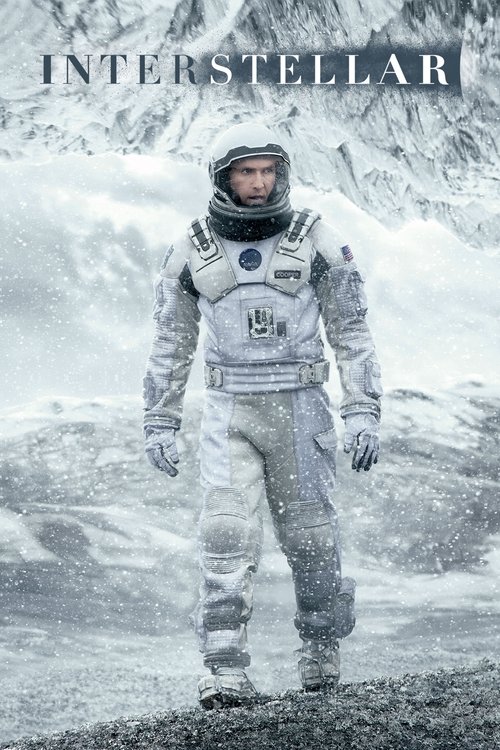
"Mankind was born on Earth. It was never meant to die here."
Interstellar - Symbolism & Philosophy
Symbols & Motifs
Cooper's Watch
The watch symbolizes the enduring connection and love between Cooper and Murph, a love that can transcend time and space. It also represents the promise Cooper made to return and the physical manifestation of their relative experiences of time.
Cooper gives his daughter Murph a matching watch before he leaves. Decades later, from within the tesseract, Cooper uses gravity to manipulate the second hand of Murph's watch, sending the quantum data in Morse code that she needs to solve the gravity equation and save humanity.
The Tesseract (The Bookshelf)
The tesseract is a physical representation of the fifth dimension, where time becomes a physical, explorable landscape. It symbolizes the idea that love and gravity can be used to communicate across spacetime and that humanity, in its advanced future state, can reach back to ensure its own survival.
After falling into the Gargantua black hole, Cooper finds himself inside a tesseract constructed by future humans. It takes the form of an infinite projection of Murph's childhood bedroom bookshelf, allowing him to interact with moments from her past through gravitational waves.
Dust and Blight
The dust storms and crop blight symbolize the decay and impending death of Earth. They represent humanity's failure as stewards of their planet and the stagnant, backward-looking society that has resulted—a world where people worry about their place in the dirt rather than their place in the stars.
The film opens in a near-future where relentless dust storms plague the world, and blight has wiped out most food crops, leaving only corn. This environmental catastrophe is the driving force behind the entire plot, forcing humanity to look for a new home.
Philosophical Questions
Is humanity's survival as a species more important than individual lives and relationships?
The film constantly weighs the utilitarian calculus of saving the species (Plan B) against the hope of saving those currently alive (Plan A). Cooper's journey is predicated on leaving his children to save humanity, forcing the audience to confront the immense personal cost of a collective goal. Professor Brand's lie about Plan A's viability suggests a belief that people cannot be trusted to sacrifice themselves for an abstract future, while Dr. Mann's betrayal shows how the individual survival instinct can threaten the entire species. The film explores whether it is our individual connections or our species-level instincts that truly define our humanity.
Can love be considered a scientific, physical force?
Interstellar posits that love is a force that transcends time and space, much like gravity. Amelia Brand voices this as a hypothesis that is ultimately proven correct by Cooper's actions within the tesseract. The film challenges a purely materialistic view of the universe by suggesting that human emotions and connections may have a physical reality that we do not yet understand. It asks the audience to consider whether the most powerful forces that guide us are quantifiable or if they belong to a realm beyond our current scientific grasp.
Is it humanity's destiny to leave Earth?
The film's tagline, "Mankind was born on Earth. It was never meant to die here," sets up a philosophical debate about our place in the universe. It questions whether humanity's role is to act as a steward for its home planet or to constantly push outward as pioneers. The dire state of Earth suggests a failure of stewardship, forcing the question of whether leaving is an escape or an evolutionary necessity. The narrative champions the spirit of exploration, suggesting that to survive and evolve, humanity must embrace its destiny among the stars.
Core Meaning
The core meaning of Interstellar posits that love is the one force capable of transcending the physical dimensions of time and space. Director Christopher Nolan explores the idea that while humanity's survival instinct and scientific ambition drive us to explore the cosmos, it is our deep emotional connections—specifically the profound bond between a parent and child—that ultimately provide the key to our salvation. The film suggests that human ingenuity and our capacity for sacrifice, guided by love, are the essential elements for overcoming seemingly insurmountable odds and securing a future for our species.