
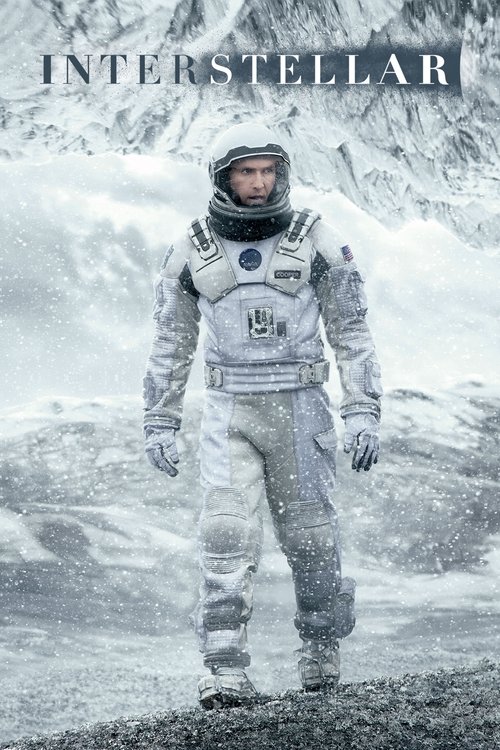
"Mankind was born on Earth. It was never meant to die here."
Director: Christopher Nolan
Cast: Matthew McConaughey, Anne Hathaway, Michael Caine, Jessica Chastain, Casey Affleck
Interstellar — Movie Quotes
Memorable Quotes
Do not go gentle into that good night. Rage, rage against the dying of the light.
Context
Recited as the Endurance launches and echoed at later turning points, tying the mission's physics to an act of defiance.
Meaning
The film's manifesto in two lines: extinction is not to be accepted gracefully. Nolan borrows Thomas's villanelle — written as a son's plea to a dying father — and inverts it into an elder's plea to a generation being sent out to fight for the species.
Love isn't something that we invented. It's observable, powerful. It has to mean something.
Context
Argued to a skeptical crew while they debate which planet to visit next, with her personal stake in the answer openly on the table.
Meaning
The thesis the film spends its remaining runtime testing. Brand proposes that affection is not a bias to be corrected out of a decision, but a form of information — a claim the plot eventually treats as literally true.
Love is the one thing that transcends time and space.
Context
Part of Brand's plea during the crew's decisive argument, and the line most often cited as the film's emotional core.
Meaning
The distilled form of the film's most divisive idea — the point where Nolan's hard-science framework deliberately hands the final move to something unquantifiable.
Everybody good? Plenty of slaves for my robot colony?
Context
Delivered in the aftermath of a violent moment of crisis aboard the ship.
Meaning
Perfect calibration of the film's tonal balance: gallows humour from a machine, released precisely when the human characters are closest to panic. It also quietly reassures the audience that this AI is a companion, not a HAL-style threat.
I have a cue light I can use to show you when I'm joking, if you'd like.
Context
During Cooper's first banter with TARS about his humour and honesty percentages.
Meaning
A joke about honesty settings that doubles as one of the film's real questions — how much candour can people actually bear from each other? Nearly every human catastrophe in the story comes from someone adjusting their own honesty parameter.
Explore More About This Movie
Dive deeper into specific aspects of the movie with our detailed analysis pages