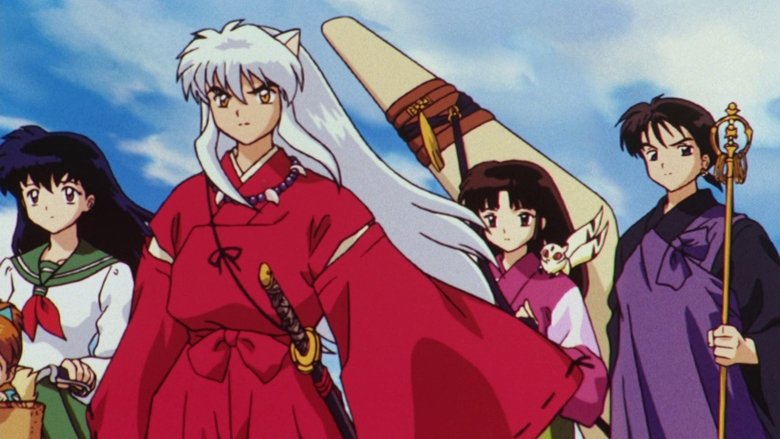

犬夜叉
InuYasha - Symbolism & Philosophy
Symbols & Motifs
The Shikon Jewel (Jewel of Four Souls)
The Shikon Jewel symbolizes the human heart and its capacity for both great good and terrible evil. Comprised of four souls—Courage, Friendship, Wisdom, and Love—its state reflects the wielder's intentions. When sought with a corrupt heart, it becomes tainted and magnifies evil. When held by a pure heart, it can be purified. Its ultimate goal is to perpetuate its own existence by trapping souls in an eternal conflict, symbolizing the endless internal struggle between light and darkness.
The central plot device of the entire series. It is born from the battle between the priestess Midoriko and a horde of demons. Its shattering at the beginning of the story sets the main quest in motion. The collection of its fragments drives the narrative, and its final fate—being wished out of existence by Kagome—marks the resolution of the series-long conflict.
The Bone-Eater's Well
The well symbolizes a bridge between worlds, connecting the past (Feudal Era) and the present (Modern Tokyo). It represents the collision of tradition and modernity, and the idea that the past is never truly gone. For Kagome and Inuyasha, it is a gateway that facilitates not only physical travel but also their emotional and personal growth as they learn from each other's worlds.
Located at Kagome's family shrine, the well is the portal that first transports Kagome to the Feudal Era in the first episode. It serves as a crucial link throughout the series, allowing Kagome to travel back and forth. Its eventual closing and reopening three years later symbolizes the final choice Kagome makes about her future.
Tessaiga
Inuyasha's sword, Tessaiga, symbolizes control, compassion, and the protection of humanity. Forged from his great demon father's fang, the sword cannot be wielded by a full demon who lacks compassion for humans, like Sesshomaru. It represents Inuyasha's hybrid nature and his choice to use his demonic power to protect others. Its transformations throughout the series mirror Inuyasha's own growth in strength and character.
Inuyasha acquires the sword early in the series, setting up a long-standing rivalry with his brother Sesshomaru over their father's legacy. The sword evolves as Inuyasha masters new techniques (like the Wind Scar and Backlash Wave) by defeating powerful demons, with each evolution marking a significant step in his journey and power level.
The Beads of Subjugation
This enchanted necklace symbolizes the initial mistrust and forced bond between Kagome and Inuyasha. It represents Kagome's control over Inuyasha's wild, demonic side. Over time, as their relationship deepens into one of love and trust, the beads become more of a comedic element, symbolizing their familiar, bickering dynamic rather than true subjugation.
Placed on Inuyasha by Kaede in the second episode, the beads allow Kagome to quell him with the command "Sit!", causing him to face-plant into the ground. This command is used throughout the entire series, often for comedic effect during their arguments, but also strategically in battles.
Philosophical Questions
What is the true nature of the self?
The series constantly explores this question through Inuyasha's identity as a half-demon. He feels he belongs to neither the human nor the demon world and initially believes he must choose one by becoming a full demon. However, his journey reveals that his hybrid nature is not a weakness but a unique strength. The series argues that the self is not about conforming to a single category but about integrating all of one's facets—the good, the bad, the past, the present—into a cohesive whole. True identity is found in one's actions and relationships, not in one's bloodline.
Can one ever truly escape the past?
Every main character is chained to their past through trauma, curses, or unresolved feelings. Kikyo's resurrection is a literal manifestation of the past refusing to die. The series explores the immense difficulty of moving forward. While the past can never be erased, "InuYasha" suggests that one can choose not to be defined by it. Through forgiveness, acceptance, and forging new bonds, the characters learn to carry their pasts not as a burden that dictates their future, but as a part of their story that has shaped who they are.
What is the morality of a wish?
The Shikon Jewel, a wish-granting artifact, serves as a focal point for this question. The series demonstrates that any selfish wish made upon the jewel inevitably leads to corruption and suffering, as it traps the wisher in an endless cycle of conflict to ensure the jewel's own survival. Naraku's wish for Kikyo's heart only perpetuates his pain. The narrative concludes that the only 'correct' wish is a selfless one: Kagome's wish for the jewel to cease to exist, thereby ending the cycle of desire and conflict for everyone. This suggests that true fulfillment comes not from getting what you want, but from freeing yourself and others from selfish desire.
Core Meaning
At its heart, "InuYasha" is an exploration of acceptance and the power of bonds. The series posits that one's true strength comes not from denying one's nature but from embracing all parts of oneself—the human and the demon, the past and the present. It champions the idea that companionship and love can heal the deepest wounds, allowing individuals to overcome hatred, loneliness, and cycles of revenge. The central conflict revolves around the Shikon Jewel, a physical manifestation of this internal struggle, which can be corrupted by selfish desires or purified by a selfless heart. Ultimately, the creators convey that the most powerful wish is not for personal gain but for the well-being of others, and that true belonging is found not in a place or a state of being, but in the connections forged with others.