InuYasha
A feudal fairy tale of conflicted hearts and clashing swords, painting a poignant journey through time where love and forgiveness bloom amidst demonic chaos.
InuYasha

InuYasha

犬夜叉

16 October 2000 — 30 March 2010 Japan 2 season 193 episode Ended ⭐ 8.6 (2,035)
Cast: Kappei Yamaguchi, Satsuki Yukino, Houko Kuwashima, Noriko Hidaka, Izumi Ōgami
Animation Sci-Fi & Fantasy Action & Adventure Comedy Mystery
Love and Redemption Friendship and Found Family The Duality of Good and Evil Overcoming the Past

Overview

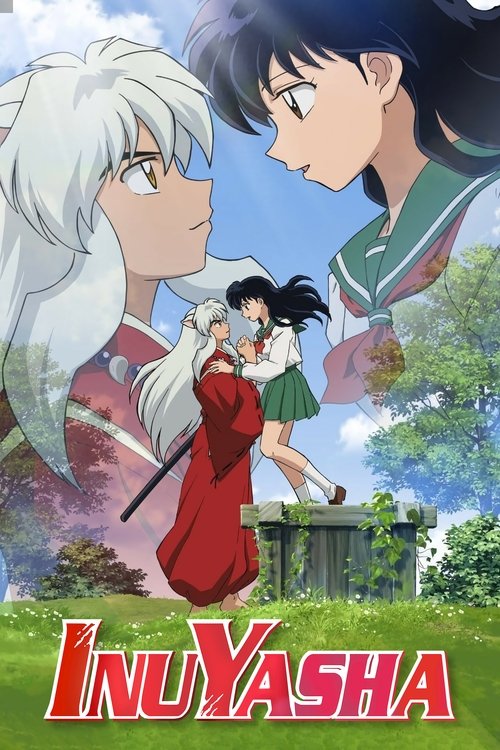
"InuYasha" follows Kagome Higurashi, a 15-year-old girl from modern-day Tokyo who is transported to the Sengoku period of Japan after falling into her family's cursed well. There, she discovers she is the reincarnation of a powerful priestess named Kikyo and meets Inuyasha, a half-demon pinned to a sacred tree. When the sacred Shikon Jewel—an artifact of immense power—is shattered into numerous fragments and scattered across the land, Kagome and Inuyasha are forced into an uneasy alliance to recover the pieces before they fall into the hands of nefarious demons, particularly the cunning and malevolent Naraku.

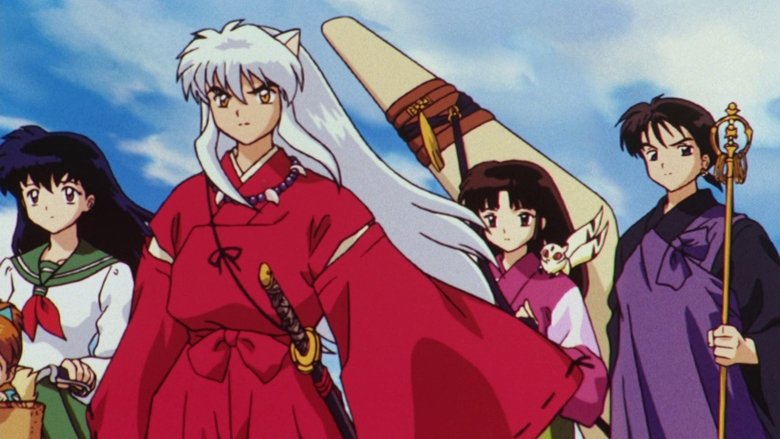
Their quest evolves as they are joined by a memorable cast of allies: Shippo, a young fox demon; Miroku, a cursed monk with a black hole in his hand; and Sango, a skilled demon slayer seeking revenge for her slaughtered clan. Together, this group navigates the perilous feudal landscape, battling an array of yokai and confronting their own personal demons. The journey is complicated by Inuyasha's lingering feelings for the resurrected Kikyo and the growing romantic bond between him and Kagome, creating a central love triangle that spans the entire series.

The series, originally running for 167 episodes and later concluded with a 26-episode series called "InuYasha: The Final Act," masterfully blends action, adventure, romance, and comedy. It explores the group's efforts to defeat Naraku, who is revealed to be the mastermind behind the tragedies that befell each of the main characters, all while delving into themes of redemption, friendship, and the struggle between good and evil within oneself.

Core Meaning

At its heart, "InuYasha" is an exploration of acceptance and the power of bonds. The series posits that one's true strength comes not from denying one's nature but from embracing all parts of oneself—the human and the demon, the past and the present. It champions the idea that companionship and love can heal the deepest wounds, allowing individuals to overcome hatred, loneliness, and cycles of revenge. The central conflict revolves around the Shikon Jewel, a physical manifestation of this internal struggle, which can be corrupted by selfish desires or purified by a selfless heart. Ultimately, the creators convey that the most powerful wish is not for personal gain but for the well-being of others, and that true belonging is found not in a place or a state of being, but in the connections forged with others.

Thematic DNA

Love and Redemption 35%
Friendship and Found Family 30%
The Duality of Good and Evil 25%
Overcoming the Past 10%

Love and Redemption

This is the central theme, driving most of the character arcs. The complex love triangle between Inuyasha, Kagome, and Kikyo explores how love can persist beyond death and betrayal, and how new love can foster growth and healing. Characters like Miroku and Sango are driven by love for their families and each other to seek redemption and break curses. Even the antagonist, Naraku, is born from a human's corrupted love for Kikyo. The series consistently shows that acts of love and compassion are the keys to redeeming past sins and overcoming hatred.

Friendship and Found Family

The core group—Inuyasha, Kagome, Miroku, Sango, and Shippo—forms a powerful found family. Each character is an outcast in some way, dealing with profound loss and loneliness. Together, they find acceptance, support, and the strength to face their individual and collective enemies. Their journey emphasizes that the bonds of friendship can be as strong, if not stronger, than blood, providing a sense of belonging that empowers them to grow and succeed.

The Duality of Good and Evil

"InuYasha" delves into the idea that good and evil are not absolute forces but exist within everyone. Inuyasha's half-demon nature is a literal representation of this conflict, as he struggles between his human heart and demonic instincts. The Shikon Jewel itself is neither inherently good nor evil; its nature is determined by the heart of its wielder. The series suggests that choices, not birthright, define a person's morality, and even the most corrupted beings can harbor a sliver of light, while the purest hearts can contain darkness.

Overcoming the Past

Nearly every character is haunted by a tragic past. Inuyasha and Kikyo are bound by a past betrayal orchestrated by Naraku; Sango seeks to avenge her murdered clan and save her brainwashed brother; and Miroku is cursed to live with a deadly wind tunnel inherited from his ancestors. The series is a long journey of confronting these past traumas, learning to forgive—both others and themselves—and moving forward to build a new future.

Character Analysis

InuYasha

Kappei Yamaguchi

Archetype: Antihero/Hero
Key Trait: Stubborn but fiercely protective

Motivation

Initially, his sole motivation is to obtain the Shikon Jewel to become a full demon, believing it will solve his problems of ostracization. This motivation shifts dramatically as he forms bonds with Kagome and his friends. His primary drive becomes the protection of his newfound family and his desire to defeat Naraku, not for power, but to avenge the suffering of his loved ones.

Character Arc

Inuyasha begins as a bitter, resentful half-demon who trusts no one and desires the Shikon Jewel to become a full demon, shedding the human side he despises. His initial interactions with Kagome are hostile and purely self-serving. Throughout the series, his journey is one of learning to accept his humanity. He discovers that his human heart is not a weakness but the source of his greatest strength—his desire to protect his friends. He evolves from a lone wolf into a leader and a loyal companion, moving past his tragic history with Kikyo to embrace a future with Kagome, ultimately choosing to live as a half-demon who protects humans.

Kagome Higurashi

Satsuki Yukino

Archetype: Heroine/The Heart
Key Trait: Compassionate and resilient

Motivation

Her initial motivation is simply to get back home and restore the shattered Shikon Jewel to fix her mistake. This evolves into a deep-seated desire to help people and see the quest through to the end. Her love for Inuyasha and her friends becomes her driving force, motivating her to become stronger and make incredible sacrifices to ensure their safety and defeat Naraku.

Character Arc

Kagome starts as an ordinary, somewhat insecure high school student thrown into a world she doesn't understand. Initially overwhelmed, she quickly demonstrates immense courage, empathy, and spiritual power. Her arc is a coming-of-age story where she learns to balance her life in the modern world with her profound responsibilities in the past. She grows from a reluctant participant into a powerful priestess and the emotional anchor of the group. Her unwavering belief in Inuyasha helps him heal, and she ultimately makes the selfless choice to remain in the Feudal Era, embracing her destiny and her love for him.

Sesshomaru

Ken Narita

Archetype: Antagonist/Antihero
Key Trait: Stoic and proud

Motivation

At first, Sesshomaru is motivated by a pure desire for power and a belief in his own superiority, seeking the Tessaiga as his birthright. His motivation transforms entirely after meeting Rin. His primary drive becomes ensuring her safety, which forces him to confront his own prejudices and leads him toward a more profound understanding of strength that isn't reliant on destruction.

Character Arc

Sesshomaru is introduced as a cold, powerful, and arrogant full demon who despises his half-demon brother, Inuyasha, and all humans. His arc is one of the most significant in the series. His journey begins with a ruthless pursuit of their father's powerful sword, Tessaiga. However, his path changes after he is given the healing sword Tenseiga and encounters Rin, a young human girl who shows him unconditional kindness. Through protecting Rin, Sesshomaru gradually develops compassion and a sense of protectiveness, moving beyond his obsession with power. He eventually resolves his feud with Inuyasha and forges his own path, becoming a protector rather than a destroyer, culminating in him obtaining his own powerful sword, Bakusaiga.

Naraku

Toshiyuki Morikawa

Archetype: Villain
Key Trait: Manipulative and cruel

Motivation

Naraku's motivations are complex. On the surface, he seeks to collect all the Shikon Jewel shards to become an all-powerful demon. However, his deeper motivations are tied to his human origin: to fully sever his human heart (Onigumo) and to possess Kikyo, whom he both hates for rejecting Onigumo and desires. He manipulates and destroys others primarily to corrupt the Shikon Jewel with their pain and hatred.

Character Arc

Naraku is born from the human bandit Onigumo, who allows his body to be consumed by demons out of his corrupt desire for Kikyo. Naraku remains the central antagonist throughout the series, consistently evolving by absorbing other demons to become more powerful and creating various incarnations to do his bidding. His arc is not one of redemption but of descent into pure evil and manipulation. He masterfully orchestrates the suffering of all the main characters. In his final moments, it's revealed that his true, unattainable wish was to have Kikyo's heart, a human desire the Shikon Jewel could never grant, showing that the root of his immense evil was a twisted, unrequited love.

Symbols & Motifs

The Shikon Jewel (Jewel of Four Souls)

Meaning:

The Shikon Jewel symbolizes the human heart and its capacity for both great good and terrible evil. Comprised of four souls—Courage, Friendship, Wisdom, and Love—its state reflects the wielder's intentions. When sought with a corrupt heart, it becomes tainted and magnifies evil. When held by a pure heart, it can be purified. Its ultimate goal is to perpetuate its own existence by trapping souls in an eternal conflict, symbolizing the endless internal struggle between light and darkness.

Context:

The central plot device of the entire series. It is born from the battle between the priestess Midoriko and a horde of demons. Its shattering at the beginning of the story sets the main quest in motion. The collection of its fragments drives the narrative, and its final fate—being wished out of existence by Kagome—marks the resolution of the series-long conflict.

The Bone-Eater's Well

Meaning:

The well symbolizes a bridge between worlds, connecting the past (Feudal Era) and the present (Modern Tokyo). It represents the collision of tradition and modernity, and the idea that the past is never truly gone. For Kagome and Inuyasha, it is a gateway that facilitates not only physical travel but also their emotional and personal growth as they learn from each other's worlds.

Context:

Located at Kagome's family shrine, the well is the portal that first transports Kagome to the Feudal Era in the first episode. It serves as a crucial link throughout the series, allowing Kagome to travel back and forth. Its eventual closing and reopening three years later symbolizes the final choice Kagome makes about her future.

Tessaiga

Meaning:

Inuyasha's sword, Tessaiga, symbolizes control, compassion, and the protection of humanity. Forged from his great demon father's fang, the sword cannot be wielded by a full demon who lacks compassion for humans, like Sesshomaru. It represents Inuyasha's hybrid nature and his choice to use his demonic power to protect others. Its transformations throughout the series mirror Inuyasha's own growth in strength and character.

Context:

Inuyasha acquires the sword early in the series, setting up a long-standing rivalry with his brother Sesshomaru over their father's legacy. The sword evolves as Inuyasha masters new techniques (like the Wind Scar and Backlash Wave) by defeating powerful demons, with each evolution marking a significant step in his journey and power level.

The Beads of Subjugation

Meaning:

This enchanted necklace symbolizes the initial mistrust and forced bond between Kagome and Inuyasha. It represents Kagome's control over Inuyasha's wild, demonic side. Over time, as their relationship deepens into one of love and trust, the beads become more of a comedic element, symbolizing their familiar, bickering dynamic rather than true subjugation.

Context:

Placed on Inuyasha by Kaede in the second episode, the beads allow Kagome to quell him with the command "Sit!", causing him to face-plant into the ground. This command is used throughout the entire series, often for comedic effect during their arguments, but also strategically in battles.

Memorable Quotes

I want you to be happy. I want you to laugh a lot. I don't know what exactly I'll be able to do for you, but I'll always be by your side.

— Kagome Higurashi

Context:

This is said during a quiet, heartfelt moment as Kagome tries to comfort Inuyasha, who is often troubled by his past and his identity. It represents a turning point in their relationship, moving from contentious allies to deeply caring partners.

Meaning:

This quote perfectly encapsulates Kagome's selfless and compassionate nature. It signifies her unconditional love for Inuyasha, prioritizing his happiness above all else and promising her unwavering support, which becomes the emotional foundation of their relationship and his eventual healing.

When you have someone to protect, your power increases multifold!

— InuYasha

Context:

Inuyasha often declares this during intense battles, particularly against powerful foes like Sesshomaru or Naraku. It reflects his shift in motivation from selfishness to selflessness, fighting with greater ferocity because his friends are in danger.

Meaning:

This line marks a critical point in Inuyasha's character development. It signifies his realization that his connection to others—his human side—is not a weakness but his greatest source of strength. It's the moment he embraces his role as a protector rather than a lone wolf seeking power for himself.

In the hearts of men lies both good and evil. The two coexist. Some men become good, and others become evil. It is the way of this world.

— Kikyo

Context:

Kikyo, having experienced both profound love and devastating betrayal, often reflects on the nature of the human heart. She typically says this in a philosophical moment, explaining the motivations of others or grappling with her own complicated existence after being resurrected.

Meaning:

Kikyo's wisdom reflects one of the series' core themes: the duality of human nature. Her words articulate the idea that morality is a matter of choice, not destiny. This quote also mirrors the nature of the Shikon Jewel, which can be used for either good or evil depending on the heart of its possessor.

Nothing I could've gained was worth losing her. Nothing at all!

— Sesshomaru

Context:

This is spoken in the underworld after Rin is killed by the guard dogs of hell. Sesshomaru is overcome with grief and rage at his own powerlessness, a profound shift from his usual cold and detached demeanor. His mother later revives Rin, but this moment permanently changes him.

Meaning:

This is a landmark quote for Sesshomaru, representing the culmination of his character arc. After the human girl Rin dies and his healing sword Tenseiga fails to revive her, he realizes that his quest for power and his father's sword meant nothing compared to the life of the person who taught him compassion. It is his first true display of love and regret.

Episode Highlights

The Girl Who Overcame Time... and the Boy Who Was Just Overcome

S1E1

The inaugural episode sets the entire stage for the series. It introduces Kagome Higurashi, her transportation to the Feudal Era via the Bone-Eater's Well, and her first encounter with the sealed half-demon Inuyasha. The Shikon Jewel is revealed and then quickly ripped from her body, establishing the central conflict.

Significance:

This episode is foundational, establishing the series' premise, main characters, and the primary objective of the story. It perfectly blends modern life with feudal fantasy, immediately hooking the audience.

The Mystery of the New Moon and the Black-Haired Inuyasha

S1E13

A crucial episode for character development, this is where Kagome and the audience learn Inuyasha's greatest secret: on the night of the new moon, he loses his demonic powers and becomes fully human. This vulnerability forces him to rely on Kagome for protection, deepening their bond and trust.

Significance:

It reveals a critical weakness in the protagonist, adding layers to his character and raising the stakes during their journey. It also strengthens the trust and interdependence between Inuyasha and Kagome early in the series.

Return of the Tragic Priestess, Kikyo

S1E15

The witch Urasue resurrects the priestess Kikyo using her sacred ashes and a part of Kagome's soul. Kikyo's return drastically complicates the narrative, as she is filled with hatred for Inuyasha, believing he betrayed her 50 years prior. This episode establishes the central love triangle that defines much of the series' emotional conflict.

Significance:

Kikyo's resurrection introduces a major, long-running conflict and a source of deep emotional turmoil for both Inuyasha and Kagome, forcing them to confront the past in a very real and dangerous way.

Enter Sango the Demon Slayer

S1E24

This episode introduces Sango, the last core member of the group. Her tragic backstory is revealed: her entire village of demon slayers was massacred, and her brother Kohaku was manipulated into helping by the series' main antagonist, Naraku. It's a dark and emotional entry that firmly establishes Naraku's cruelty.

Significance:

Sango's introduction completes the main cast and provides another powerful, personal motivation for the group's quest to defeat Naraku. Her skills as a demon slayer make her an invaluable member of the team.

The Tragic Love Song of Destiny (Part 1 & 2)

S6E147

These episodes are a flashback that finally reveals the full story of what happened between Inuyasha and Kikyo 50 years ago. It shows how Naraku, in his original form as Onigumo, manipulated them into betraying each other, leading to Kikyo's death and Inuyasha being sealed to the sacred tree.

Significance:

This two-part episode is essential for understanding the central tragedy that underpins the entire series. It clarifies the motivations of Inuyasha, Kikyo, and Naraku, and re-frames the entire narrative with the truth of their past.

Among the Twinkling Stars

S7E175

This episode features the final, tragic death of Kikyo. Wounded by Naraku's miasma, she dies peacefully in Inuyasha's arms. In her last moments, they share a kiss and she tells him he saved her, finally finding peace. Kagome's presence and her ability to feel Kikyo's heart bring closure to the long and painful love triangle.

Significance:

Kikyo's definitive death is a monumental turning point in the series. It resolves the central love triangle, allowing Inuyasha and Kagome's relationship to move forward without the shadow of the past, and solidifies their shared resolve to defeat Naraku.

Toward Tomorrow

S7E193

The series finale. After Naraku's defeat, Kagome is trapped inside the Shikon Jewel and must make a choice. Guided by Inuyasha's voice, she makes the one correct wish: for the Shikon Jewel to disappear forever. She is returned to her time and the well closes. Three years later, after graduating high school, the well reopens, and she chooses to return to the Feudal Era to live with Inuyasha permanently.

Significance:

This episode provides a definitive and satisfying conclusion to the epic saga. It resolves the main conflict, shows the happy futures of the entire cast, and brings the love story of Inuyasha and Kagome to a heartwarming close.

Philosophical Questions

What is the true nature of the self?

The series constantly explores this question through Inuyasha's identity as a half-demon. He feels he belongs to neither the human nor the demon world and initially believes he must choose one by becoming a full demon. However, his journey reveals that his hybrid nature is not a weakness but a unique strength. The series argues that the self is not about conforming to a single category but about integrating all of one's facets—the good, the bad, the past, the present—into a cohesive whole. True identity is found in one's actions and relationships, not in one's bloodline.

Can one ever truly escape the past?

Every main character is chained to their past through trauma, curses, or unresolved feelings. Kikyo's resurrection is a literal manifestation of the past refusing to die. The series explores the immense difficulty of moving forward. While the past can never be erased, "InuYasha" suggests that one can choose not to be defined by it. Through forgiveness, acceptance, and forging new bonds, the characters learn to carry their pasts not as a burden that dictates their future, but as a part of their story that has shaped who they are.

What is the morality of a wish?

The Shikon Jewel, a wish-granting artifact, serves as a focal point for this question. The series demonstrates that any selfish wish made upon the jewel inevitably leads to corruption and suffering, as it traps the wisher in an endless cycle of conflict to ensure the jewel's own survival. Naraku's wish for Kikyo's heart only perpetuates his pain. The narrative concludes that the only 'correct' wish is a selfless one: Kagome's wish for the jewel to cease to exist, thereby ending the cycle of desire and conflict for everyone. This suggests that true fulfillment comes not from getting what you want, but from freeing yourself and others from selfish desire.

Alternative Interpretations

One of the most debated aspects of the series is the nature of the Inuyasha/Kagome/Kikyo love triangle. One interpretation views it as a straightforward romance where Kagome is the destined partner, and Kikyo represents an inescapable past that must be laid to rest for Inuyasha to move on. Another perspective sees Kagome not as her own person, but merely as a substitute for Kikyo, arguing that Inuyasha's love for his first love was his 'true' love, and his relationship with Kagome is a second chance. Critics of this view point to Inuyasha's significant character growth with Kagome as evidence that their love is distinct and transformative.

Another area of interpretation involves Sesshomaru's character. Some viewers see his transformation as a natural evolution driven by the paternal instincts awakened by Rin. Others interpret it more philosophically, suggesting that his journey is an allegory for rejecting the pursuit of destructive power (Tessaiga) in favor of creative or life-giving power (Tenseiga), representing a maturation from a simplistic view of strength to a more profound understanding of it.

Cultural Impact

"InuYasha" made a significant cultural impact both in Japan and internationally, becoming a gateway anime for many Western fans in the early 2000s. Its serialization from 1996 to 2008 and its anime adaptation (2000-2010) placed it at a pivotal time in the global popularization of anime. Creator Rumiko Takahashi, already famous for hits like "Ranma ½", used "InuYasha" to explore darker themes while retaining her signature blend of comedy and romance, which broadened its appeal across typical shonen (young male) and shojo (young female) demographics.

The series was highly influential in popularizing the *isekai* (different world) subgenre, where a protagonist from the modern world is transported to a fantasy realm. It also introduced a wide international audience to Japanese history and folklore, including concepts of *yokai* (demons), *miko* (priestesses), and the Sengoku period. Its long run on Adult Swim's Toonami block in the U.S. cemented its status as a classic, fostering a large and dedicated fanbase that engaged heavily in fan culture, including fanfiction, fan art, and cosplay, which were burgeoning online at the time. The enduring love for the series led to the creation of a sequel, "Yashahime: Princess Half-Demon," which follows the children of Inuyasha, Kagome, and Sesshomaru, demonstrating the series' lasting legacy and influence on a new generation of viewers.

Audience Reception

"InuYasha" received widespread acclaim from audiences worldwide and is considered a classic of its era. Fans consistently praise its compelling blend of action, deep emotional storytelling, and rich character development. The romance, particularly the central love triangle, was a major point of engagement and debate, creating a passionate and enduring fanbase. The dynamic cast of characters, each with a tragic and well-developed backstory, is frequently cited as a major strength.

However, the original anime's 167-episode run did draw criticism for its pacing and the prevalence of filler episodes, which sometimes slowed the main plot's progression. The 'monster-of-the-week' format in certain stretches was seen by some as repetitive. Despite this, the overall reception was overwhelmingly positive. The decision to conclude the series with "The Final Act" was highly praised by fans for providing a faithful and satisfying conclusion to the manga's storyline, resolving long-standing plot points and character arcs effectively. To this day, the series is remembered fondly for its emotional depth, iconic characters, and epic scope.

Interesting Facts

  • The creator, Rumiko Takahashi, is one of Japan's most successful and wealthiest manga artists, often called the 'Queen of Manga'.
  • Rumiko Takahashi did not have a clear ending in mind for the relationship between Inuyasha and Kagome when she began the series, developing it as the story progressed.
  • The series blends action, romance, fantasy, and horror, a combination of genres that helped it appeal to a wide demographic of both male and female readers and viewers.
  • The anime originally ended in 2004 with episode 167, leaving the story unfinished. It was later concluded in 2009-2010 with the 26-episode series "InuYasha: The Final Act," which adapted the remaining manga chapters.
  • Inuyasha's immense popularity in the United States is largely credited to its long-running broadcast on Cartoon Network's Adult Swim block, which introduced the series to a generation of Western anime fans.
  • The name 'Inuyasha' translates to 'Dog Yaksha' or 'Dog Demon'. A 'Yaksha' is a nature spirit from Hindu, Jain, and Buddhist mythology.

⚠️ Spoiler Analysis

Click to reveal detailed analysis with spoilers

Frequently Asked Questions

Explore More About This Movie

Dive deeper into specific aspects of the movie with our detailed analysis pages

Comments (0)

Leave a comment

No comments yet. Be the first to share your thoughts!