
Io capitano
Io Capitano - Symbolism & Philosophy
Symbols & Motifs
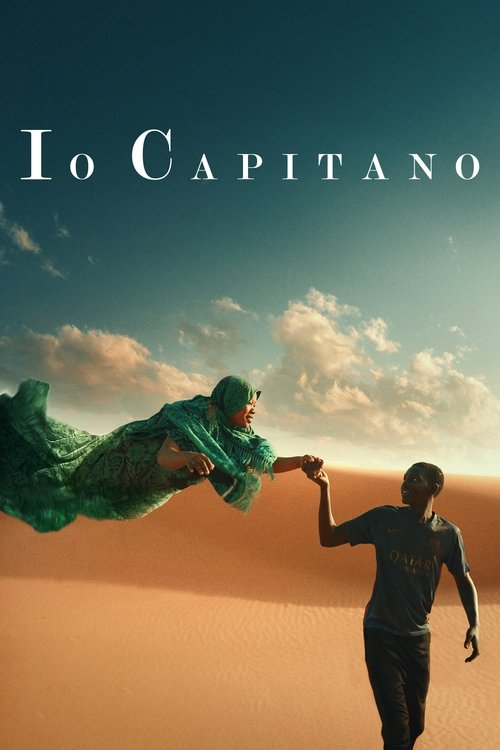
The Floating Woman
Symbolizes guilt, mercy, and the psychological burden of those left behind. When Seydou is unable to save a woman in the desert, her image follows him in a surreal sequence, representing his deep-seated humanity that refuses to be extinguished by horror.
Used during a dream sequence in the Sahara where Seydou imagines taking the hand of a dying woman and lifting her into the sky, allowing her to fly across the sands.
Smartphones and Social Media
Represent the "Siren's call" of the 21st century. They offer a filtered, utopian vision of Europe that fuels the boys' desires while obscuring the lethal reality of the journey.
Early scenes show the boys scrolling through TikTok and music videos, contrasting the digital glamour with their dusty Dakar reality.
The Boat
Symbolizes the liminal space between life and death, and between Africa and Europe. It is the final crucible where Seydou must prove his manhood and moral character.
The massive, rusting vessel becomes the stage for the final act where Seydou is responsible for hundreds of refugees.
Ancestors and Blessings
Symbolizes the cultural roots and moral anchor that Seydou carries. His respect for tradition and family remains his compass even when his physical compass fails.
The ritual at the cemetery before they leave and Seydou's frequent "conversations" with his mother in his mind.
Philosophical Questions
Is the right to move a universal human right, or a privilege of birth?
The film asks why a European teen can fly across the world for fun while a Senegalese teen must face torture and death to do the same. It challenges the 'lottery of birth' that dictates freedom of movement.
Does suffering necessarily lead to the loss of morality?
Seydou is placed in situations where he could choose his own safety over others, yet he consistently chooses empathy (e.g., trying to save the woman in the desert, refusing to leave Moussa). The film explores the integrity of the soul under extreme duress.
Can art truly represent the 'other' without exploitation?
Through its production methods, the film raises questions about the ethics of a white European director telling an African story. Garrone attempts to solve this by acting as an 'intermediary' for real survivors' voices.
Core Meaning
The core meaning of Io Capitano is the humanization of a global crisis that is often reduced to statistics and political rhetoric. Director Matteo Garrone wanted to give a "reverse shot" of the immigration narrative, showing the journey from the perspective of the migrants rather than the European shore. It is a story about the fundamental human right to move and the universal nature of youth aspirations.
The film explores the transition from childhood to adulthood through the lens of extreme adversity, framing the migrant experience as a contemporary epic akin to the Odyssey. It highlights that the desire to explore the world and seek better opportunities is not just born of desperation but of a human drive that should not be met with systemic brutality and death.