Io Capitano
Io capitano
Overview
Io Capitano tells the gripping story of Seydou and Moussa, two sixteen-year-old cousins from Dakar, Senegal, who yearn for a better life in Europe. Driven by dreams of musical stardom and lured by the idealized images of the West seen through their smartphones, they secretly save money for months. Despite the warnings of their family and the terrifying reality of the journey, they embark on an epic quest across the African continent.
Their journey takes them through a series of grueling trials: the vast, scorched expanses of the Sahara Desert, the brutal detention camps of Libya, and the perilous waters of the Mediterranean Sea. Along the way, their youthful naivety is shattered by human traffickers, corrupt officials, and the raw power of nature. The film shifts from the vibrant, communal life of Senegal to the dehumanizing landscapes of the migrant trail, forcing the protagonists to find strength in their bond and their will to survive.
Ultimately, the story focuses on Seydou’s transformation from a frightened boy into a leader. When he is forced to pilot a crowded, rickety boat toward Sicily, he must carry the weight of hundreds of lives on his shoulders. The film avoids political preaching, instead centering on the subjective, emotional experience of those who risk everything for the basic right to move and seek a future.

Core Meaning
The core meaning of Io Capitano is the humanization of a global crisis that is often reduced to statistics and political rhetoric. Director Matteo Garrone wanted to give a "reverse shot" of the immigration narrative, showing the journey from the perspective of the migrants rather than the European shore. It is a story about the fundamental human right to move and the universal nature of youth aspirations.
The film explores the transition from childhood to adulthood through the lens of extreme adversity, framing the migrant experience as a contemporary epic akin to the Odyssey. It highlights that the desire to explore the world and seek better opportunities is not just born of desperation but of a human drive that should not be met with systemic brutality and death.
Thematic DNA
The Right to Dream and Move
The film emphasizes that Seydou and Moussa aren't fleeing war or famine, but are driven by the same youthful ambition that motivates teenagers everywhere. It challenges the notion that only Westerners have the "right" to travel for adventure or career growth.
Loss of Innocence
Seydou begins the journey as a sheltered boy who loves his mother and music. Through the horrors of the Sahara and the torture in Libyan prisons, he is forced to abandon his naivety and take on adult responsibilities to survive.
Solidarity vs. Exploitation
The narrative contrasts the extreme greed of traffickers and militias with the profound kindness of fellow migrants, such as the mentor figure Martin, who helps Seydou recover and find work.
Resilience and Agency
The title Io Capitano (I Captain) signifies the protagonist's reclaimed agency. By taking the helm, Seydou refuses to be a passive victim of fate or a faceless number in a news report.
Character Analysis
Seydou
Seydou Sarr
Motivation
Initially motivated by a dream of fame and helping his family, his motivation shifts to pure survival and the protection of his cousin and the people on his boat.
Character Arc
Seydou evolves from a timid teenager hiding his plans from his mother to a heroic leader. He endures physical and mental torture but retains his empathy, eventually saving hundreds of people at sea.
Moussa
Moustapha Fall
Motivation
Desire for a better life and a chance to make it in the music industry.
Character Arc
Moussa is the one who initiates the journey. He suffers a debilitating injury (a gunshot wound to the leg) and becomes the dependent whose survival provides the impetus for Seydou's final heroic act.
Martin
Issaka Sawadogo
Motivation
To reach his family in Italy and to help a young man he sees as a son.
Character Arc
A fellow captive who takes Seydou under his wing. He teaches Seydou construction skills and provides the paternal guidance Seydou lost when he left Dakar.
Symbols & Motifs
The Floating Woman
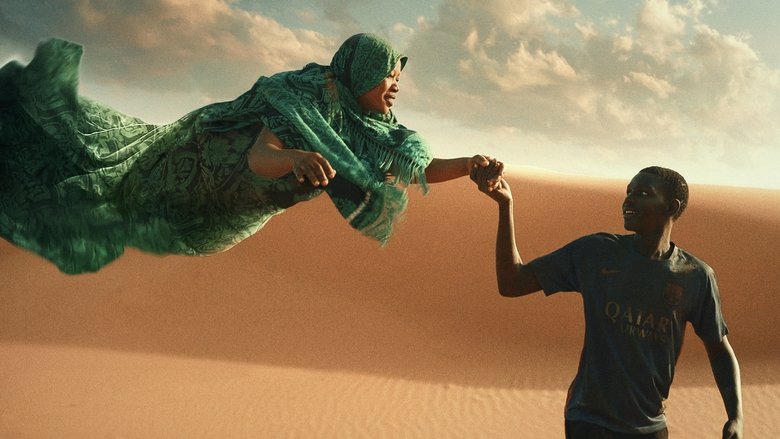
Symbolizes guilt, mercy, and the psychological burden of those left behind. When Seydou is unable to save a woman in the desert, her image follows him in a surreal sequence, representing his deep-seated humanity that refuses to be extinguished by horror.
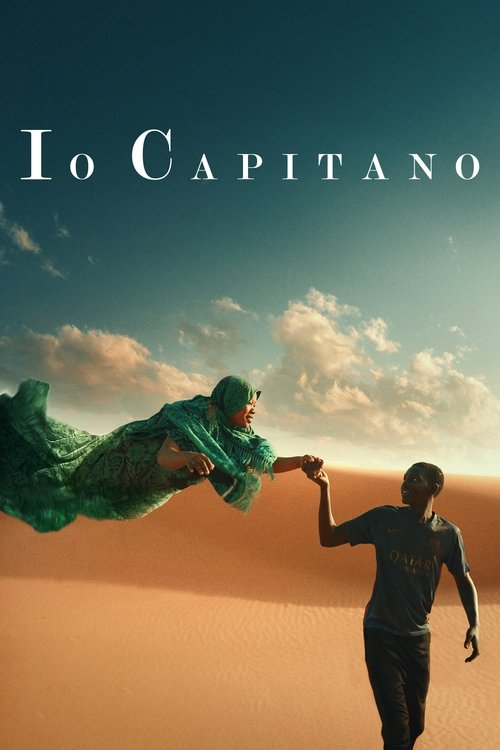
Used during a dream sequence in the Sahara where Seydou imagines taking the hand of a dying woman and lifting her into the sky, allowing her to fly across the sands.
Smartphones and Social Media
Represent the "Siren's call" of the 21st century. They offer a filtered, utopian vision of Europe that fuels the boys' desires while obscuring the lethal reality of the journey.
Early scenes show the boys scrolling through TikTok and music videos, contrasting the digital glamour with their dusty Dakar reality.
The Boat
Symbolizes the liminal space between life and death, and between Africa and Europe. It is the final crucible where Seydou must prove his manhood and moral character.
The massive, rusting vessel becomes the stage for the final act where Seydou is responsible for hundreds of refugees.
Ancestors and Blessings
Symbolizes the cultural roots and moral anchor that Seydou carries. His respect for tradition and family remains his compass even when his physical compass fails.
The ritual at the cemetery before they leave and Seydou's frequent "conversations" with his mother in his mind.
Memorable Quotes
Io capitano! Io capitano!
— Seydou
Context:
Shouted at an Italian Coast Guard helicopter as the boat approaches Sicily.
Meaning:
The ultimate declaration of triumph and responsibility. It marks the moment Seydou realizes he has succeeded in the impossible task of bringing everyone to shore safely.
I'd rather have my son than the money.
— Seydou's Mother
Context:
When Seydou tentatively asks her what she would think if he went to Europe.
Meaning:
Reveals the emotional cost of migration and the mother's intuitive fear for her son's safety over material gain.
Don't ever look back.
— Sisko (The trip organizer)
Context:
As the boys are being briefed on the desert crossing.
Meaning:
A grim warning about the psychological trauma and the lethal nature of the path they are taking.
No one will die! I promise you!
— Seydou
Context:
Said to the panicked passengers on the boat during a storm.
Meaning:
Highlights Seydou's moral burden and his refusal to accept the "inevitable" deaths associated with the crossing.
Philosophical Questions
Is the right to move a universal human right, or a privilege of birth?
The film asks why a European teen can fly across the world for fun while a Senegalese teen must face torture and death to do the same. It challenges the 'lottery of birth' that dictates freedom of movement.
Does suffering necessarily lead to the loss of morality?
Seydou is placed in situations where he could choose his own safety over others, yet he consistently chooses empathy (e.g., trying to save the woman in the desert, refusing to leave Moussa). The film explores the integrity of the soul under extreme duress.
Can art truly represent the 'other' without exploitation?
Through its production methods, the film raises questions about the ethics of a white European director telling an African story. Garrone attempts to solve this by acting as an 'intermediary' for real survivors' voices.
Alternative Interpretations
The most debated aspect of the film is its ending. While the final shot is one of pure triumph, many critics and viewers offer a more sobering interpretation:
- The Heroic Ending: Seydou has completed his 'hero's journey.' He has overcome death and brought his 'family' to the Promised Land. His cry of "Io Capitano!" is his final ascension to selfhood.
- The Bittersweet/Tragic Interpretation: Knowing the current political climate in Italy, viewers suggest that the moment the credits roll, Seydou's nightmare continues. He will likely be arrested for 'human smuggling' (as the real Fofana Amara was) and face years of legal battles or deportation. The joy is a fleeting, tragic illusion.
- The Magical Realist Reading: The occasional dream sequences suggest that the film is not a standard documentary but a myth. Under this lens, Seydou's success is a miraculous, symbolic victory of the human spirit over a world that tried to crush it.
Cultural Impact
Io Capitano has had a significant impact on European and African cultural discourse regarding the migrant crisis. In Italy, a country at the epicenter of the crisis and governed by a right-wing coalition, the film was hailed as a necessary humanizing force against anti-immigrant rhetoric. It won twelve awards at the Venice Film Festival and was nominated for the Academy Award for Best International Feature, bringing global attention to the specific 'middle' part of the migrant journey—the desert and Libya—which is rarely seen on screen.
The film was also screened for Pope Francis, who praised its message of compassion. Its use of the Wolof language and casting of non-professionals was noted as a major step for authentic representation in Western-produced cinema. It moved the conversation away from 'illegal entry' toward 'the human desire for life,' influencing students and audiences through special screenings across Europe and Africa.
Audience Reception
Audiences and critics alike have given Io Capitano high praise, resulting in a rare 100% score on Rotten Tomatoes from critics upon its initial release. Viewers were particularly moved by the performance of Seydou Sarr, whose expressive face carries the emotional weight of the film. The visual beauty of the cinematography by Paolo Carnera was frequently cited as a highlight, as it made the journey feel like a grand cinematic experience rather than a depressing documentary.
Some criticism was directed at the film's fable-like structure, with a few critics arguing that it occasionally smoothed over the most brutal aspects of the journey (like sexual violence) to remain a 'crowd-pleaser.' However, the majority of the audience saw this as a deliberate choice to focus on the boy's resilience and to ensure the story reached a wider, younger audience.
Interesting Facts
- The film was shot in sequence to help the first-time actors experience the emotional and physical weight of the journey chronologically.
- The lead actors, Seydou Sarr and Moustapha Fall, were not given the full script; they only knew their characters' fates day-by-day.
- It is based on the real-life testimonies of multiple migrants, specifically Fofana Amara, who at age 15 piloted a boat to Italy.
- Director Matteo Garrone spent years researching the story and collaborated with real migrants who acted as extras and consultants on set.
- Seydou Sarr was originally more interested in becoming a professional soccer player than an actor and almost missed his audition to play a match.
- The 13-minute standing ovation at the Venice Film Festival moved the young lead actors to tears.
- Garrone deliberately omitted the sexual violence often faced by women on these routes to focus specifically on the teenage boys' perspective and keep the film 'accessible' like a fable.
Easter Eggs
Connection to 'Pinocchio'
Garrone has noted that Io Capitano follows the structure of a dark fairy tale. Seydou’s journey mirrors Pinocchio's: an innocent boy leaving home, being tricked by 'foxes and cats' (traffickers), and eventually finding himself in the 'belly of a whale' (the boat/prison) to emerge as a 'real man.'
Mamadou Kouassi Cameo/Reference
Mamadou Kouassi, whose life story inspired the first half of the film (the desert and prison), worked as a script consultant. His influence is felt in the precise details of the Libyan 'human markets.'
Gomorrah Aesthetic Contrast
While Gomorrah was gritty and desaturated, Io Capitano uses vibrant, saturated colors, especially in Senegal, to subvert the 'poverty porn' trope and show the beauty of the world the migrants are leaving behind.
⚠️ Spoiler Analysis
Click to reveal detailed analysis with spoilers
Frequently Asked Questions
Explore More About This Movie
Dive deeper into specific aspects of the movie with our detailed analysis pages
Comments (0)
No comments yet. Be the first to share your thoughts!