
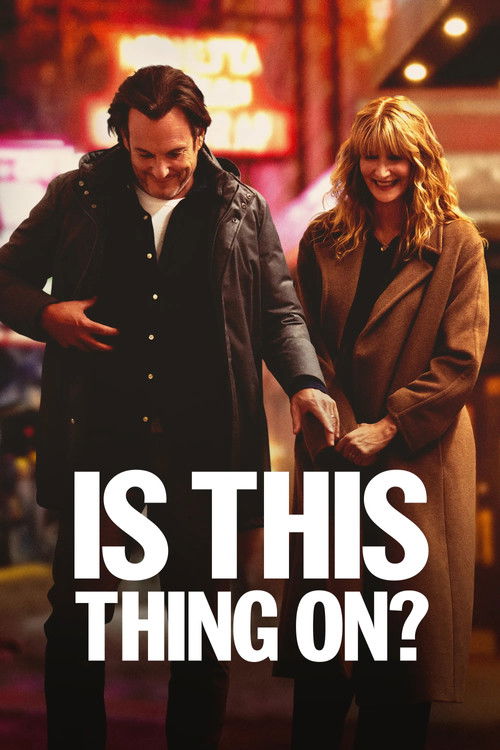
The following describes the film's plot developments as documented in published coverage.
The engine of the film is not a single betrayal but the slow collapse of a twenty-year marriage. Alex Novak, a father of two, is facing an impending divorce from Tess as the film opens; the story is interested in the aftermath rather than the rupture. The decisive turn comes not from the marriage at all but from a piece of comic accident: after the split, Alex finds he can't pay the cover at the Olive Tree Cafe, and so puts his name down for the open mic night at the Comedy Cellar downstairs. That cheapskate impulse is the hinge of his entire second act.
What follows is the escalation of a habit into an identity. Alex begins performing regularly, and the stage becomes the mechanism by which he processes the divorce — the film's central conceit being that stand-up here functions as therapy, a compulsory honesty that the marriage never demanded of him. In the course of this new life he has a fling with Jill, a fellow comic, which belongs to the film's reinvention strand rather than to any conventional infidelity plot: it happens after the separation, and its significance is what it reveals about Alex's appetite for a world where he is unencumbered and new.
The genuine structural surprise is how much weight the film gives Tess. Rather than functioning as the obstacle or the wound, she is running a parallel reckoning with the sacrifices she made for the family — an arc about identity and deferred ambition that the film treats as equal in stakes to Alex's stage time. The retrospective revelation, in other words, is symmetry: what looked at first like a man's midlife awakening turns out to be two simultaneous awakenings, one loud and public, one private and unapplauded.
The resolution is framed less as a verdict than as an open question the film poses directly — whether love can take a new form. Alex and Tess are left navigating co-parenting and identity rather than reconciling or annihilating each other. The meaning that lands only in retrospect is that the microphone was never the point: the title's plea, 'is this thing on?', applies retroactively to every unheard thing either of them said inside the marriage. Alex's success at being heard by strangers is also the indictment of how long he went unheard by the one person who should have been listening — and vice versa.
Note: published sources consulted for this analysis describe the film's premise, mid-film developments and thematic resolution but do not detail the specific final scene; that beat is therefore not characterized here.