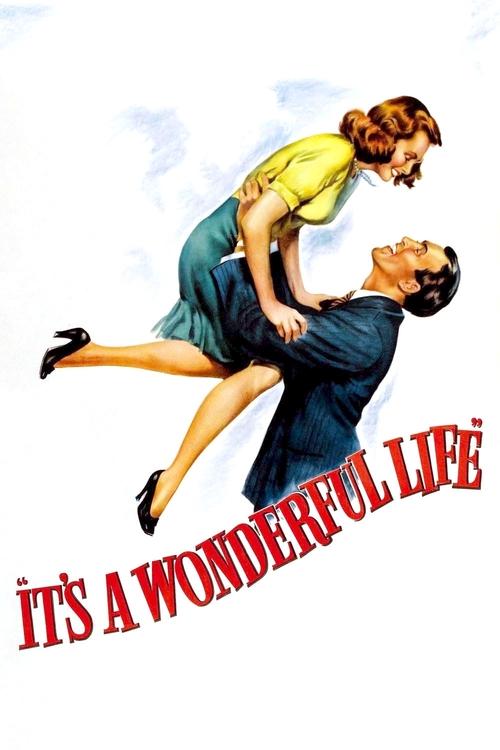
It's a Wonderful Life
A heart-wrenching yet ultimately uplifting fantasy drama that explores the profound impact of a single life, painting a poignant cinematic portrait of despair and redemption.
It's a Wonderful Life

"It's a wonderful laugh! It's a wonderful love!"

20 December 1946 United States of America 130 min ⭐ 8.3 (4,607)
Director: Frank Capra
Cast: James Stewart, Donna Reed, Lionel Barrymore, Thomas Mitchell, Henry Travers
Drama Family Fantasy
The Value of the Individual Sacrifice vs. Personal Ambition Community vs. Greed Faith and Despair
Budget: $3,180,000
Box Office: $9,644,124

It's a Wonderful Life - Ending Explained

⚠️ Spoiler Analysis

The entire narrative of "It's a Wonderful Life" is a lead-up to its pivotal twist, which occurs when George Bailey, on the verge of suicide, wishes he had never been born. His guardian angel, Clarence, grants this wish, plunging George into a nightmarish alternate reality. In this world, Bedford Falls is now Pottersville, a sleazy, vice-ridden town controlled entirely by Mr. Potter. This is because, without George, the Bailey Building & Loan never existed to counter Potter's influence.

The devastating revelations pile up: George's brother Harry drowned as a child because George wasn't there to save him, and consequently, the men on the transport ship Harry would have saved in the war also died. Mr. Gower, the pharmacist, went to prison for poisoning a child because George wasn't there to stop the mistake. His mother is a bitter widow who runs a boarding house and doesn't know him. Mary, his beloved wife, is a lonely, timid librarian who never married. This alternate timeline makes it clear that George's 'insignificant' life was, in fact, the cornerstone of his entire community's happiness and prosperity. The horror of this vision is what shatters his despair and makes him beg for his life back. The film's ending reveals that while George was experiencing this, his wife Mary had rallied the townspeople, who generously donate more than enough money to cover the missing $8,000, reinforcing the film's message that George's true wealth was in his relationships all along. A final hidden meaning becomes clear: the unpunished Mr. Potter represents the lingering presence of greed in the world, but the community's response shows that it can be overcome by collective goodness.

Alternative Interpretations

Despite its heartwarming reputation, "It's a Wonderful Life" has been subject to several darker and more cynical interpretations. Some critics view the film not as a celebration of community, but as a profoundly pessimistic tale of a man trapped by circumstance. In this reading, George Bailey never escapes Bedford Falls; his dreams are permanently thwarted, and the happy ending is merely a temporary reprieve, a placation that reinforces his confinement.

Film historian Andrew Sarris called it "one of the most profoundly pessimistic tales of human existence ever to achieve a lasting popularity." This perspective argues that Pottersville, the alternate town, is not a fantasy but a more realistic depiction of the world, and George's return to Bedford Falls is a retreat into a comforting illusion. The fact that Mr. Potter, the villain, faces no consequences for stealing the $8,000 is often cited as evidence of the story's underlying cynicism about justice.

Another theory places a sinister spin on Mary's character. One fan theory suggests that Mary's secret wish to marry George and stay in Bedford Falls is the catalyst for all of George's misfortunes, from his father's stroke to the Great Depression, arguing that fate itself conspired to trap him so her wish could come true.