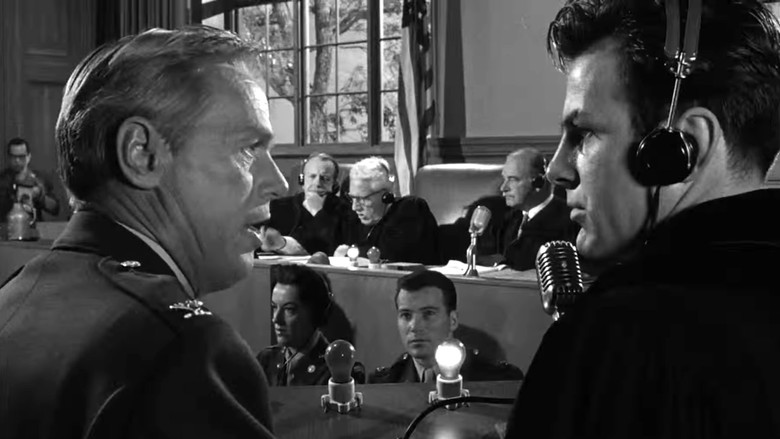
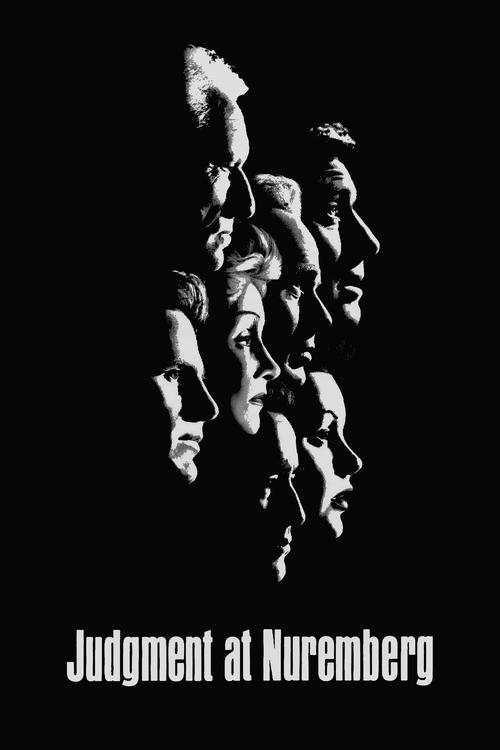
"The event the world will never forget."
Director: Stanley Kramer
Cast: Spencer Tracy, Richard Widmark, Maximilian Schell, Burt Lancaster, Marlene Dietrich
Judgment at Nuremberg — Characters & Cast
Character Analysis
Chief Judge Dan Haywood
Spencer Tracy
Motivation
His primary motivation is to understand the truth and deliver a just and righteous verdict. He is driven by a deep-seated belief in the sanctity of law and the value of a single human life, principles he feels compelled to uphold against the forces of political expediency and historical revisionism.
Character Arc
Judge Haywood begins as a thoughtful, somewhat provincial American judge, seemingly unprepared for the immense weight of the trial. He initially tries to understand the German perspective through his interactions with people like Mrs. Bertholt. Throughout the trial, as he listens to the horrifying evidence, his initial empathy for the German people's plight hardens into a firm, unwavering conviction that justice must be served, regardless of political pressures. His journey is one from observer to the ultimate arbiter of moral responsibility.
Dr. Ernst Janning
Burt Lancaster
Motivation
Initially, his motivation is a stoic, prideful refusal to recognize the legitimacy of the court. However, his conscience is slowly awakened. His ultimate motivation becomes a desperate need to tell the truth, not for acquittal, but for the potential salvation of Germany and to reclaim a shred of his own lost integrity, admitting that he and others should have known and acted sooner.
Character Arc
Janning starts the trial as a silent, defiant, and respected legal scholar who refuses to participate. He is the embodiment of how a sophisticated, intellectual man could become complicit in evil. His arc is a powerful journey from denial to confession. Moved by the prosecution's evidence and disgusted by his own defense attorney's tactics, he ultimately breaks his silence to condemn himself and the regime he served, providing the film's moral climax.
Hans Rolfe
Maximilian Schell
Motivation
Rolfe is motivated by a complex mix of professional duty and patriotism. He aims to defend not just the four men in the dock, but the honor of Germany itself. He argues that the judges were patriots following the law of their land and uses a "tu quoque" (you also) defense, pointing to moral failings of the Allied nations to challenge the court's authority.
Character Arc
Hans Rolfe does not have a significant arc of change; he remains a brilliant and passionate defense attorney throughout. He begins and ends as a fierce German patriot, dedicated to defending his clients by using any logical or legal argument available. While he is not a Nazi sympathizer, he believes his country is being unfairly singled out for judgment by the victors. His skill and fervor force the prosecution—and the audience—to confront uncomfortable truths about the world's complicity.
Colonel Tad Lawson
Richard Widmark
Motivation
His motivation is deeply personal and emotional. Haunted by the atrocities he has witnessed, he is driven by a burning need to hold the perpetrators accountable and to ensure the world does not forget the victims of the Holocaust. For him, the trial is not a political exercise but a moral necessity.
Character Arc
Colonel Lawson is a character defined by his righteous fury, having been present at the liberation of the concentration camps. He remains unwavering in his mission to see the defendants convicted. His arc is less about personal change and more about the struggle to maintain his fervor for justice against the tide of political maneuvering and the German populace's desire to forget. He represents the raw, uncompromising anger of those who witnessed the horrors firsthand.
Cast
Explore More About This Movie
Dive deeper into specific aspects of the movie with our detailed analysis pages