The central twist in "Jurassic Park" is the revelation that the dinosaurs, which were all genetically engineered to be female to prevent breeding, have found a way to reproduce on their own. Dr. Alan Grant discovers a nest of hatched dinosaur eggs, confirming Dr. Ian Malcolm's earlier prediction that "life finds a way." The scientific explanation provided is that the gaps in the dinosaur DNA were filled with frog DNA, and some West African frogs possess the ability to spontaneously change their sex in a single-gender environment. This crucial plot point underscores the film's main theme: the futility of trying to control nature. It reveals the fatal flaw in InGen's seemingly perfect system and is the ultimate proof of Hammond's hubris.
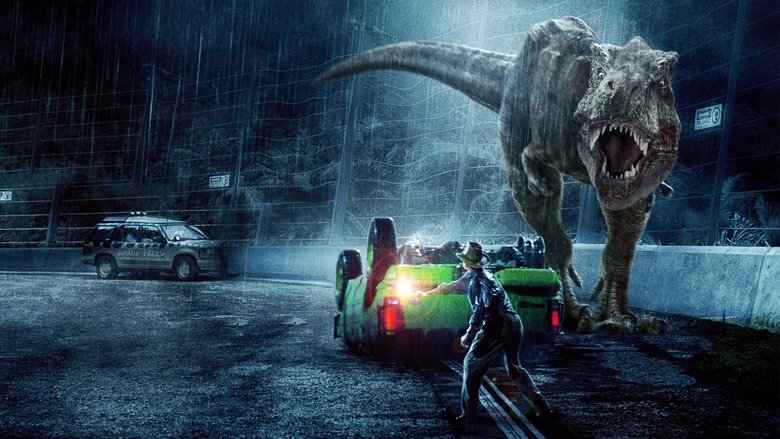
Another major plot turn is the industrial espionage carried out by Dennis Nedry, the park's lead computer programmer. Bribed by a corporate rival, Nedry deactivates the park's security systems, including most of the electric fences, to steal frozen dinosaur embryos. This act of sabotage directly leads to the escape of the Tyrannosaurus rex and the velociraptors, initiating the film's central disaster. Nedry's subsequent death—blinded and killed by a Dilophosaurus—serves as a moment of karmic justice.
The film's ending provides a moment of poetic, chaotic justice. As the survivors are cornered by two velociraptors in the visitor center's main hall, they are unexpectedly saved by the T. rex, which storms in and kills the raptors. This ending is ironic, as the film's primary antagonist inadvertently becomes the heroes' savior. It reinforces the theme of nature's unpredictability and its indifference to human affairs—the T. rex wasn't saving them, it was simply asserting its dominance as the apex predator. This allows the survivors to escape, leaving Hammond to look upon his failed dream as they fly away from the island.