Jurassic Park
A thrilling sci-fi adventure where awe quickly turns to terror, evoking the primal fear of being hunted by resurrected prehistoric giants.
Jurassic Park

Jurassic Park

"An adventure 65 million years in the making."

11 June 1993 United States of America 127 min ⭐ 8.0 (17,169)
Director: Steven Spielberg
Cast: Sam Neill, Laura Dern, Jeff Goldblum, Richard Attenborough, Bob Peck
Adventure Science Fiction
The Perils of Unchecked Ambition Humanity vs. Nature Science, Ethics, and Responsibility Capitalism and the Commodification of Nature
Budget: $63,000,000
Box Office: $920,100,000

Overview

Directed by Steven Spielberg, "Jurassic Park" is a landmark 1993 science fiction adventure film based on Michael Crichton's novel. Eccentric billionaire John Hammond (Richard Attenborough) has created a theme park on a remote island called Isla Nublar, populated with genetically engineered dinosaurs. After a park worker is killed, Hammond invites a group of experts to endorse the park's safety to his anxious investors. This group includes paleontologist Dr. Alan Grant (Sam Neill), paleobotanist Dr. Ellie Sattler (Laura Dern), and the charismatic chaos theorist Dr. Ian Malcolm (Jeff Goldblum).

Upon arrival, the visitors are initially mesmerized by the sight of living dinosaurs, a scientific marvel achieved by extracting DNA from prehistoric insects preserved in amber. However, their wonder soon turns to horror when a perfect storm of corporate espionage and a tropical cyclone leads to a catastrophic failure of the park's security systems. A disgruntled computer programmer, Dennis Nedry, deactivates the electric fences in an attempt to steal valuable dinosaur embryos, unleashing the prehistoric predators. The small group of visitors, along with Hammond's two young grandchildren, must fight for survival against escaped dinosaurs, including the formidable Tyrannosaurus rex and the cunning Velociraptors.
Core Meaning

The central message of "Jurassic Park" is a cautionary tale about the dangers of unchecked scientific ambition and the arrogance of humanity's attempts to control nature. Dr. Ian Malcolm's recurring warning, "Your scientists were so preoccupied with whether or not they could, they didn't stop to think if they should," encapsulates the film's core meaning. The film critiques the hubris of assuming that complex natural systems can be fully understood and contained for profit or entertainment. It explores the idea that nature is inherently unpredictable and will always resist human control, a concept Malcolm refers to as Chaos Theory. Ultimately, the film suggests that some scientific frontiers are best left unexplored and that humanity must approach nature with humility and respect, rather than attempting to dominate and commercialize it.

Thematic DNA

The Perils of Unchecked Ambition 35%
Humanity vs. Nature 30%
Science, Ethics, and Responsibility 25%
Capitalism and the Commodification of Nature 10%

The Perils of Unchecked Ambition

This theme is primarily embodied by John Hammond, whose dream of a dinosaur theme park blinds him to the ethical and practical dangers. His ambition, driven by a desire to create something wondrous (and profitable), leads him to cut corners and ignore warnings from his own experts, particularly Ian Malcolm. The catastrophic failure of the park serves as a direct consequence of his hubris, demonstrating that ambition without foresight and ethical consideration can lead to disastrous outcomes.

Humanity vs. Nature

The film constantly highlights the folly of trying to control the natural world. From the dinosaurs unexpectedly breeding due to their amphibian DNA to the unpredictable chaos of a tropical storm, nature consistently defies the park's technological constraints. Ian Malcolm's famous line, "Life, uh... finds a way," becomes the film's thesis statement, asserting that nature is a powerful, chaotic force that cannot be neatly packaged or controlled by human systems. The dinosaurs, resurrected against the natural order, ultimately reclaim their dominance, reinforcing the theme that humanity is a part of nature, not its master.

Science, Ethics, and Responsibility

"Jurassic Park" delves into the ethical responsibilities of scientists. The film questions the morality of de-extinction and genetic manipulation, not just from a safety perspective, but from a philosophical one. It raises questions about the right to resurrect extinct species for entertainment and profit. The scientists at InGen, driven by discovery and funded by Hammond's commercial goals, fail to fully consider the moral ramifications of their work, leading to tragic consequences and serving as a warning about the need for ethical guidelines in scientific advancement.

Capitalism and the Commodification of Nature

The entire Jurassic Park venture is a commercial enterprise. Hammond's dream is not just to share dinosaurs with the world, but to create a profitable tourist attraction. This is evident in the extensive merchandising seen in the visitor center and the high-tech, theme-park-style presentation. The film critiques the capitalist impulse to turn natural wonders into commodities, suggesting that such an approach is not only disrespectful to nature but also inherently dangerous, as the drive for profit can lead to compromised safety and unforeseen disasters.

Character Analysis

Dr. Alan Grant

Sam Neill

Archetype: The Reluctant Hero/Mentor
Key Trait: Pragmatic

Motivation

Initially motivated by his passion for dinosaurs and securing funding for his dig, his primary motivation quickly shifts to survival and, more importantly, protecting Lex and Tim. His expertise in dinosaur behavior becomes his key tool for keeping them alive.

Character Arc

Dr. Grant begins as a traditional, tech-averse paleontologist who dislikes children. Initially wary of the park, his skepticism turns to a fight for survival. Trapped with Hammond's grandchildren, he is forced to become their protector. Through this ordeal, he evolves from a detached academic into a nurturing, paternal figure, overcoming both his aversion to children and his discomfort with the unpredictable present. By the end, he has found a newfound appreciation for family and connection.

Dr. Ellie Sattler

Laura Dern

Archetype: The Competent Heroine
Key Trait: Resourceful

Motivation

Her motivations are rooted in scientific curiosity, a strong moral compass, and a fierce loyalty to her companions. She is driven by the need to understand the park's ecosystem and, later, to rescue her friends and restore order to ensure their escape.

Character Arc

Dr. Sattler is a capable and intelligent paleobotanist who is presented as Dr. Grant's professional equal. Throughout the film, she remains resourceful and brave, often taking initiative in dangerous situations, such as venturing out to restore the park's power. Her arc is less about personal change and more about demonstrating her unwavering competence and courage in the face of chaos. She challenges traditional gender roles, famously remarking, "We can discuss sexism in survival situations when I get back."

Dr. Ian Malcolm

Jeff Goldblum

Archetype: The Oracle/Cassandra
Key Trait: Skeptical

Motivation

Malcolm is motivated by his intellectual convictions about the unpredictability of complex systems. He is driven to expose the hubris and folly of the Jurassic Park project, to make others see the inherent dangers they are ignoring. He is also motivated by a certain charming bravado and a flirtatious nature.

Character Arc

Dr. Malcolm, a flamboyant mathematician specializing in Chaos Theory, serves as the film's philosophical conscience. From the outset, he predicts the park's inevitable failure, acting as a prophet of doom whose warnings are ignored. His arc sees his theoretical predictions become a brutal reality. After being injured by the T. rex, his role shifts from an active critic to a wounded observer, a living testament to the chaos he foresaw. He doesn't change so much as he is proven tragically correct.

John Hammond

Richard Attenborough

Archetype: The Tragic Creator
Key Trait: Ambitious

Motivation

Hammond is motivated by a complex mix of genuine wonder, the desire to create something unprecedented, and a significant profit motive. He wants to dazzle the world and, as he claims, make the park accessible to everyone, though his actions often betray a focus on commercial success over safety and ethical considerations.

Character Arc

John Hammond begins as a charismatic, grandfatherly showman, filled with childlike wonder and immense pride in his creation. His initial refusal to accept the park's flaws and dangers showcases his dangerous idealism and greed. The collapse of the park forces him to confront the catastrophic consequences of his ambition. His arc is one of disillusionment, as he transforms from a proud visionary into a humbled man who realizes the terrible error of his ways, ultimately prioritizing the survival of his grandchildren over his dream.

Symbols & Motifs

Amber-Preserved Mosquito

Meaning:

The mosquito preserved in amber symbolizes the seductive but dangerous power of resurrecting the past. It is the source of the dinosaur DNA, representing the initial spark of scientific possibility. However, it also represents a past that was perhaps meant to remain buried, and its unlocking unleashes forces that cannot be controlled.

Context:

The amber mosquito is prominently featured on John Hammond's cane, a constant visual reminder of the park's origins. The process of extracting DNA from the mosquito is explained in the visitor center's tour, highlighting it as the key to the entire enterprise.

Ripples in the Water

Meaning:

The concentric ripples in the glass of water symbolize the impending, inescapable threat and the terror of the unknown. It's a visual manifestation of Chaos Theory, where a distant cause (the T. rex's footsteps) creates a predictable but terrifying effect. It has become an iconic cinematic representation of building suspense.

Context:

This occurs inside the Ford Explorer tour vehicle just before the first appearance of the Tyrannosaurus rex. The rhythmic thumping sound combines with the visual of the vibrating water, creating a moment of pure, escalating dread for both the characters and the audience.

The T. rex

Meaning:

The Tyrannosaurus rex symbolizes the awesome, uncontrollable power of nature itself. It is both a figure of awe and terror. Initially presented as the ultimate threat, it paradoxically becomes the island's savior in the final scene, destroying the velociraptors. This dual role represents nature's indifference to human morality; it is a force of destruction and preservation, operating on its own terms.

Context:

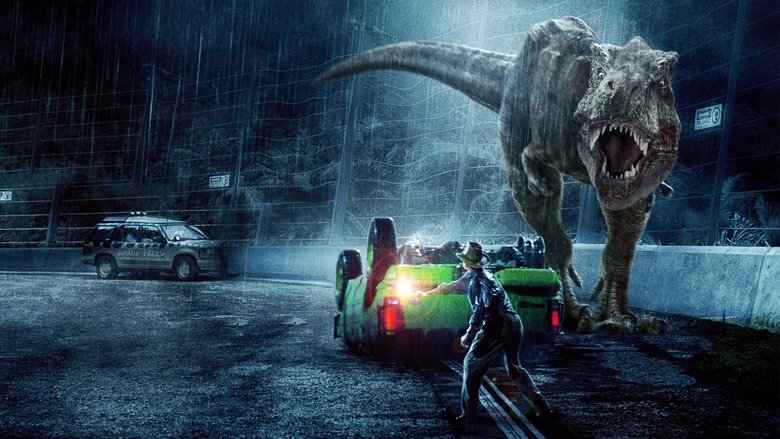
The T. rex's breakout from its paddock is a pivotal, terrifying set piece. It hunts the main characters throughout the film. In the climactic scene, it storms into the visitor center and battles the velociraptors, inadvertently allowing the human survivors to escape.

Velociraptors

Meaning:

The Velociraptors symbolize manufactured, intelligent horror. Unlike the more instinct-driven T. rex, the raptors are depicted as cunning, collaborative hunters who can problem-solve (like opening doors). They represent the specific, unforeseen consequences of genetic engineering—a creation that is not just powerful, but terrifyingly smart.

Context:

Dr. Grant describes their hunting tactics early in the film, establishing their threat. They are kept in a high-security enclosure. Later, they escape and hunt the characters through the visitor center, most notably in the tense kitchen scene with the children.

Memorable Quotes

Life, uh... finds a way.

— Dr. Ian Malcolm

Context:

Spoken during a luncheon discussion after the tour of the lab. Malcolm is expressing his deep skepticism about Hammond's ability to control the dinosaurs' breeding, arguing that imposing such limitations on a complex biological system is doomed to fail.

Meaning:

This is the philosophical core of the film. It signifies that nature is an unstoppable, unpredictable force that will always overcome artificial constraints. It foreshadows the dinosaurs breeding despite being engineered as all-female and the ultimate collapse of the park's control systems.

Your scientists were so preoccupied with whether or not they could, they didn't stop to think if they should.

— Dr. Ian Malcolm

Context:

This line is part of the same luncheon debate. Malcolm is directly challenging Hammond's justification for creating the dinosaurs, shifting the argument from the technical feasibility to the moral permissibility of the entire endeavor.

Meaning:

This quote directly addresses the film's central theme of scientific ethics and responsibility. It criticizes the pursuit of knowledge and power without considering the moral and ethical consequences, highlighting the hubris at the heart of the Jurassic Park project.

Welcome... to Jurassic Park.

— John Hammond

Context:

Hammond delivers this line with immense pride as Drs. Grant, Sattler, and Malcolm see a living Brachiosaurus for the first time. It's the grand reveal, the moment the audience shares in the characters' disbelief and amazement.

Meaning:

This iconic line captures the initial sense of pure wonder and awe that the park was intended to evoke. It represents the successful realization of Hammond's impossible dream, delivered with the flourish of a master showman, just before the dream turns into a nightmare.

Clever girl.

— Robert Muldoon

Context:

The park's game warden, Robert Muldoon, says this just before he is ambushed and killed by a Velociraptor. He realizes that one raptor has lured him into a trap while another attacks him from the side.

Meaning:

This quote encapsulates the terrifying intelligence of the Velociraptors. Spoken with a mix of respect and fear, it acknowledges that the hunter has just been outsmarted by its prey. It highlights that the dinosaurs are not just mindless monsters, but cunning adversaries.

Philosophical Questions

Should humanity have the right to 'play God' by resurrecting extinct species?

The film explores this question through the character of Ian Malcolm, who argues that just because we have the technological capability to do something doesn't mean we have the moral right to do it. John Hammond represents the opposing view, believing that his creation is a gift to the world. The catastrophic failure of the park serves as the film's primary argument against such hubris, suggesting that de-extinction is a violation of the natural order with unpredictable and dangerous consequences.

Can nature truly be controlled by technology?

"Jurassic Park" consistently argues that it cannot. The entire park is a monument to the idea of technological control, with its electric fences, automated systems, and genetic manipulation designed to create an all-female population. However, every system fails. The power grid is shut down, the dinosaurs prove they can breed, and their behavior remains wildly unpredictable. The film uses Chaos Theory, as explained by Malcolm, to posit that complex natural systems have too many variables to ever be fully controlled or predicted by human intervention.

What is the ethical responsibility of scientists for their creations?

The film presents a case study in scientific responsibility. The geneticists at InGen, particularly Dr. Wu, are so focused on the technical achievement of cloning dinosaurs that they overlook the ethical implications and the potential for disaster. The film suggests that scientific advancement must be tempered with foresight, humility, and a deep consideration of the potential consequences. Hammond's eventual remorse shows a dawning awareness of his own failure in this responsibility.

Alternative Interpretations

While the primary interpretation of "Jurassic Park" is a cautionary tale about scientific hubris, some alternative readings offer different perspectives. One interpretation views the film as a critique of corporate greed and the inherent dangers of capitalism. In this light, John Hammond is not just an idealist but a CEO whose cost-cutting measures (like underpaying key staff like Nedry) and prioritization of profit directly lead to the disaster. The park itself is the ultimate commodification of nature, packaged for consumption by the wealthy, and its failure is an indictment of a system that values profit over safety and ethics.

Another interpretation focuses on the theme of parenthood and family. Dr. Grant's character arc is central to this reading. His initial dislike of children is challenged when he is forced into a paternal role for Lex and Tim. His journey to protect them mirrors a parent's instinct to safeguard their offspring. The dinosaurs themselves, particularly the T. rex, can be seen through this lens—not as a monster, but as a territorial animal defending its domain, an ultimate and powerful force of nature. The final shot of the pelicans flying alongside the helicopter can be interpreted as a symbol of natural, harmonious family units, a stark contrast to the artificially created 'family' of the park that fell into chaos.

Cultural Impact

"Jurassic Park" was a watershed moment in cinematic history, revolutionizing the film industry with its groundbreaking use of computer-generated imagery (CGI). The seamless integration of CGI with Stan Winston's life-sized animatronics created a level of realism never before seen, setting a new standard for visual effects that would influence blockbusters for decades to come. The film's release in 1993 sparked a global phenomenon, reigniting public fascination with dinosaurs on an unprecedented scale. Museums reported massive increases in attendance at their dinosaur exhibits, and paleontology experienced a surge in public interest and funding, an effect dubbed the 'dinosaur renaissance'.

The film's success established a new paradigm for the summer blockbuster, blending high-concept science fiction with thrilling action and family-friendly adventure. It spawned a multi-billion dollar franchise, including sequels, theme park attractions at Universal Studios, video games, toys, and a vast array of merchandise that has kept the brand a household name for over three decades. Its iconography, from the iconic T. rex logo to John Williams' majestic score, is deeply embedded in popular culture. Phrases like "Life finds a way" and scenes like the rippling water glass have been endlessly parodied and referenced across all forms of media, from television shows like 'The Simpsons' to other films, solidifying their place in the cultural lexicon. More than just a movie, "Jurassic Park" reshaped the visual language of cinema and permanently cemented dinosaurs as a fixture of modern pop culture.

Audience Reception

Upon its release in 1993, "Jurassic Park" was met with widespread acclaim from both audiences and critics, becoming the highest-grossing film of all time until the release of "Titanic." Audiences were overwhelmingly captivated by the film's groundbreaking visual effects, which brought dinosaurs to life with a stunning level of realism that was previously unimaginable. The thrilling and suspenseful action sequences, particularly the T. rex attack and the velociraptor kitchen scene, were universally praised for their masterful direction by Steven Spielberg. The film's sense of wonder, adventure, and terror resonated deeply with viewers of all ages. Points of praise also frequently centered on the strong performances of the cast and John Williams' iconic musical score. While there was some minor criticism aimed at the character development being secondary to the spectacle, the overall verdict was that "Jurassic Park" was a cinematic triumph and a masterclass in blockbuster filmmaking.

Interesting Facts

  • The T. rex's terrifying roar was a composite of sounds from a baby elephant, a tiger, and an alligator.
  • During filming in Hawaii, the cast and crew were hit by Hurricane Iniki, one of the most powerful hurricanes in Hawaiian history. Some footage of the actual storm was used in the film.
  • The iconic rippling water effect in the jeep was achieved by stretching a guitar string underneath the dashboard, which when plucked, created the concentric circles.
  • The role of Dr. Alan Grant was offered to Harrison Ford, who turned it down.
  • The film's groundbreaking use of CGI was a late decision. Originally, the dinosaurs were going to be created primarily with go-motion animation, a form of stop-motion.
  • Steven Spielberg directed the post-production of "Jurassic Park" via satellite from Poland, where he was filming "Schindler's List".
  • The scene where the T. rex attacks the Ford Explorer was filmed on a soundstage, and the 'rain' caused the animatronic T. rex to malfunction frequently.
  • The part of Ian Malcolm was almost cut from the early script drafts, but Spielberg insisted on including the character.
  • The full-sized animatronic T. rex built by Stan Winston's team weighed about 15,000 pounds and was incredibly powerful.

Easter Eggs

Dennis Nedry is seen watching the movie "Jaws" on one of his computer monitors.

This is a direct homage to another of Steven Spielberg's most famous blockbusters, "Jaws". Both films are creature features that build immense suspense.

When Dr. Grant fastens his seatbelt on the helicopter, he gets two 'female' ends and has to tie them together.

This small detail cleverly foreshadows how the all-female dinosaurs on the island will manage to reproduce, echoing Ian Malcolm's theory that "life finds a way."

In the gift shop, a book titled "The Making of Jurassic Park" by Don Shay and Jody Duncan can be seen on a shelf.

This is a meta-reference, as this was a real, officially licensed book released in conjunction with the movie.

During a control room scene, a map on a monitor briefly shows a second island labeled 'Site B'.

This is a subtle foreshadowing of Isla Sorna, the 'factory floor' island where dinosaurs were bred before being moved to the park, which becomes the main setting for the sequel, "The Lost World: Jurassic Park".

The roars of the Dilophosaurus were created by mixing sounds of a howler monkey, a hawk, a rattlesnake, and a swan.

⚠️ Spoiler Analysis

Click to reveal detailed analysis with spoilers

Frequently Asked Questions

Explore More About This Movie

Dive deeper into specific aspects of the movie with our detailed analysis pages

Comments (0)

Leave a comment

No comments yet. Be the first to share your thoughts!