"An adventure 65 million years in the making."
Jurassic Park - Symbolism & Philosophy
Symbols & Motifs
Amber-Preserved Mosquito
The mosquito preserved in amber symbolizes the seductive but dangerous power of resurrecting the past. It is the source of the dinosaur DNA, representing the initial spark of scientific possibility. However, it also represents a past that was perhaps meant to remain buried, and its unlocking unleashes forces that cannot be controlled.
The amber mosquito is prominently featured on John Hammond's cane, a constant visual reminder of the park's origins. The process of extracting DNA from the mosquito is explained in the visitor center's tour, highlighting it as the key to the entire enterprise.
Ripples in the Water
The concentric ripples in the glass of water symbolize the impending, inescapable threat and the terror of the unknown. It's a visual manifestation of Chaos Theory, where a distant cause (the T. rex's footsteps) creates a predictable but terrifying effect. It has become an iconic cinematic representation of building suspense.
This occurs inside the Ford Explorer tour vehicle just before the first appearance of the Tyrannosaurus rex. The rhythmic thumping sound combines with the visual of the vibrating water, creating a moment of pure, escalating dread for both the characters and the audience.
The T. rex
The Tyrannosaurus rex symbolizes the awesome, uncontrollable power of nature itself. It is both a figure of awe and terror. Initially presented as the ultimate threat, it paradoxically becomes the island's savior in the final scene, destroying the velociraptors. This dual role represents nature's indifference to human morality; it is a force of destruction and preservation, operating on its own terms.
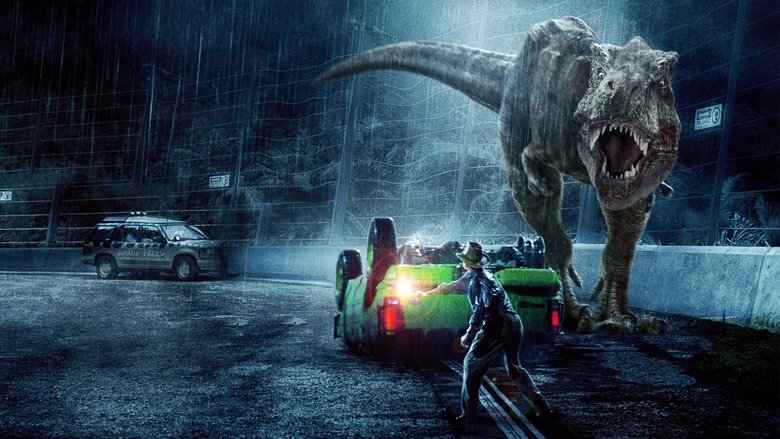
The T. rex's breakout from its paddock is a pivotal, terrifying set piece. It hunts the main characters throughout the film. In the climactic scene, it storms into the visitor center and battles the velociraptors, inadvertently allowing the human survivors to escape.
Velociraptors
The Velociraptors symbolize manufactured, intelligent horror. Unlike the more instinct-driven T. rex, the raptors are depicted as cunning, collaborative hunters who can problem-solve (like opening doors). They represent the specific, unforeseen consequences of genetic engineering—a creation that is not just powerful, but terrifyingly smart.
Dr. Grant describes their hunting tactics early in the film, establishing their threat. They are kept in a high-security enclosure. Later, they escape and hunt the characters through the visitor center, most notably in the tense kitchen scene with the children.
Philosophical Questions
Should humanity have the right to 'play God' by resurrecting extinct species?
The film explores this question through the character of Ian Malcolm, who argues that just because we have the technological capability to do something doesn't mean we have the moral right to do it. John Hammond represents the opposing view, believing that his creation is a gift to the world. The catastrophic failure of the park serves as the film's primary argument against such hubris, suggesting that de-extinction is a violation of the natural order with unpredictable and dangerous consequences.
Can nature truly be controlled by technology?
"Jurassic Park" consistently argues that it cannot. The entire park is a monument to the idea of technological control, with its electric fences, automated systems, and genetic manipulation designed to create an all-female population. However, every system fails. The power grid is shut down, the dinosaurs prove they can breed, and their behavior remains wildly unpredictable. The film uses Chaos Theory, as explained by Malcolm, to posit that complex natural systems have too many variables to ever be fully controlled or predicted by human intervention.
What is the ethical responsibility of scientists for their creations?
The film presents a case study in scientific responsibility. The geneticists at InGen, particularly Dr. Wu, are so focused on the technical achievement of cloning dinosaurs that they overlook the ethical implications and the potential for disaster. The film suggests that scientific advancement must be tempered with foresight, humility, and a deep consideration of the potential consequences. Hammond's eventual remorse shows a dawning awareness of his own failure in this responsibility.
Core Meaning
The central message of "Jurassic Park" is a cautionary tale about the dangers of unchecked scientific ambition and the arrogance of humanity's attempts to control nature. Dr. Ian Malcolm's recurring warning, "Your scientists were so preoccupied with whether or not they could, they didn't stop to think if they should," encapsulates the film's core meaning. The film critiques the hubris of assuming that complex natural systems can be fully understood and contained for profit or entertainment. It explores the idea that nature is inherently unpredictable and will always resist human control, a concept Malcolm refers to as Chaos Theory. Ultimately, the film suggests that some scientific frontiers are best left unexplored and that humanity must approach nature with humility and respect, rather than attempting to dominate and commercialize it.