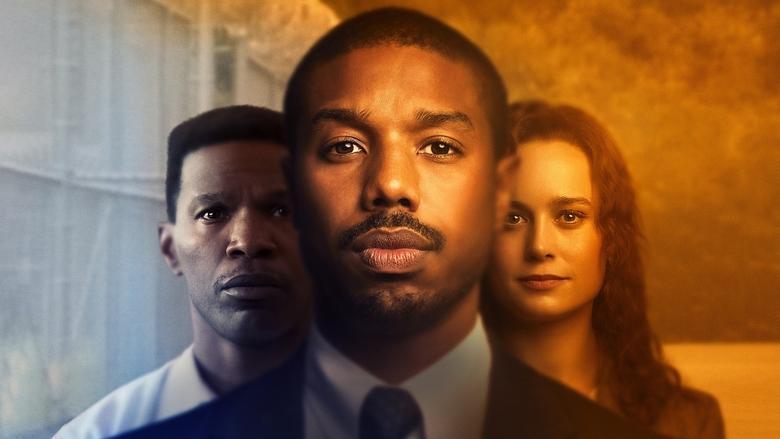
Just Mercy
A somber, powerful drama where the crushing weight of systemic injustice is met with the unwavering light of hope, visualized as a single candle flickering defiantly in a vast, dark cavern.
Just Mercy
Just Mercy

"Every generation has its hero. Meet ours."

25 December 2019 United States of America 137 min ⭐ 7.9 (2,394)
Director: Destin Daniel Cretton
Cast: Michael B. Jordan, Brie Larson, Jamie Foxx, O'Shea Jackson Jr., Rafe Spall
Drama Crime History
Systemic Racism and Injustice The Morality of Capital Punishment Hope vs. Hopelessness The Importance of Proximity and Empathy
Budget: $25,000,000
Box Office: $50,401,502

Just Mercy - Ending Explained

⚠️ Spoiler Analysis

The plot of "Just Mercy" follows Bryan Stevenson's relentless efforts to prove Walter McMillian's innocence. A key turning point is when Stevenson convinces the state's key witness, Ralph Myers, to recant his testimony. Myers reveals on the stand that he was coerced by law enforcement, who threatened him with the death penalty if he didn't implicate McMillian. Despite this dramatic recantation and testimony from dozens of alibi witnesses, the local judge refuses to grant McMillian a new trial, a devastating setback that highlights the depth of the systemic corruption.

Undeterred, Stevenson takes two crucial steps. First, he appears on the television news program 60 Minutes to bring national attention to the case, successfully shifting public opinion. Second, he appeals the decision to the Alabama Supreme Court. The higher court overturns the local ruling and grants McMillian a new trial. In the film's climax, Stevenson presents a motion to the new District Attorney, Tommy Chapman (Rafe Spall), to dismiss all charges. After a tense confrontation where Stevenson appeals to Chapman's conscience, Chapman joins the motion in court. The judge dismisses the case, and Walter McMillian is finally exonerated and walks free after six years on death row.

The ending titles provide crucial context: Stevenson and Eva Ansley continue their work with the Equal Justice Initiative, having saved over 140 individuals from death sentences. Walter McMillian remained friends with Stevenson but suffered from trauma-induced dementia until his death in 2013. The case of Ronda Morrison's murder was never officially solved. A final, chilling statistic reveals that for every nine people executed in the United States, one person on death row has been found to be innocent.

Alternative Interpretations

While "Just Mercy" is largely a straightforward, fact-based narrative, some critical analysis has offered alternative perspectives on its cinematic choices. One interpretation is that by adhering to the conventions of the inspirational legal drama, the film softens the true horror and systemic rot it seeks to expose. Some critics argue that the ultimately hopeful ending, where a good man's tireless work triumphs over a corrupt system, could inadvertently suggest that the system is fixable with enough individual effort, rather than being fundamentally broken. This perspective suggests the film's message is that the system has inequities but contains checks and balances that can correct them, which might be a less radical critique than the one offered in Stevenson's book.

Another interpretation focuses on the dramatization of certain events. For instance, the tense courtroom scene where the judge denies McMillian's petition never happened in that way; the decision was simply faxed to Stevenson's office. While these changes create cinematic tension, some argue they miss the more mundane, bureaucratic, and insidious nature of the injustice Stevenson describes in his memoir. This reading suggests the film prioritizes emotional beats over a more nuanced depiction of the relentless, often undramatic, grind of fighting a deeply entrenched system.