Just Mercy
A somber, powerful drama where the crushing weight of systemic injustice is met with the unwavering light of hope, visualized as a single candle flickering defiantly in a vast, dark cavern.
Just Mercy

Just Mercy

"Every generation has its hero. Meet ours."

25 December 2019 United States of America 137 min ⭐ 7.9 (2,394)
Director: Destin Daniel Cretton
Cast: Michael B. Jordan, Brie Larson, Jamie Foxx, O'Shea Jackson Jr., Rafe Spall
Drama Crime History
Systemic Racism and Injustice The Morality of Capital Punishment Hope vs. Hopelessness The Importance of Proximity and Empathy
Budget: $25,000,000
Box Office: $50,401,502

Overview

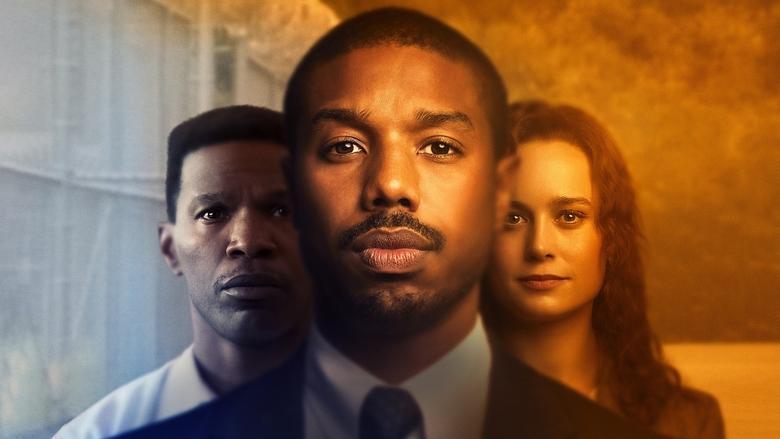
Based on the powerful true story, "Just Mercy" follows young, idealistic lawyer Bryan Stevenson (Michael B. Jordan) after he graduates from Harvard and heads to Alabama in the late 1980s. Foregoing lucrative career paths, he establishes the Equal Justice Initiative with the help of local advocate Eva Ansley (Brie Larson). Their mission is to provide legal representation to death row inmates who have been denied fair treatment, many of whom were condemned without adequate legal help.

Stevenson's focus soon narrows to the case of Walter "Johnny D." McMillian (Jamie Foxx), a Black man sentenced to die for the murder of a white teenage girl, despite a complete lack of physical evidence and an airtight alibi placing him at a church fish fry with dozens of witnesses. As Stevenson delves into the case, he uncovers a web of coerced testimony, withheld evidence, and overt racism within the local law enforcement and judicial system. He faces immense resistance, hostility, and threats from a community and a legal system determined to uphold McMillian's conviction, forcing him to navigate a perilous battle for justice against overwhelming odds.
Core Meaning

The core message of "Just Mercy" is a profound exploration of the deep-seated flaws and racial biases within the American criminal justice system, particularly concerning capital punishment. Director Destin Daniel Cretton, adapting Bryan Stevenson's memoir, aimed to expose the humanity of those condemned and challenge the notion that people are disposable. The film argues that justice is not merely about punishing the guilty but is fundamentally about protecting the innocent and offering mercy. It carries a powerful message about hope, perseverance, and the moral imperative to fight against injustice, even when the system seems designed to crush dissent. The central idea is encapsulated in Stevenson's belief that "each of us is more than the worst thing we've ever done" and that true character is measured by how we treat the poor, the disfavored, and the condemned.

Thematic DNA

Systemic Racism and Injustice 35%
The Morality of Capital Punishment 30%
Hope vs. Hopelessness 20%
The Importance of Proximity and Empathy 15%

Systemic Racism and Injustice

This is the central theme of the film, illustrated through the wrongful conviction of Walter McMillian. The narrative shows how racial prejudice infects every level of the justice system, from Sheriff Tom Tate's initial targeting of McMillian due to his affair with a white woman, to the coerced testimony, the overwhelmingly white jury, and the judicial indifference to clear evidence of innocence. The film portrays a system where a Black man is "guilty from the moment you're born," making his fight for freedom a battle against deeply ingrained societal biases.

The Morality of Capital Punishment

"Just Mercy" critically examines the death penalty, not just through the lens of wrongful convictions but also through its inherent inhumanity. The character of Herbert Richardson (Rob Morgan), a Vietnam veteran with severe PTSD who is executed despite his remorse and mental health issues, forces the audience to confront the ethical complexities of state-sanctioned killing. The film depicts the cold, procedural nature of execution and the immense psychological toll it takes on inmates and those, like Stevenson, who fight to prevent it. The final title card, stating that for every nine people executed, one on death row has been exonerated, drives this theme home with a chilling statistic.

Hope vs. Hopelessness

The film presents a constant struggle between despair and hope. The inmates, particularly McMillian initially, are steeped in a sense of hopelessness, believing the system is too corrupt to beat. Bryan Stevenson embodies the opposing force of hope, believing that with persistence, empathy, and truth, justice is attainable. His unwavering commitment, even after devastating setbacks like losing Herbert Richardson's case and having McMillian's initial appeal denied, demonstrates the theme that, as Stevenson's book puts it, "hopelessness is the enemy of justice."

The Importance of Proximity and Empathy

A key idea, drawn directly from Bryan Stevenson's philosophy, is that one cannot understand important things from a distance; you have to "get close." The film shows Stevenson doing just that—he doesn't just review case files, he builds relationships with his clients and their families. This proximity fosters the empathy needed to fight for them. This is also shown when a prison guard's prejudice towards an inmate softens after he learns of their shared traumatic experiences in the foster care system, symbolizing the power of understanding through closeness.

Character Analysis

Bryan Stevenson

Michael B. Jordan

Archetype: The Idealistic Hero/Crusader
Key Trait: Unwavering Hope

Motivation

Stevenson is motivated by a fundamental belief in justice, equality, and the inherent worth of every individual. He is driven by his mother's teaching to "fight for the people who need the help the most" and a conviction that the opposite of poverty is not wealth, but justice. His goal is not just to win cases but to challenge and reform a broken system.

Character Arc

Bryan begins as a young, Harvard-educated lawyer, driven by a deep sense of purpose but perhaps naive about the depth of the systemic resistance he will face in Alabama. He is initially met with skepticism from his clients and outright hostility from the legal establishment. Through immense perseverance, devastating losses, and small victories, his idealism is tempered by hard-won experience. He transforms from a determined newcomer into a seasoned and nationally recognized advocate for justice, never losing his core belief in humanity and mercy.

Walter 'Johnny D.' McMillian

Jamie Foxx

Archetype: The Wronged Man/The Victim
Key Trait: Resilient Dignity

Motivation

Initially, Walter's motivation is simple survival. As the film progresses, his primary motivation becomes the desire to prove his innocence and reclaim his life and reputation for himself and his family. He wants to restore the truth of who he is, a truth that was stolen from him by a corrupt system.

Character Arc

When we first meet Walter, he is a man broken by the system, filled with despair and resignation after being wrongfully convicted. He is initially cynical and reluctant to trust Bryan, having been failed by the justice system so completely. As Bryan tirelessly works on his case and uncovers new evidence, Walter's hope is gradually rekindled. His journey is one of reclaiming his dignity and voice, culminating in his emotional release and transformation into an advocate who testifies alongside Bryan.

Eva Ansley

Brie Larson

Archetype: The Ally/The Steadfast Supporter
Key Trait: Fearless Resolve

Motivation

Eva is motivated by a fierce sense of what is right and a deep-seated opposition to the injustices she witnesses in her community. She provides the crucial local support and administrative backbone that allows Bryan to focus on the legal battles, driven by the shared goal of fighting for the condemned and wrongfully convicted.

Character Arc

Eva Ansley is presented as a strong, determined local advocate from the very beginning. Her character arc is less about internal change and more about demonstrating steadfast resolve in the face of escalating threats. She co-founds the Equal Justice Initiative with Bryan and manages its operations. When faced with bomb threats and community hostility, her resolve only hardens, showing her unwavering commitment to the cause.

Ralph Myers

Tim Blake Nelson

Archetype: The Reluctant Witness
Key Trait: Haunted

Motivation

Myers is initially motivated by self-preservation. He was coerced by police into lying with the threat of the death penalty. His motivation shifts to a desire for redemption and to clear his conscience after being confronted by Bryan with the truth and the impact his lies have had on Walter's family.

Character Arc

Ralph Myers is introduced as the key witness whose false testimony convicted Walter McMillian. He is a career criminal, physically and emotionally scarred, and initially hostile towards Bryan. His arc is one of redemption. Terrified of the authorities who coerced him, he eventually finds the courage to recant his testimony on the stand, driven by a guilty conscience. This act of bravery is a pivotal turning point in the fight for Walter's freedom, showing that even those broken by the system can find a path to truth.

Symbols & Motifs

The Courtroom

Meaning:

The courtroom is traditionally a symbol of justice and fairness. In "Just Mercy," it is initially portrayed as a space of profound injustice, where truth is ignored, and prejudice presides. Over the course of the film, as Bryan Stevenson fights for Walter McMillian, it transforms into a battleground where justice can, with immense effort, be reclaimed.

Context:

This is seen in the stark contrast between McMillian's initial, sham trial (which lasted only a day and a half) and the later hearings where Stevenson presents overwhelming evidence of his innocence. The final scene in the Alabama Supreme Court represents the ultimate reclamation of the courtroom as a place of justice, where the charges are finally dismissed.

The Electric Chair ('Yellow Mama')

Meaning:

The electric chair, nicknamed 'Yellow Mama' at Holman Prison, is a grim and constant symbol of the state's power over life and death and the ever-present fear the inmates live with. It represents the finality and brutality of capital punishment, a system the film argues is deeply flawed and inhumane.

Context:

The chair's presence is felt throughout the film, particularly during the sequence leading up to Herbert Richardson's execution. The sounds of its preparation and the inmates' reactions—clanging their cups on the bars in solidarity—highlight its terrifying reality. Ralph Myers is also coerced into testifying after being placed on death row for an evening and smelling the burning flesh from an execution.

Hymns and Gospel Music

Meaning:

The use of hymns and spiritual songs symbolizes hope, faith, and the shared humanity of the condemned men. It provides a source of solace and spiritual resistance in the face of despair, connecting the men to their cultural roots and a sense of grace amidst profound injustice.

Context:

Herbert Richardson requests that the hymn "The Old Rugged Cross" be played during his execution. In another scene, the men on death row can hear another inmate singing a hymn, a moment of shared, somber community. The music often contrasts with the grim reality of the prison, highlighting the resilience of the human spirit.

Memorable Quotes

Each of us is more than the worst thing we've ever done.

— Bryan Stevenson

Context:

This idea is woven throughout Bryan's work and his arguments. It is the philosophical foundation for why he defends people on death row, believing in their capacity for more than just the crime they are accused or convicted of.

Meaning:

This quote, a core tenet of the real Bryan Stevenson's philosophy, encapsulates the film's central message of mercy and redemption. It argues for a justice system that recognizes the complexity of human beings rather than defining them solely by their worst actions, advocating for compassion over condemnation.

The true measure of our character is how we treat the poor, the disfavored, the accused, the incarcerated, and the condemned.

— Bryan Stevenson

Context:

This is a guiding principle for Bryan throughout the film. He repeats variations of this idea to explain why he has chosen to dedicate his life to defending death row inmates in Alabama, a deeply unpopular and dangerous job.

Meaning:

This quote challenges society to look at its most vulnerable members as a reflection of its own morality. It posits that a society's commitment to justice and fairness is not judged by how it treats the powerful and privileged, but by how it treats those on the margins.

I feel like they done put me on death row, too.

— Minnie McMillian (Walter's wife)

Context:

Minnie says this to Bryan during a conversation about the toll her husband's imprisonment has taken on their family and community. She is expressing the deep, shared suffering and the feeling of being condemned alongside Walter.

Meaning:

This line powerfully illustrates the ripple effect of wrongful conviction. It shows that the injustice done to one person extends outward, effectively imprisoning their entire family in a state of pain, fear, and helplessness. It highlights the immense emotional and societal cost of a failed justice system.

You're guilty from the moment you're born.

— Walter McMillian

Context:

Walter says this to Bryan early in their relationship, explaining his cynicism and initial refusal to accept Bryan's help. It's a summary of his life experience with a justice system that has always been prejudiced against him.

Meaning:

This quote is a stark and painful expression of the reality of systemic racism in the Deep South. It conveys Walter's profound sense of hopelessness and his understanding that, for a Black man in his society, the presumption of innocence is a myth.

Philosophical Questions

What is the true meaning of justice, and can it exist without mercy?

The film consistently explores the relationship between justice and mercy. It questions a purely retributive form of justice that focuses only on punishment. Through Bryan Stevenson's work, the film argues that a higher form of justice must include compassion, understanding, and mercy. The case of Herbert Richardson, a mentally ill veteran who is executed, pushes this question to the forefront: even for the guilty, is the ultimate punishment just? The film suggests that true justice is restorative and recognizes shared human brokenness.

If a legal system is systemically flawed, can individual acts of integrity correct it?

"Just Mercy" champions the power of an individual, Bryan Stevenson, to effect change within a corrupt system. His victory in freeing Walter McMillian is a testament to perseverance and moral courage. However, the film also shows the immense, almost insurmountable, barriers he faces, from racist sheriffs to indifferent judges. This raises the question of whether one good lawyer is an exception or a solution. The epilogue, noting that EJI has saved over 140 people from the death penalty, suggests individual action is vital, but the statistic that 1 in 9 on death row are innocent implies the systemic problem is vast and requires more than just a few heroic individuals to fix.

How does a society's character reflect in its treatment of its most vulnerable members?

The film directly poses this question through Stevenson's quote: "The true measure of our character is how we treat the poor, the disfavored, the accused..." It portrays a society (1980s Alabama) that is deeply flawed because it marginalizes, condemns, and brutalizes its Black and poor citizens. The rampant injustice in Walter McMillian's case is presented not as an anomaly, but as a direct reflection of the community's character and values at the time. The film challenges the audience to apply this same metric to contemporary society.

Alternative Interpretations

While "Just Mercy" is largely a straightforward, fact-based narrative, some critical analysis has offered alternative perspectives on its cinematic choices. One interpretation is that by adhering to the conventions of the inspirational legal drama, the film softens the true horror and systemic rot it seeks to expose. Some critics argue that the ultimately hopeful ending, where a good man's tireless work triumphs over a corrupt system, could inadvertently suggest that the system is fixable with enough individual effort, rather than being fundamentally broken. This perspective suggests the film's message is that the system has inequities but contains checks and balances that can correct them, which might be a less radical critique than the one offered in Stevenson's book.

Another interpretation focuses on the dramatization of certain events. For instance, the tense courtroom scene where the judge denies McMillian's petition never happened in that way; the decision was simply faxed to Stevenson's office. While these changes create cinematic tension, some argue they miss the more mundane, bureaucratic, and insidious nature of the injustice Stevenson describes in his memoir. This reading suggests the film prioritizes emotional beats over a more nuanced depiction of the relentless, often undramatic, grind of fighting a deeply entrenched system.

Cultural Impact

"Just Mercy" was released at a time of heightened national conversation about racial injustice and criminal justice reform in the United States. Based on Bryan Stevenson's acclaimed memoir, the film served as a powerful, mainstream vehicle to educate a broad audience about the realities of wrongful convictions, the racial bias inherent in the justice system, and the moral failings of capital punishment. Its impact was significant in humanizing statistics and legal arguments, putting a face to the names of those affected by systemic failures.

Critically, the film received positive reviews for its powerful performances and steady direction, though some critics found it followed a conventional legal drama formula. However, its reception from audiences was overwhelmingly positive, earning an A+ CinemaScore, a testament to its emotional resonance. The film's release brought renewed attention to the work of the real Equal Justice Initiative (EJI), boosting awareness and support for the organization's ongoing fight against injustice. Celebrities like Kim Kardashian and Common sponsored free screenings to amplify its message. In the broader culture, "Just Mercy" became a touchstone in discussions following the events of 2020, serving as an accessible and moving entry point for understanding the long history of racial inequality in America's legal institutions.

Audience Reception

Audiences reacted to "Just Mercy" with overwhelming positivity and profound emotion. The film earned a rare A+ CinemaScore, an rating based on polling opening-night moviegoers, which indicates exceptional audience approval. On Rotten Tomatoes, the audience score stands at a near-perfect 99%. Viewers praised the powerful and moving performances by Michael B. Jordan and Jamie Foxx, the importance of the story, and its emotional impact. Many reviewers on platforms like IMDb and social media described the film as "heart-wrenching," "inspiring," and "a must-see." Audiences were frequently shocked and angered by the blatant injustice depicted, particularly the statistic revealed at the end about the rate of exonerations from death row. While a few found the pacing slow or the tone overly earnest, the vast majority lauded the film as a vital and eye-opening piece of cinema that sparked important conversations about the American justice system.

Interesting Facts

  • The film is based on the bestselling 2014 memoir of the same name by the real Bryan Stevenson.
  • Jamie Foxx, who plays Walter McMillian, drew on personal experience for the role; his own father was jailed for seven years for a minor, non-violent drug offense.
  • Michael B. Jordan, who was also a producer on the film, implemented an "inclusion rider" for the production, mandating diversity in hiring for the cast and crew.
  • The real Bryan Stevenson and his organization, the Equal Justice Initiative (EJI), worked closely with the filmmakers to ensure the story's accuracy.
  • Brie Larson took the supporting role of Eva Ansley out of loyalty to director Destin Daniel Cretton, who had given her a breakout role in his 2013 film "Short Term 12." The real Eva Ansley called Larson her "kindred spirit" after they spoke.
  • The film's events take place in Monroeville, Alabama, which is, ironically, the hometown of "To Kill a Mockingbird" author Harper Lee.
  • The film received a rare A+ CinemaScore from audiences upon its release, indicating exceptionally positive public reception.
  • Tim Blake Nelson's physical appearance as Ralph Myers, including facial scars, was meticulously designed to resemble the real Myers, who was injured in a childhood fire.

⚠️ Spoiler Analysis

Click to reveal detailed analysis with spoilers

Frequently Asked Questions

Explore More About This Movie

Dive deeper into specific aspects of the movie with our detailed analysis pages

Comments (0)

Leave a comment

No comments yet. Be the first to share your thoughts!