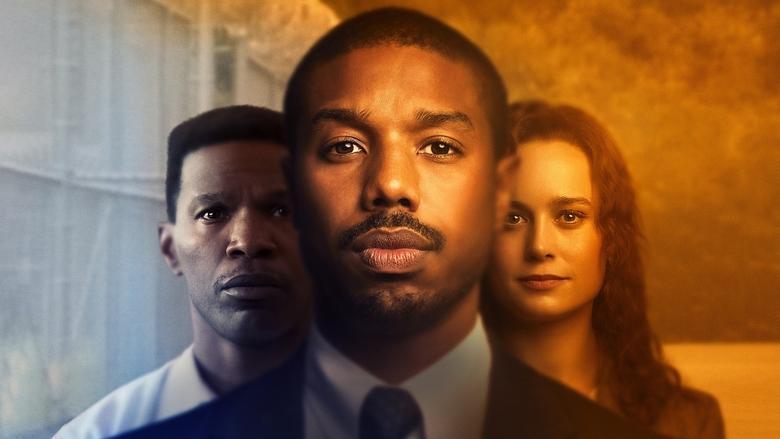

"Every generation has its hero. Meet ours."
Just Mercy - Symbolism & Philosophy
Symbols & Motifs
The Courtroom
The courtroom is traditionally a symbol of justice and fairness. In "Just Mercy," it is initially portrayed as a space of profound injustice, where truth is ignored, and prejudice presides. Over the course of the film, as Bryan Stevenson fights for Walter McMillian, it transforms into a battleground where justice can, with immense effort, be reclaimed.
This is seen in the stark contrast between McMillian's initial, sham trial (which lasted only a day and a half) and the later hearings where Stevenson presents overwhelming evidence of his innocence. The final scene in the Alabama Supreme Court represents the ultimate reclamation of the courtroom as a place of justice, where the charges are finally dismissed.
The Electric Chair ('Yellow Mama')
The electric chair, nicknamed 'Yellow Mama' at Holman Prison, is a grim and constant symbol of the state's power over life and death and the ever-present fear the inmates live with. It represents the finality and brutality of capital punishment, a system the film argues is deeply flawed and inhumane.
The chair's presence is felt throughout the film, particularly during the sequence leading up to Herbert Richardson's execution. The sounds of its preparation and the inmates' reactions—clanging their cups on the bars in solidarity—highlight its terrifying reality. Ralph Myers is also coerced into testifying after being placed on death row for an evening and smelling the burning flesh from an execution.
Hymns and Gospel Music
The use of hymns and spiritual songs symbolizes hope, faith, and the shared humanity of the condemned men. It provides a source of solace and spiritual resistance in the face of despair, connecting the men to their cultural roots and a sense of grace amidst profound injustice.
Herbert Richardson requests that the hymn "The Old Rugged Cross" be played during his execution. In another scene, the men on death row can hear another inmate singing a hymn, a moment of shared, somber community. The music often contrasts with the grim reality of the prison, highlighting the resilience of the human spirit.
Philosophical Questions
What is the true meaning of justice, and can it exist without mercy?
The film consistently explores the relationship between justice and mercy. It questions a purely retributive form of justice that focuses only on punishment. Through Bryan Stevenson's work, the film argues that a higher form of justice must include compassion, understanding, and mercy. The case of Herbert Richardson, a mentally ill veteran who is executed, pushes this question to the forefront: even for the guilty, is the ultimate punishment just? The film suggests that true justice is restorative and recognizes shared human brokenness.
If a legal system is systemically flawed, can individual acts of integrity correct it?
"Just Mercy" champions the power of an individual, Bryan Stevenson, to effect change within a corrupt system. His victory in freeing Walter McMillian is a testament to perseverance and moral courage. However, the film also shows the immense, almost insurmountable, barriers he faces, from racist sheriffs to indifferent judges. This raises the question of whether one good lawyer is an exception or a solution. The epilogue, noting that EJI has saved over 140 people from the death penalty, suggests individual action is vital, but the statistic that 1 in 9 on death row are innocent implies the systemic problem is vast and requires more than just a few heroic individuals to fix.
How does a society's character reflect in its treatment of its most vulnerable members?
The film directly poses this question through Stevenson's quote: "The true measure of our character is how we treat the poor, the disfavored, the accused..." It portrays a society (1980s Alabama) that is deeply flawed because it marginalizes, condemns, and brutalizes its Black and poor citizens. The rampant injustice in Walter McMillian's case is presented not as an anomaly, but as a direct reflection of the community's character and values at the time. The film challenges the audience to apply this same metric to contemporary society.
Core Meaning
The core message of "Just Mercy" is a profound exploration of the deep-seated flaws and racial biases within the American criminal justice system, particularly concerning capital punishment. Director Destin Daniel Cretton, adapting Bryan Stevenson's memoir, aimed to expose the humanity of those condemned and challenge the notion that people are disposable. The film argues that justice is not merely about punishing the guilty but is fundamentally about protecting the innocent and offering mercy. It carries a powerful message about hope, perseverance, and the moral imperative to fight against injustice, even when the system seems designed to crush dissent. The central idea is encapsulated in Stevenson's belief that "each of us is more than the worst thing we've ever done" and that true character is measured by how we treat the poor, the disfavored, and the condemned.