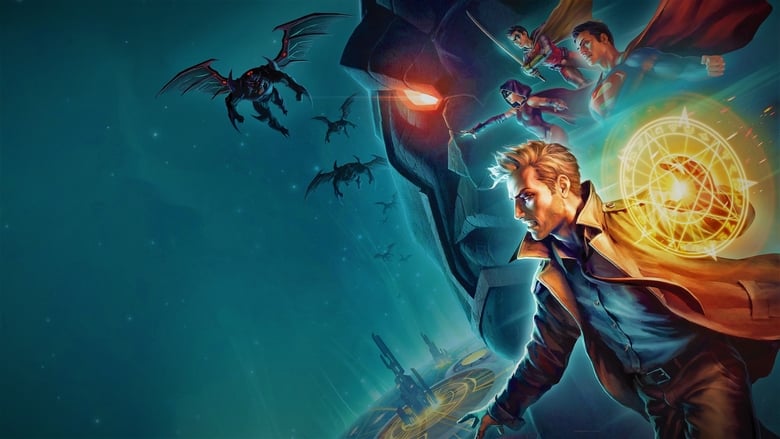
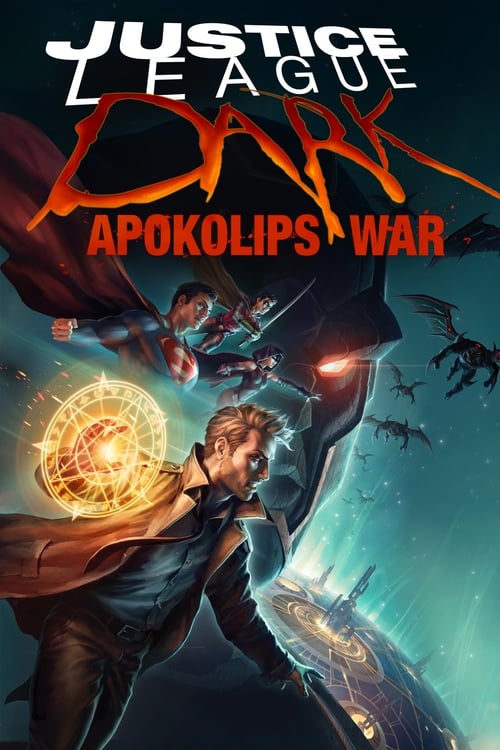
The central twist of Justice League Dark: Apokolips War is the utter and complete failure of the heroes' initial assault on Apokolips. The film opens with what appears to be a standard superhero plan, but it is revealed that Darkseid, through Cyborg's compromised systems, knew they were coming and had prepared an army of 'Paradooms' (hybrids of Parademons and Doomsday). This leads to the swift and brutal slaughter or enslavement of most of the Justice League and Teen Titans, setting the stage for the two-year time jump into a post-apocalyptic world. Key heroes like Wonder Woman, Martian Manhunter, Mera, and Hawkman are captured and transformed into cybernetic Furies, while Batman is psychologically broken and fused to the Mobius Chair to serve as Darkseid's strategist.
A crucial mid-film revelation is that the power source for Apokolips is a captive Barry Allen, forced to run on a cosmic treadmill, perpetually feeding the planet's energy needs. Another significant twist comes when it's revealed that John Constantine's apparent cowardice in the initial battle was not his choice; Zatanna, at Batman's behest as part of a contingency plan, cast a compulsion spell on him to flee and survive, ensuring a powerful magic user would be left on Earth.
The climax is a cascade of devastating turns. Damian Wayne dies saving his father from Darkseid's Omega Beams, an act that finally breaks Batman's conditioning. Damian's death unleashes Raven's full power, which she uses to resurrect him, transforming into her more powerful White Raven persona. Lois Lane sacrifices herself by detonating LexCorp Tower to destroy the Paradooms on Earth; her final message to Superman is what breaks him free from Trigon's possession. The ultimate resolution is not a clean victory. After Cyborg sacrifices himself to boom tube Apokolips, Darkseid, and Trigon into a void, Batman reveals that the planet's core has been drained by Darkseid's machines, and billions are still doomed to die. This leads to the final, reality-altering twist: Constantine convinces The Flash to run back in time and create another 'Flashpoint,' erasing their entire timeline in the hope that a new one will be better. The film ends as a white light consumes the surviving heroes, resetting the entire 15-movie universe.