Justice League Dark: Apokolips War
"The war to end all wars."
Overview
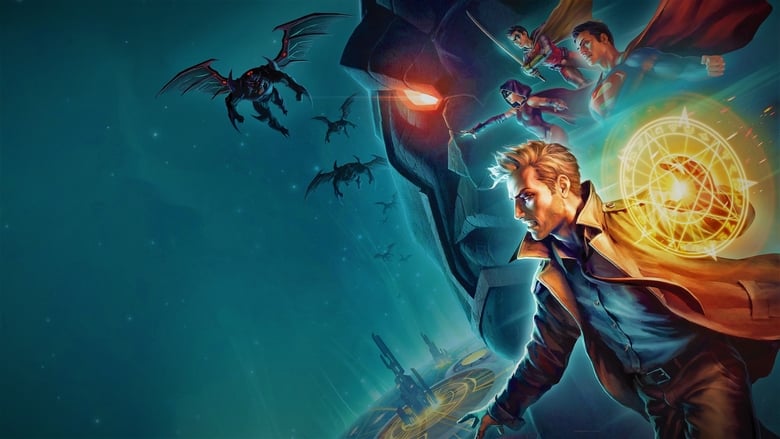
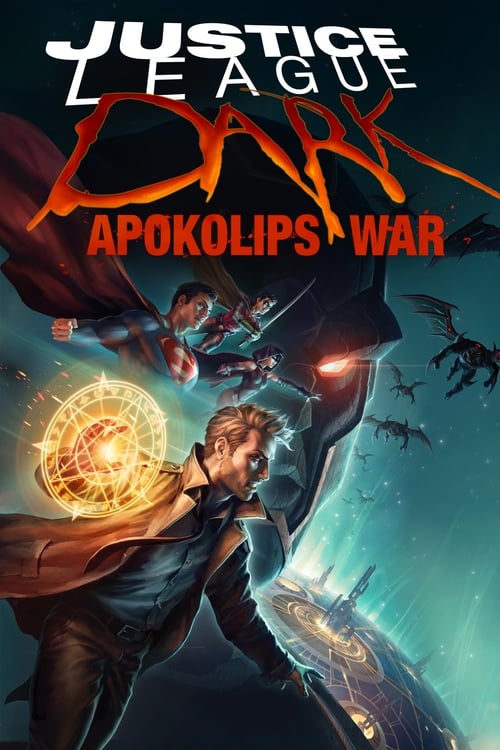
Serving as the finale to the DC Animated Movie Universe, Justice League Dark: Apokolips War picks up with the Justice League launching a preemptive strike against the tyrannical Darkseid on his homeworld of Apokolips. The attack proves to be a catastrophic failure, as Darkseid was aware of their plan and decimates Earth's heroes. The film then jumps forward two years to a desolate, conquered Earth, where the remaining heroes are scattered, broken, or have been twisted into monstrous versions of their former selves serving Darkseid.
A depowered Superman, haunted by his failure, bands together with Raven and John Constantine to assemble a ragtag team of surviving heroes and villains for one last, desperate mission to save what's left of humanity. This final, brutal assault on Apokolips forces alliances between unlikely characters and pushes every survivor to their absolute limit, leading to a conclusion that reshapes their entire reality.
Core Meaning
The core meaning of Justice League Dark: Apokolips War revolves around the immense cost of both failure and victory, and the difficult, often devastating choices that must be made in the face of insurmountable odds. The film deconstructs the traditional invincibility of its heroes, forcing them to confront their limitations, guilt, and the catastrophic consequences of their decisions. It posits that even in the bleakest of circumstances, hope and the will to fight for a better future, however slim the chance, are essential. Ultimately, the film's message is that sometimes, a reset is necessary, a 'Flashpoint' that, while erasing the past, provides a chance for a new beginning, even if it comes at a great personal cost and with no guarantee of a perfect outcome. It's a somber acknowledgment that some wars leave scars so deep that the only way forward is to start over.
Thematic DNA
The Nature of Hope in Despair
The film relentlessly strips away the heroes' powers, allies, and even their world, plunging them into a seemingly hopeless dystopia. Yet, the narrative is driven by a flicker of hope. Superman, despite being depowered and guilt-ridden, initiates the final mission. This theme is explored through the characters' refusal to surrender completely, even when facing certain death. The final decision to reset the timeline is the ultimate act of hope: sacrificing their reality for the *possibility* of a better one, even with no guarantees.
The Weight of Failure and Redemption
Every major character is burdened by past failures. Superman's failed invasion is the catalyst for the entire apocalyptic scenario. John Constantine is haunted by his decision to flee the initial battle, abandoning Zatanna. The character arcs are centered around their attempts at redemption. Constantine's journey from a self-serving cynic to someone willing to make the ultimate sacrifice is central. Batman's redemption comes after being freed from Darkseid's control and witnessing Damian's sacrifice.
Sacrifice and Loss
The film is defined by its staggering body count and the sacrifices made by its characters. Numerous heroes die brutally and unceremoniously, emphasizing the grim reality of the war. Key moments of sacrifice include Lois Lane's self-destruction to break Trigon's hold on Superman, Cyborg's integration with Apokolips to defeat Darkseid, and Damian Wayne's death to save his father. The entire resolution of the film is predicated on the ultimate sacrifice: erasing their own existence for a new timeline.
The Corrupting Influence of Power
Darkseid represents the ultimate corrupting power, not just through his physical might but his ability to break and reshape heroes into his servants, such as Batman and the other Furies. On the other side, the film explores the corrupting nature of demonic power through Raven's struggle to contain her father, Trigon. Trigon's eventual possession of Superman showcases how even the most virtuous can be twisted by overwhelming power.
Character Analysis
John Constantine
Matt Ryan
Motivation
Primarily driven by his love for Zatanna and the immense guilt he feels for leaving her behind. This personal motivation evolves into a broader responsibility to save what's left of the world, culminating in his decision to convince Barry to reset everything.
Character Arc
Constantine begins the film as a drunken, guilt-ridden recluse, having fled the initial battle on Apokolips at Zatanna's magically-coerced behest. Initially reluctant, he is drawn back into the fight and becomes the strategic, albeit cynical, heart of the resistance. His arc is one of redemption, moving from self-preservation to self-sacrifice. He faces his inner demons, tricks gods, and ultimately makes the difficult choice to advocate for the timeline's erasure, accepting his own non-existence for the greater good.
Superman (Clark Kent)
Jerry O'Connell
Motivation
To atone for his catastrophic failure and save the last vestiges of humanity. His love for Lois Lane serves as his emotional anchor and the catalyst for breaking free from Trigon's control.
Character Arc
Superman starts as a broken man, stripped of his powers and crushed by the failure of his plan that doomed the world. His journey is about rediscovering the hero within, even without his powers. He learns to lead not through might, but through inspiration and unwavering hope. His possession by Trigon represents his ultimate test, but his love for Lois Lane allows him to overcome it and regain his powers, symbolizing that his true strength comes from his humanity.
Raven
Taissa Farmiga
Motivation
To keep her demonic father imprisoned and protect those she loves, especially Damian Wayne. Her motivation shifts from mere containment to mastering her own power for the sake of others.
Character Arc
Raven's arc is a struggle for control over her demonic father, Trigon, who is imprisoned within her. Her emotional state is a constant battle, with Damian Wayne serving as her emotional anchor. Damian's death causes her to lose control and unleash Trigon, but it also paradoxically allows her to ultimately gain control over her own powers, resurrecting Damian and emerging as a more powerful, fully realized White Raven.
Damian Wayne (Robin)
Stuart Allan
Motivation
Initially, a reluctant sense of responsibility for his father. This is deepened by his love for Raven and his desire to prove himself as more than just an assassin's heir. Ultimately, he is motivated by love for his father, leading to his self-sacrifice.
Character Arc
Damian begins as the cynical and detached leader of the League of Assassins. He is drawn back into the conflict out of a sense of duty and his underlying connection to both his father and Raven. His arc is about accepting his role as a hero and embracing his humanity. He sacrifices himself to save his father, a selfless act that breaks through Batman's brainwashing and represents the culmination of his journey from a trained killer to a true hero.
Symbols & Motifs
The Mobius Chair
The Mobius Chair, a device of infinite knowledge, is perverted into a tool of enslavement and control. It symbolizes the corruption of wisdom and truth, as Darkseid uses it not for enlightenment but to turn Batman, a symbol of human intellect and will, into his puppet. Its abandonment after Batman is freed signifies his rejection of this corrupted power.
Batman is shown fused to the Mobius Chair, serving as Darkseid's strategist on Apokolips. He uses it to command Darkseid's forces until Damian's appeal breaks his brainwashing.
Liquid Kryptonite Tattoo
The liquid kryptonite tattoo on Superman's chest is a constant, physical representation of his failure and powerlessness. It's a brand of shame that keeps him grounded and vulnerable, forcing him to lead through character and determination rather than strength. Its removal signifies his rebirth and the return of hope.
Darkseid has Superman tattooed with liquid kryptonite after the initial failed invasion, stripping him of his powers for two years. The kryptonite is only burned out of his system when he is possessed and then freed from the demonic power of Trigon.
Flashpoint
Flashpoint is not just a plot device but a symbol of the ultimate reset button. It represents the desperate choice of starting over when a situation is beyond repair, acknowledging that the current reality is a failed state. It is a bittersweet symbol of hope, as it erases both the suffering and the survival of the current timeline's heroes.
At the end of the film, with Earth's core destabilized and billions doomed to die, Constantine convinces The Flash to run back in time and create another Flashpoint, resetting the entire DC Animated Movie Universe continuity.
Memorable Quotes
You know what you have to do, mate. Clear the board. Start again.
— John Constantine
Context:
After the final battle, Batman reveals that the Earth's core has been drained, dooming the planet. As the surviving heroes despair, Constantine quietly approaches The Flash with this instruction, initiating the film's 'Flashpoint' ending.
Meaning:
This quote encapsulates the film's grim conclusion and its central theme of necessary sacrifice. It's a moment of profound defeat, acknowledging that their victory over Darkseid is pyrrhic and the world is unsalvageable. Constantine, the ultimate pragmatist, recognizes that the only hope lies in a complete reset, no matter how uncertain the outcome.
Accept the things you cannot change, have the courage to change the things you can, and have the wisdom to know the difference.
— Opening Narration/Serenity Prayer
Context:
This quote is displayed on screen at the very beginning of the film, setting a somber and philosophical tone before the narrative begins.
Meaning:
This opening quote, a variation of the Serenity Prayer, establishes the film's core philosophical conflict. It foreshadows the heroes' initial, hubristic attempt to change what they cannot (Darkseid's might) and their ultimate, courageous decision to change what they can (the timeline itself). It's a thematic bookend for the entire DCAMU, which began with a Flashpoint.
You cost me my father... and my teammates. I won't forgive that.
— Damian Wayne
Context:
Spoken to a depowered Clark Kent when Clark, Raven, and Constantine seek out Damian at the former League of Assassins fortress to recruit him for the final mission.
Meaning:
This line highlights the deep personal cost of Superman's initial failure. It establishes the emotional stakes and the fractured relationships among the survivors. Damian's anger and grief are raw, representing the feelings of all those who lost everything. It also sets up his own arc of moving beyond blame towards heroic action.
Philosophical Questions
Is it justifiable to erase a reality, including its survivors, for the mere possibility of a better one?
The film's entire climax hinges on this question. The heroes win the battle but lose the war, as Earth is doomed. Constantine's proposal to create a new Flashpoint is presented as the only logical choice, but it's a monumental gamble. It forces the characters (and the audience) to weigh the certainty of a broken, dying world against the complete uncertainty of a new one. It delves into utilitarian ethics, questioning whether the potential for a greater good outweighs the sacrifice of the existing reality and the individuals who fought so hard to survive it.
What is the nature of heroism when stripped of power and hope?
The film systematically dismantles its most powerful heroes. Superman is depowered, Batman is brainwashed, and Wonder Woman becomes a mindless cyborg. This forces the narrative to explore what it means to be a hero beyond superpowers. Superman's heroism is redefined through his ability to inspire and lead despite his vulnerability. Constantine's heroism is found in his cynical pragmatism and willingness to make impossible choices. The film suggests that true heroism is not about invincibility, but about the will to fight on after all hope seems lost.
Can a timeline be inherently flawed or 'wrong'?
The film reveals that the entire DCAMU reality was a consequence of the original *Flashpoint*, and this altered timeline is what allowed Darkseid to ultimately triumph. This raises a deterministic question about whether their universe was doomed from its inception. Was the heroes' struggle always fated to end in ruin because of its flawed origins? The decision to reset the timeline is an attempt to correct this fundamental 'error,' exploring the idea that some realities are so fundamentally broken that they cannot be saved, only erased and rewritten.
Alternative Interpretations
While the film's ending is presented as a necessary reset, there are alternative ways to interpret its meaning and implications. One interpretation is that the ending is a critique of cyclical comic book storytelling. The constant reboots and new timelines (like DC's New 52, on which this universe was based) are mirrored in The Flash being forced to 'clear the board' again. It suggests a certain futility, an endless loop of crisis and rebirth where lasting consequences are ultimately erased.
Another perspective views the ending not as a negation of the film's events, but as the ultimate heroic act. The characters, having endured unimaginable trauma, choose to sacrifice their own existence and memories for the mere chance of a better world for others. In this reading, the journey and the development they underwent were real and meaningful, as it led them to a point of profound selflessness. The victory wasn't defeating Darkseid, but choosing hope over their own scarred existence.
A more cynical interpretation suggests that the film proves Darkseid's philosophy of Anti-Life correct. The universe the heroes fought to save was so fundamentally broken and filled with suffering that its only solution was non-existence (via the timeline's erasure). This pessimistic view posits that the heroes didn't achieve a hopeful new beginning, but rather conceded that their reality was an unlivable failure, effectively succumbing to the hopelessness Darkseid represents.
Cultural Impact
Justice League Dark: Apokolips War holds a significant place in the landscape of superhero animation as the definitive and brutal conclusion to the DC Animated Movie Universe (DCAMU), a 15-film saga that began in 2013. Its impact is twofold: it served as a creative and narrative endpoint, while also pushing the boundaries of mainstream American superhero animation in terms of violence and thematic darkness. The film was seen by many as DC's animated answer to Marvel's *Avengers: Endgame*, providing a climactic, high-stakes finale that drew together years of storytelling.
Critically, it was largely praised for its boldness, emotional weight, and willingness to commit to its grim premise, with many reviewers noting that its R-rating was used effectively to underscore the horrors of war. However, it also drew criticism from some viewers for what they perceived as excessive, nihilistic violence and for killing off beloved characters unceremoniously, likening it to 'torture-porn'. The ending, which resets the entire timeline, was polarizing; some saw it as a poignant, bittersweet conclusion that paves the way for a fresh start, while others felt it rendered the sacrifices and struggles of the entire film meaningless. The film's unapologetically dark tone and complex character arcs, particularly for figures like Constantine and a depowered Superman, resonated with audiences craving more mature superhero narratives. It cemented the DC animated films' reputation for taking creative risks that their live-action counterparts often avoided and left a lasting legacy as a bold, if divisive, capstone to a significant era of DC animation.
Audience Reception
Audience reception for Justice League Dark: Apokolips War was generally positive, though deeply polarized. A significant portion of viewers praised the film for its bold, uncompromisingly dark tone and the emotional weight of its story, often calling it a fittingly epic and brutal finale to the DCAMU saga. Many lauded the high stakes, the shocking character deaths, and the focus on less central characters like John Constantine and Raven, who carried much of the film's emotional core. The action sequences and the sheer scale of the conflict were frequently cited as high points.
Conversely, a vocal segment of the audience criticized the film for its bleakness, finding the relentless death and destruction to be gratuitous and nihilistic rather than impactful. The unceremonious deaths of many fan-favorite characters were a common point of contention, with some feeling it disrespected the characters' legacies within the animated universe. The 'Flashpoint' ending was also divisive; while some saw it as a poignant and necessary conclusion, others felt it was a 'cop-out' that rendered the entire film's struggle and sacrifices meaningless. Overall, it was a film that viewers either loved for its audacity and emotional gut-punch or disliked for its perceived cynicism and grimdark tone.
Interesting Facts
- The film serves as the fifteenth and final installment of the DC Animated Movie Universe (DCAMU), a shared continuity that began with 2013's *Justice League: The Flashpoint Paradox*.
- Screenwriter Mairghread Scott revealed the idea for John Constantine and King Shark being ex-lovers came from wanting a humorous twist, where everyone assumes his ex in the Suicide Squad is Harley Quinn, only for it to be King Shark.
- Jason O'Mara voiced Batman in eleven films within this continuity, making his tenure as the animated Dark Knight second in length only to Kevin Conroy.
- The film is a very loose adaptation of several comic storylines, including Geoff Johns' "Darkseid War" and Grant Morrison's "Final Crisis," but tells a largely original story to conclude the DCAMU.
- Tony Todd, famous for his role as Candyman, voices the formidable villain Darkseid.
- Writer Ernie Altbacker admitted he intentionally made Etrigan the Demon stop rhyming to signify the sheer hopelessness of the situation, jokingly referring to him as 'Emo-trigan'.
- The creative team was given no limitations on characters or outcomes, with producer James Tucker's philosophy for ending the continuity being akin to 'a bad tenant being kicked out of the house, he's going to wreck everything'.
Easter Eggs
The Flashpoint Connection
The entire plot is bookended by the concept of 'Flashpoint'. The film's ending directly mirrors the event that started the DCAMU, Justice League: The Flashpoint Paradox, by having The Flash reset the timeline once again. Constantine explicitly blames the first Flashpoint for creating the reality where Darkseid could win.
Harley Quinn's "Yatzee!"
During a fight, Harley Quinn exclaims "Yatzee!", a callback to a line she had in the earlier DCAMU film, *Suicide Squad: Hell to Pay*. This creates a fun, if slightly confusing, moment of continuity.
The Lazarus Pit's Side Effects
Damian reveals he used a Lazarus Pit to resurrect Nightwing, who was subsequently driven insane. This is a direct reference to the consequences of using the pit, as established in previous films in the DCAMU like *Son of Batman* and *Batman: Bad Blood*.
Demonic Superman's Return
When Trigon possesses Superman, his demonic appearance, particularly the four glowing eyes, is a visual callback to when Trigon possessed Superman in the earlier DCAMU film *Justice League vs. Teen Titans*.
Cyborg's Final "Booyah!"
In a dark twist on his classic catchphrase, Cyborg's last words before sacrificing himself and all of Apokolips are "Suck it, bitches," instead of his usual "Booyah!". This highlights the grim and hopeless tone of the film's climax.
⚠️ Spoiler Analysis
Click to reveal detailed analysis with spoilers
Frequently Asked Questions
Explore More About This Movie
Dive deeper into specific aspects of the movie with our detailed analysis pages
Comments (0)
No comments yet. Be the first to share your thoughts!