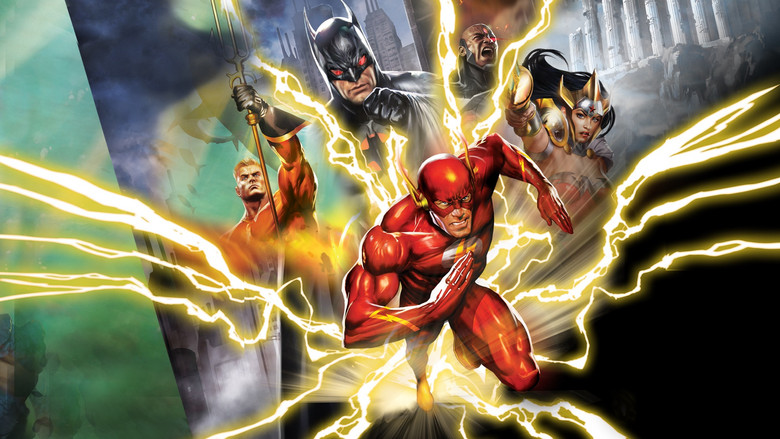
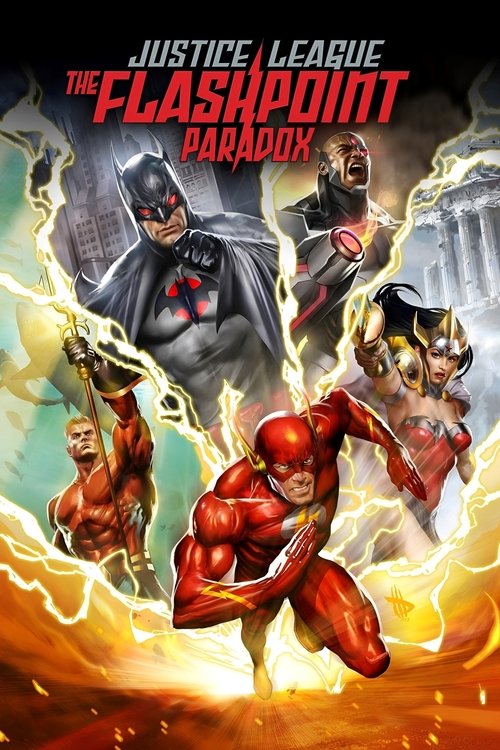
The central twist of Justice League: The Flashpoint Paradox is the revelation that Barry Allen himself, not his nemesis Eobard Thawne (Professor Zoom), is responsible for creating the apocalyptic alternate timeline. Haunted by his mother's death, Barry ran back in time and saved her, an act of selfish love that fractured reality. Thawne merely took advantage of the situation, traveling back to this weakened timeline and acting as a 'living paradox' to keep the Speed Force congested, preventing Barry from easily fixing his mistake.
In this new reality, Bruce Wayne was killed as a child, leading his father, Thomas, to become a brutal, gun-wielding Batman and his mother, Martha, to become the Joker. Superman's ship crashed in Metropolis, and he was immediately taken by the government, growing up as a frail, sun-deprived prisoner. The world-ending war began after an affair between Aquaman and Wonder Woman was discovered by Aquaman's wife, Mera. In the ensuing confrontation, Wonder Woman killed Mera, leading Aquaman to declare war on the Amazons.
The climax sees a massive battle between the forces of Atlantis and Themyscira. Most of the heroes who join the fight are brutally killed. Wonder Woman murders Billy Batson, and Aquaman kills Cyborg. Just as Professor Zoom is about to kill Barry, Thomas Wayne shoots Zoom in the head. Mortally wounded himself, Thomas gives Barry a letter for Bruce and urges him to run. Barry travels back in time and stops his past self from saving their mother, merging three timelines (DC, Wildstorm, Vertigo) and creating a new, slightly altered reality—the 'New 52' universe. The film ends with Barry delivering the emotional letter to Bruce, who is deeply moved by his father's final words.