Justice League: The Flashpoint Paradox
"Fight the future."
Overview
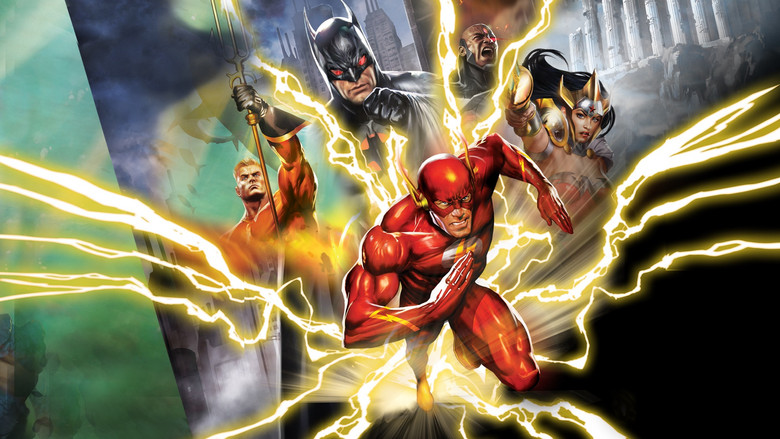
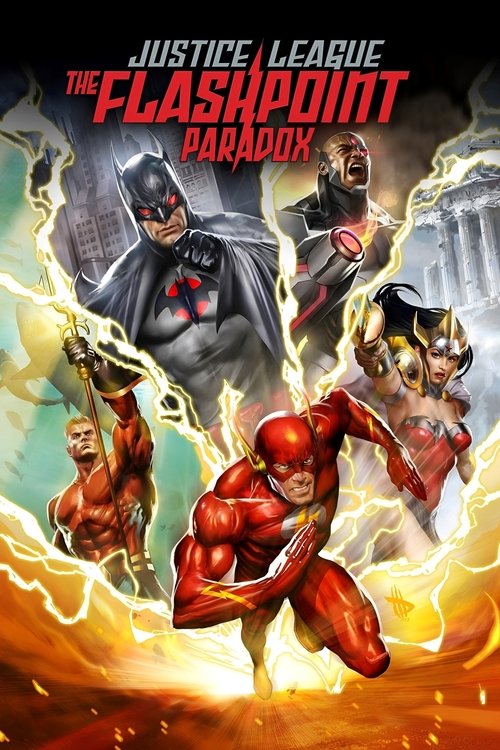
Barry Allen, The Flash, wakes up to a world not his own. His mother is alive, his powers are gone, and the Justice League never existed. In its place is a grim, fractured reality where the world teeters on the brink of annihilation. A catastrophic war between Wonder Woman's Amazons and Aquaman's Atlanteans has ravaged Europe and threatens to consume the globe.
To restore his own timeline, Barry must team up with this world's darker, more violent Batman—Thomas Wayne—and a government-agent Cyborg. Their mission is to find the cause of this temporal anomaly and reset the timeline before this broken world destroys itself. It's a desperate race against time, where every choice has devastating consequences and the heroes Barry once knew are now terrifyingly different.
Core Meaning
Justice League: The Flashpoint Paradox is a profound exploration of grief, regret, and the consequences of altering one's past. Director Jay Oliva aimed to tell a story about the danger of being unable to let go of personal tragedy. The film posits that even a single, well-intentioned change can have catastrophic, unforeseen ripple effects, leading to a world far worse than the one left behind. The core message is a poignant reflection on acceptance: one must accept the things they cannot change to move forward, as clinging to the past can destroy the future for everyone. The film serves as a cautionary tale about the selfish nature of grief and the immense responsibility that comes with great power.
Thematic DNA
The Butterfly Effect and Unintended Consequences
The central theme revolves around the chaos theory concept that one small change can have massive, unpredictable results. Barry Allen's decision to save his mother, a single act of love, ripples through time, creating a dystopian reality. This altered world features a brutal war between Amazons and Atlanteans, a cynical and lethal Batman, and a world without its greatest heroes like Superman. The film vividly illustrates how Barry's personal choice leads to global catastrophe, emphasizing that good intentions don't prevent disastrous outcomes.
Grief and the Inability to Let Go
Barry Allen is haunted by the murder of his mother, a trauma that fuels his desire to change the past. The film explores how this personal grief, when acted upon, becomes a destructive force. Professor Zoom taunts him about being unable to save the ones that matter, pushing him towards the fateful decision. The emotional core of the film is Barry's journey to understand that he must accept his loss. Thomas Wayne, who lost his son Bruce, serves as a dark mirror, showing another man broken by grief but one who ultimately helps Barry make the right choice.
The Nature of Heroism
The film deconstructs the traditional idea of heroism by presenting corrupted versions of iconic characters. Wonder Woman and Aquaman are portrayed as ruthless, warmongering monarchs, their nobility erased by altered circumstances. Thomas Wayne's Batman is a gun-wielding, cynical casino owner who has no qualms about killing. This forces the viewer to question what defines a hero. Is it powers, or is it the moral choices they make? Barry's ultimate heroic act is not defeating a villain, but undoing his own mistake at great personal cost.
War and Its Dehumanizing Effect
The war between the Atlanteans and Amazons is depicted with shocking brutality, pushing the boundaries for a DC animated film. The violence is graphic, featuring decapitations and the deaths of major characters, including children. This unflinching portrayal serves to highlight the horrors of conflict and how easily societies, even those led by one-time heroes, can descend into savagery. The war is not glorified; it is shown as a grim, world-ending disaster born from betrayal and rage.
Character Analysis
Barry Allen / The Flash
Justin Chambers
Motivation
Initially, his motivation is deeply personal: to undo the tragedy of his mother's murder and have a life with her. As the Flashpoint reality worsens, his motivation shifts to a desperate need to restore the timeline and save billions of lives from a war he inadvertently caused.
Character Arc
Barry begins as a hero haunted by his past. His grief drives him to commit a selfish act—saving his mother—which plunges the world into chaos. Throughout the film, he is forced to confront the horrific consequences of his actions. His arc is one of painful realization and maturation, culminating in him making the ultimate sacrifice: letting his mother die to save the world. He learns the hard lesson of acceptance.
Thomas Wayne / Batman
Kevin McKidd
Motivation
His primary motivation is the lingering pain and anger from his son's death. The slim hope of Bruce's survival in another reality is what drives him to help Barry. His final act is motivated by his enduring love for his son.
Character Arc
Thomas Wayne is a bitter, violent, and cynical man who became Batman after his son, Bruce, was killed. He is initially distrustful of Barry but is swayed by the hope that his son is alive in another timeline. He transitions from a nihilistic loner to a crucial ally, helping Barry regain his powers and ultimately sacrificing himself for a world he barely cares about, all for the chance to send a final message to his son.
Eobard Thawne / Professor Zoom
C. Thomas Howell
Motivation
His motivation is a pure, obsessive hatred for Barry Allen. He seeks not just to defeat The Flash, but to psychologically destroy him. He uses his knowledge of time to exploit Barry's greatest weakness: the death of his mother. He delights in the chaos, seeing it as the ultimate proof of his victory over his rival.
Character Arc
Professor Zoom serves as the catalyst and the ultimate tormentor. His arc is static; he is a malevolent force dedicated to making Barry suffer. He reveals that Barry himself, not Zoom, created the Flashpoint timeline, turning Barry's quest for a villain into a moment of horrifying self-realization. He exists to be the architect of Barry's pain.
Victor Stone / Cyborg
Michael B. Jordan
Motivation
His motivation is to save the world from self-destruction. He works for the government and attempts to assemble a team to stop the war, believing that heroes must unite to protect humanity, even when the world's most powerful figures are the ones causing the destruction.
Character Arc
In the Flashpoint timeline, Cyborg is America's greatest and most respected superhero, trying desperately to unite the world's remaining heroes to stop the Amazon-Atlantean war. He represents the last bastion of organized heroism in a fallen world. His arc is a tragic one of a noble leader fighting a losing battle, ultimately failing but never giving up on doing the right thing.
Symbols & Motifs
The Serenity Prayer
Symbolizes the film's central message about acceptance. The prayer—"Accept the things you cannot change, have the courage to change the things you can, and have the wisdom to know the difference"—is taught to a young Barry by his mother. It represents the wisdom he has yet to learn.
It's introduced in the opening scene as a lesson from Nora Allen. The entire film is Barry's painful journey to finally understand and accept its meaning. His initial failure to heed this wisdom leads to the creation of the Flashpoint timeline, and his eventual acceptance allows him to restore reality.
Thomas Wayne's Letter to Bruce
Represents hope, redemption, and the enduring love of a father. In a timeline defined by loss, the letter is a tangible connection between a father and the son he lost, offering a final message of love and pride.
At the climax of the film, the dying Thomas Wayne gives the letter to Barry to deliver to Bruce in the restored timeline. The final scene shows Barry giving the letter to Bruce, who reads it and is moved to tears, providing a powerful, emotional conclusion and underscoring the personal stakes of Barry's journey.
The Flash's Ring
Symbolizes Barry Allen's identity and connection to his original timeline. The ring contains his costume and is a physical manifestation of his role as The Flash. When it fails to produce his suit and instead reveals Professor Zoom's, it's the first concrete sign that his reality has been usurped.
After waking in the new reality, Barry activates his ring, only to find the Reverse-Flash's costume inside. This moment in the Batcave is a jarring reveal for both Barry and Thomas Wayne, visually representing how Barry's world has been twisted by his nemesis and his own actions.
Memorable Quotes
Accept the things you cannot change. Have the courage to change the things you can... and have the wisdom to know the difference.
— Nora Allen
Context:
Nora says this to a young Barry in the film's opening scene after they stop to help someone with car trouble. The line is recalled later, framing Barry's entire internal conflict.
Meaning:
This is the thematic heart of the movie. It's the lesson Barry must learn: that his mother's death, while tragic, is a fixed point he cannot and should not change. His journey is about gaining the wisdom to understand this.
You're one hell of a messenger.
— Bruce Wayne / Batman
Context:
This is said in the Batcave at the very end of the film, after Barry has returned to the corrected timeline and given Bruce the letter from his father, Thomas Wayne.
Meaning:
This quote is delivered with immense gratitude and emotion by Bruce Wayne. It acknowledges the incredible journey Barry undertook and the profound gift he delivered—a final connection to the father he lost. It validates Barry's entire ordeal.
There is now.
— Thomas Wayne / Batman
Context:
During the final battle, Professor Zoom taunts Barry, saying there isn't enough Speed Force for Barry to travel back in time while Zoom is using it. Batman appears behind Zoom, says the line, and shoots him in the head.
Meaning:
This line, delivered just before he kills Professor Zoom, demonstrates Thomas Wayne's brutal pragmatism and his ultimate sacrifice. He eliminates Zoom to free up the Speed Force, giving Barry the chance to fix the timeline, knowing it will erase him from existence.
Philosophical Questions
Is it ever justifiable to change the past for personal happiness, even if the consequences are unknown?
The film explores this question through Barry's singular, emotionally driven decision to save his mother. He acts out of love and grief, a universally understandable motive. However, the film's answer is a resounding 'no.' It demonstrates that meddling with the fabric of reality, no matter how noble the intention, is an act of supreme hubris with catastrophic consequences that far outweigh the personal benefit. The dystopian result serves as a stark moral lesson.
What is the relationship between sacrifice and heroism?
The film contrasts different forms of sacrifice. Barry's initial action is the opposite of sacrifice; it's self-serving. He only becomes a true hero again when he makes the ultimate personal sacrifice: choosing to let his mother die to save the world. Thomas Wayne also exemplifies this, giving his own life to ensure Barry can succeed, motivated by love for a son he can never see again. The film suggests that true heroism lies not in power, but in the willingness to give up what you cherish most for the greater good.
Does our identity depend on our tragedies?
The film delves into the idea that formative tragedies shape who we become. Bruce Wayne becomes Batman because his parents were killed; Thomas Wayne becomes a different, more brutal Batman because his son was killed. Barry Allen's life as The Flash is defined by his mother's murder. By erasing that tragedy, he also erases himself and the hero he was. The film seems to argue that while we should not be consumed by tragedy, it is an undeniable part of the tapestry of our identity, and removing it can unravel everything we are.
Alternative Interpretations
While the film's primary message is a cautionary tale about changing the past, an alternative interpretation views it as a critique of superhero fallibility and the inherent selfishness of grief. From this perspective, Barry's actions are not just a mistake but a profound character flaw, revealing that even the most righteous heroes can doom the world for personal gain. The apocalyptic war between Wonder Woman and Aquaman can be seen as a metaphor for how easily order and heroism can collapse without a central moral compass (like Superman or the original Batman), suggesting the entire superhero structure is fragile and dependent on key individuals.
Another reading focuses on the cyclical nature of DC's comic universe. The film, like the comic, is a 'reboot' mechanism. Therefore, the paradox isn't just a plot device but a meta-commentary on the publisher's need to periodically wipe the slate clean to tell new stories. The destruction of the old timeline, while tragic within the narrative, is a necessary creative act, mirroring DC's real-world decision to launch The New 52.
Cultural Impact
Justice League: The Flashpoint Paradox is a landmark film in DC's animation history. Released in 2013, it served as an adaptation of the pivotal 2011 comic storyline that rebooted the entire DC comics line into the 'New 52'. Similarly, the film acted as a reset for DC's animated features, launching the interconnected DC Animated Movie Universe (DCAMU) that would define their output for the next seven years.
Critically, the film was highly acclaimed, with many reviews stating it surpassed its source material by creating a more cohesive and emotionally resonant narrative. Its uncharacteristically brutal and dark tone was a frequent topic of discussion, setting a new precedent for maturity in mainstream American superhero animation. The film's success proved that The Flash could carry a major story, elevating the character's profile significantly before the popular CW television series premiered the following year. Director Jay Oliva's goal was to create a definitive animated version of The Flash that future live-action projects would reference, a goal arguably achieved as elements of the 'Flashpoint' story were later adapted in both the TV show and the 2023 live-action film, 'The Flash'.
For audiences, it became a fan-favorite and is often cited as one of the best DC animated movies ever made. Its bold storytelling and willingness to kill major characters left a lasting impact, cementing its legacy as a game-changer that paved the way for more complex and mature stories within the DCAMU.
Audience Reception
Audience reception for Justice League: The Flashpoint Paradox was overwhelmingly positive. Viewers frequently praise it as one of the best, if not the best, entries in the entire line of DC Universe Animated Original Movies. The film is lauded for its emotionally compelling story that successfully adapts a complex comic event into a cohesive narrative, with many fans feeling it improved upon the source material. The mature tone, intense action sequences, and shocking level of violence were highlighted as strengths, making the stakes feel incredibly high.
The voice acting was another point of high praise, particularly Kevin McKidd's portrayal of the grim and gritty Thomas Wayne Batman. While the anime-influenced visual style was sometimes a point of contention for some viewers who found the character proportions awkward, many others appreciated its dynamic and hard-hitting quality. The main points of criticism were minor, typically focusing on the underutilization of certain cameo characters or the sheer brutality being excessive for some. Overall, the verdict from audiences is that the film is a dark, thrilling, and emotionally resonant masterpiece.
Interesting Facts
- The film kicked off the DC Animated Movie Universe (DCAMU), a series of 16 interconnected films that concluded with 'Justice League Dark: Apokolips War' in 2020.
- Many actors reprised their roles from previous DC animated projects, including Kevin Conroy as Bruce Wayne, Nathan Fillion as Hal Jordan, and Dana Delany as Lois Lane, which helped bridge the gap for longtime fans.
- Sam Daly, who voices Superman, is the son of Tim Daly, who famously voiced Superman in 'Superman: The Animated Series'.
- Director Jay Oliva stated that because The Flash was not a marquee character at the time, he was given significant creative freedom, allowing him to create a film in his vision without heavy studio interference.
- The animation was handled by the Japanese company Studio 4°C, and Jay Oliva cited the classic anime film 'Ninja Scroll' as a major influence on the movie's distinct, stylized, and more 'grotesque' visual style.
- The film is known for its high level of violence, which pushed the boundaries of its PG-13 rating and surprised many viewers accustomed to more toned-down animated features.
Easter Eggs
The Allen family home in the opening scene strongly resembles the McFly house from the 'Back to the Future' film series.
This is a deliberate homage to another iconic time-travel story. Both protagonists, Barry Allen and Marty McFly, inadvertently create disastrous alternate timelines through their actions and must then work to repair the damage they've caused.
The WildStorm character Grifter makes a prominent appearance as a member of the resistance.
This was a nod to the fact that the original 'Flashpoint' comic book event led to the integration of the WildStorm and Vertigo universes into the main DC continuity, known as The New 52.
In the post-credits scene, a Boom Tube opens, and a horde of Parademons emerges.
This scene directly sets up the next film in the series, 'Justice League: War', which depicts Darkseid's invasion of Earth and the formation of the New 52 Justice League, officially launching the shared continuity of the DCAMU.
⚠️ Spoiler Analysis
Click to reveal detailed analysis with spoilers
Frequently Asked Questions
Explore More About This Movie
Dive deeper into specific aspects of the movie with our detailed analysis pages
Comments (0)
No comments yet. Be the first to share your thoughts!