"Fight the future."
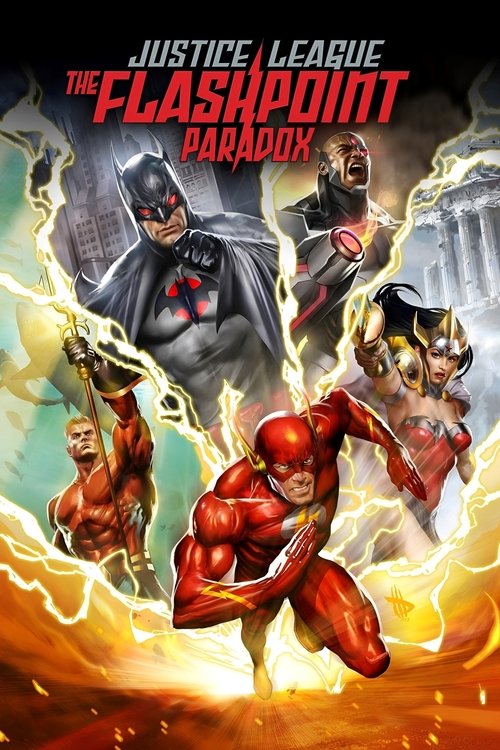
Justice League: The Flashpoint Paradox - Symbolism & Philosophy
Symbols & Motifs
The Serenity Prayer
Symbolizes the film's central message about acceptance. The prayer—"Accept the things you cannot change, have the courage to change the things you can, and have the wisdom to know the difference"—is taught to a young Barry by his mother. It represents the wisdom he has yet to learn.
It's introduced in the opening scene as a lesson from Nora Allen. The entire film is Barry's painful journey to finally understand and accept its meaning. His initial failure to heed this wisdom leads to the creation of the Flashpoint timeline, and his eventual acceptance allows him to restore reality.
Thomas Wayne's Letter to Bruce
Represents hope, redemption, and the enduring love of a father. In a timeline defined by loss, the letter is a tangible connection between a father and the son he lost, offering a final message of love and pride.
At the climax of the film, the dying Thomas Wayne gives the letter to Barry to deliver to Bruce in the restored timeline. The final scene shows Barry giving the letter to Bruce, who reads it and is moved to tears, providing a powerful, emotional conclusion and underscoring the personal stakes of Barry's journey.
The Flash's Ring
Symbolizes Barry Allen's identity and connection to his original timeline. The ring contains his costume and is a physical manifestation of his role as The Flash. When it fails to produce his suit and instead reveals Professor Zoom's, it's the first concrete sign that his reality has been usurped.
After waking in the new reality, Barry activates his ring, only to find the Reverse-Flash's costume inside. This moment in the Batcave is a jarring reveal for both Barry and Thomas Wayne, visually representing how Barry's world has been twisted by his nemesis and his own actions.
Philosophical Questions
Is it ever justifiable to change the past for personal happiness, even if the consequences are unknown?
The film explores this question through Barry's singular, emotionally driven decision to save his mother. He acts out of love and grief, a universally understandable motive. However, the film's answer is a resounding 'no.' It demonstrates that meddling with the fabric of reality, no matter how noble the intention, is an act of supreme hubris with catastrophic consequences that far outweigh the personal benefit. The dystopian result serves as a stark moral lesson.
What is the relationship between sacrifice and heroism?
The film contrasts different forms of sacrifice. Barry's initial action is the opposite of sacrifice; it's self-serving. He only becomes a true hero again when he makes the ultimate personal sacrifice: choosing to let his mother die to save the world. Thomas Wayne also exemplifies this, giving his own life to ensure Barry can succeed, motivated by love for a son he can never see again. The film suggests that true heroism lies not in power, but in the willingness to give up what you cherish most for the greater good.
Does our identity depend on our tragedies?
The film delves into the idea that formative tragedies shape who we become. Bruce Wayne becomes Batman because his parents were killed; Thomas Wayne becomes a different, more brutal Batman because his son was killed. Barry Allen's life as The Flash is defined by his mother's murder. By erasing that tragedy, he also erases himself and the hero he was. The film seems to argue that while we should not be consumed by tragedy, it is an undeniable part of the tapestry of our identity, and removing it can unravel everything we are.
Core Meaning
Justice League: The Flashpoint Paradox is a profound exploration of grief, regret, and the consequences of altering one's past. Director Jay Oliva aimed to tell a story about the danger of being unable to let go of personal tragedy. The film posits that even a single, well-intentioned change can have catastrophic, unforeseen ripple effects, leading to a world far worse than the one left behind. The core message is a poignant reflection on acceptance: one must accept the things they cannot change to move forward, as clinging to the past can destroy the future for everyone. The film serves as a cautionary tale about the selfish nature of grief and the immense responsibility that comes with great power.