
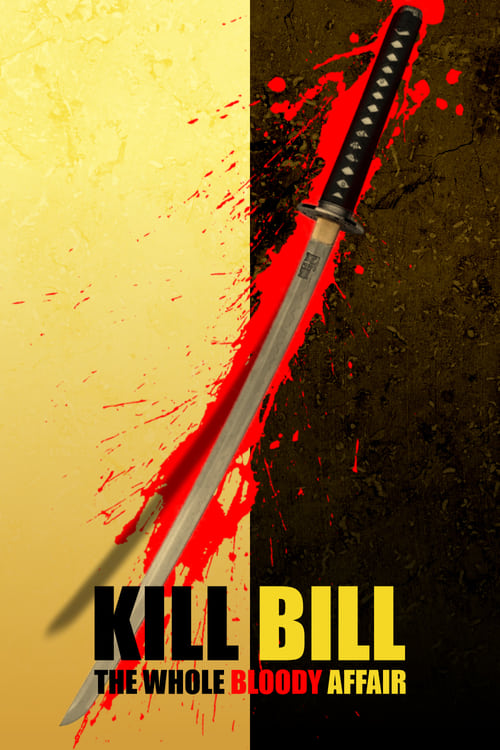
Kill Bill: The Whole Bloody Affair
A blood-soaked ballad of vengeance, pulsating with the fury of a wronged mother, painted across a canvas of grindhouse grit and samurai showdowns.
Kill Bill: The Whole Bloody Affair
27 March 2011 Japan 247 min ⭐ 8.0 (1,084)
Director: Quentin Tarantino
Cast: Uma Thurman, Lucy Liu, Vivica A. Fox, Michael Madsen, Daryl Hannah
Crime Action Thriller
Revenge Motherhood and Femininity Past vs. Future Genre Pastiche and Homage
Budget: $55,000,000

Kill Bill: The Whole Bloody Affair - Ending Explained

⚠️ Spoiler Analysis

"Kill Bill: The Whole Bloody Affair" is built around one central, massive twist revealed in the final moments of what was originally Volume 1 and which re-contextualizes the entire narrative: The Bride's daughter is alive. The driving force behind her initial rampage is the belief that her child was killed in the chapel massacre. This reveal transforms her mission from one of pure, nihilistic revenge into a rescue operation. The second half of the film becomes a mother's desperate fight to reclaim her child, adding a profound emotional stake that was absent before.

Another key revelation is the complex nature of Bill. Portrayed as a shadowy, monstrous figure for much of the film, the final act reveals him to be a surprisingly gentle and loving father to B.B. His motivations were born not of pure evil, but of a twisted, possessive love and a feeling of profound betrayal. This complicates the audience's perception of him, turning the final confrontation from a simple hero-versus-villain showdown into a tragic, emotionally charged conversation between two former lovers with a deeply complicated history.

The ending itself is the ultimate spoiler. The Bride does not simply butcher Bill. She uses the mythical "Five Point Palm Exploding Heart Technique," a secret taught to her by Pai Mei, which Bill believed was impossible to learn. This method of killing him is intimate and poetic, a final testament to her superior skill. After he takes five steps, he falls dead, acknowledging her victory. Her final scene is not of triumph, but of catharsis. Lying on a bathroom floor, she cries tears of joy and relief, repeating the words "Thank you," finally free from her bloody quest and able to begin a new life as a mother. Her revenge is complete, but her true victory is the future she has secured with her daughter.

Alternative Interpretations

One significant alternative interpretation revolves around the nature of The Bride's quest. While on the surface it is a straightforward revenge fantasy, some critics and viewers interpret the entire saga as an elaborate metaphor for a mother's fierce, almost primal, struggle to reunite with her child. In this reading, the members of the Deadly Viper Assassination Squad are not just villains but symbolic obstacles representing the forces that tore her family apart. Her violent journey is an externalization of her internal battle to overcome trauma and reclaim her identity as a mother.

Another interpretation questions the film's ending. While The Bride achieves her goal and finds a peaceful life with her daughter, some viewers see a more tragic undercurrent. The quote she gives to Vernita Green's daughter—"When you grow up, if you still feel raw about it, I'll be waiting"—suggests that the cycle of violence is not truly broken. This reading posits that The Bride, despite her escape, has planted the seeds for a future revenge story, implying that violence begets violence and a truly "happy ending" is impossible after such a bloody crusade.

Finally, there is a popular fan theory that "Kill Bill" is not a 'real' story within the Tarantino universe but is, in fact, the fictional movie that Mia Wallace describes starring in (as the character Fox Force Five) in "Pulp Fiction." This theory suggests that the heightened reality, genre-blending, and character archetypes are all elements of an in-universe film, explaining its stylized nature.