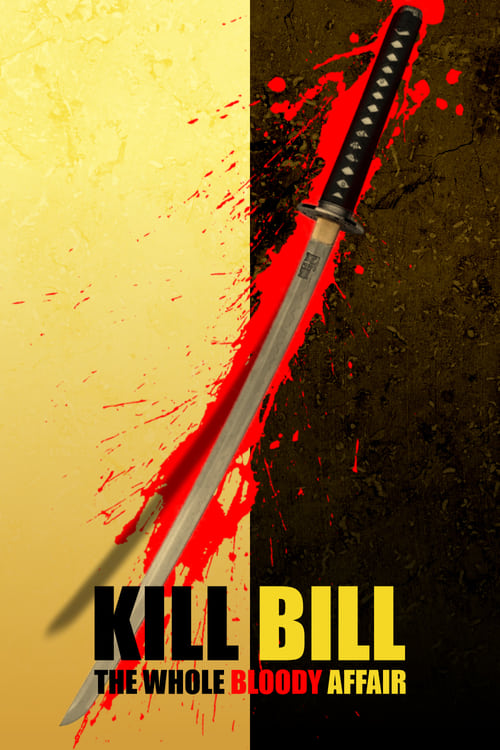
Kill Bill: The Whole Bloody Affair
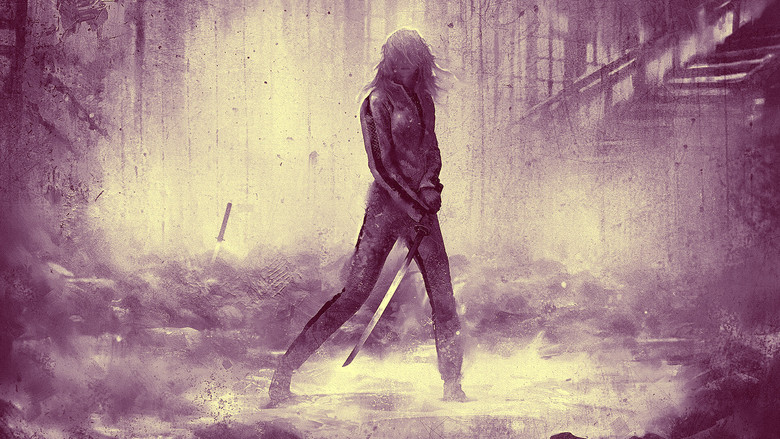
A blood-soaked ballad of vengeance, pulsating with the fury of a wronged mother, painted across a canvas of grindhouse grit and samurai showdowns.
Kill Bill: The Whole Bloody Affair

Kill Bill: The Whole Bloody Affair

27 March 2011 Japan 247 min ⭐ 8.0 (1,084)
Director: Quentin Tarantino
Cast: Uma Thurman, Lucy Liu, Vivica A. Fox, Michael Madsen, Daryl Hannah
Crime Action Thriller
Revenge Motherhood and Femininity Past vs. Future Genre Pastiche and Homage
Budget: $55,000,000

Overview

"Kill Bill: The Whole Bloody Affair" presents Quentin Tarantino's epic revenge saga as a single, sprawling cinematic experience, combining what was originally released as two separate films, Volume 1 and Volume 2. The story centers on a character known only as The Bride, a former member of the Deadly Viper Assassination Squad. After attempting to leave her life as an assassin to marry and raise a child, her former comrades, led by their enigmatic leader Bill, ambush her wedding rehearsal, leaving her for dead and taking her unborn child.

Waking from a four-year coma, The Bride embarks on a relentless and bloody quest for retribution. Her mission is to hunt down and kill every member of the squad who wronged her: O-Ren Ishii, Vernita Green, Budd, and Elle Driver, saving the eponymous Bill for last. The narrative is non-linear, weaving together her present-day rampage with flashbacks to her brutal training under the legendary martial arts master Pai Mei and the events leading up to the chapel massacre.

The journey takes her from suburban Pasadena to Tokyo, the deserts of Mexico, and beyond. The first part is a visceral, action-heavy homage to Eastern martial arts films, culminating in a spectacular showdown with O-Ren Ishii and her Yakuza army. The second half shifts tone, delving deeper into the characters' backstories and motivations, resembling a Spaghetti Western in its pacing and dialogue-heavy confrontations. It builds to a final, intimate, and emotionally complex showdown with Bill, forcing The Bride to confront her past and redefine her future.
Core Meaning

At its heart, "Kill Bill" is an exploration of the consuming nature of revenge and the path to reclaiming one's identity. The director, Quentin Tarantino, uses the framework of a hyper-stylized revenge thriller to examine deeper themes of motherhood, betrayal, and resilience. The film posits that while vengeance can be a powerful and seemingly righteous motivator, it is ultimately a destructive force.

The true meaning of The Bride's journey shifts from a simple quest for retribution to a fight for survival and, ultimately, a mother's instinct to protect her child. The revelation that her daughter is alive transforms her mission. Her ultimate victory is not just killing Bill, but escaping the cycle of violence to build a new life. Tarantino's message suggests that true strength lies not in the ability to destroy, but in the capacity for love and the will to create a future beyond the pain of the past.

Thematic DNA

Revenge 35%
Motherhood and Femininity 30%
Past vs. Future 20%
Genre Pastiche and Homage 15%

Revenge

The most prominent theme is revenge, embodied by The Bride's singular, all-consuming quest to kill the five people who destroyed her life. The film opens with the proverb "Revenge is a dish best served cold," setting the tone for her meticulous and brutal journey. However, the film explores the nuances of this theme; Budd expresses that The Bride deserves her revenge, but also that they deserve to die for their actions, suggesting a complex morality. Ultimately, the film questions whether revenge provides true satisfaction or simply perpetuates a cycle of violence.

Motherhood and Femininity

Motherhood is the emotional core of the film. The Bride's initial motivation for leaving the assassin's life is her pregnancy. The presumed death of her child fuels her rage, but the discovery that her daughter, B.B., is alive completely redefines her mission. Her ultimate goal becomes not just to kill Bill, but to reclaim her daughter and her role as a mother. The film challenges traditional gender roles, presenting a character who is both a nurturing mother and a lethal killer, showcasing a fluid and complex form of femininity.

Past vs. Future

The Bride's journey is a violent struggle to reconcile her past with the possibility of a future. She is literally buried alive by her past (in Budd's trailer) and must claw her way out to have any hope of a new life. The narrative structure, with its frequent flashbacks, constantly juxtaposes her history as an assassin with her present actions. The film's conclusion, where she escapes with her daughter, signifies a definitive break from her violent past and a step toward a peaceful future, leaving the life of an assassin behind for good.

Genre Pastiche and Homage

Tarantino uses the film as a love letter to various cinematic genres. It is a pastiche of samurai (chanbara) films, Hong Kong martial arts movies, Spaghetti Westerns, and anime. This is evident in the visual style, music choices, and narrative structure—from the Shaw Brothers opening logo to the Ennio Morricone-esque score in the second half. This theme is about celebrating cinema itself, blending disparate styles into a cohesive, unique whole.

Character Analysis

Beatrix Kiddo (The Bride)

Uma Thurman

Archetype: Antihero / Avenger
Key Trait: Unyielding Will

Motivation

Her primary motivation is revenge against Bill and the Deadly Viper Assassination Squad for the massacre at her wedding rehearsal and the theft of her daughter. This singular goal is later tempered and ultimately replaced by the maternal instinct to protect her child and secure a peaceful future for them both.

Character Arc

Beatrix begins as a victim, left for dead and stripped of everything she holds dear. Her arc is a transformation from a vessel of pure rage and vengeance into a reclaiming of her identity. Initially driven solely by her list, the discovery of her living daughter shifts her priority from revenge to protection and motherhood. Her final act is not one of triumphant violence, but of quiet, tearful relief as she chooses a future with her child over the violent life she's leaving behind.

Bill

David Carradine

Archetype: The Mentor-Turned-Villain
Key Trait: Philosophical Sadist

Motivation

Bill's motivation stems from a profound sense of heartbreak and betrayal when Beatrix, the woman he loved, left him without a word. He tells her he overreacted. His actions, while monstrous, are framed by him as the consequences of a broken heart, describing himself as being at his "most masochistic."

Character Arc

Bill is initially presented as a mysterious, almost mythical villain. His character arc is revealed in reverse; we see the monstrous result of his actions before understanding the man. In Volume 2, he is shown to be a complex, cultured, and surprisingly paternal figure who is both a cold-blooded killer and a loving father. He is driven by a deep sense of betrayal and a twisted form of love for Beatrix. His arc concludes with a graceful acceptance of his death, acknowledging Beatrix's victory and his own role in his demise.

O-Ren Ishii

Lucy Liu

Archetype: The Tragic Antagonist
Key Trait: Unyielding Authority

Motivation

Her primary motivation is to maintain power and respect as the head of the Yakuza council. She is fiercely protective of her position, which she earned through bloodshed and skill, and will not allow her authority or mixed heritage to be challenged. Her life has been defined by avenging her family and securing her place in a brutal world.

Character Arc

O-Ren's arc is detailed in a stunning anime sequence. After witnessing the brutal murder of her parents by the Yakuza, she transforms herself from a victim into a master assassin and avenges their deaths. She rises through the ranks to become the formidable leader of the Tokyo underworld. Her arc is a parallel revenge story to The Bride's, culminating in a respectful, honorable duel where she acknowledges The Bride's superior sword.

Elle Driver

Daryl Hannah

Archetype: The Rival / The Shadow
Key Trait: Ruthless Opportunism

Motivation

Elle is motivated by jealousy, rivalry, and a sadistic desire for power. Her intense hatred for Beatrix stems from Beatrix being Bill's favorite and Pai Mei's chosen student. She is pragmatic and ruthless, driven by self-interest above any loyalty to Bill or the squad.

Character Arc

Elle Driver serves as The Bride's direct rival and a dark reflection of what she could have become. Her arc is one of consistent cruelty and opportunism. She lacks the honor of the other assassins, poisoning Pai Mei and her rival Budd out of spite. Her story concludes not with an honorable death, but with being blinded and left to suffer in a trailer with a black mamba, a fate mirroring her own treacherous nature.

Budd

Michael Madsen

Archetype: The Remorseful Grunt
Key Trait: Resigned Remorse

Motivation

Budd is motivated by a desire for a simple life and, later, by greed. He seems to have grown weary of the assassin's life and feels a sense of guilt over the massacre. However, his decision to sell The Bride's Hattori Hanzō sword for a million dollars is what ultimately seals his fate, bringing him back into the world he tried to leave.

Character Arc

Budd is the only member of the squad who seems to have left the life of an assassin behind, living in a desolate trailer and working as a bouncer. He shows a degree of remorse and world-weariness, admitting that they all deserve to die for what they did. However, his greed ultimately leads to his demise. His arc is a tragic one, portraying a broken man who couldn't escape the consequences of his violent past.

Symbols & Motifs

Hattori Hanzō Sword

Meaning:

The Hattori Hanzō sword represents the pinnacle of craftsmanship, honor, and righteous purpose. It is more than a weapon; it is an instrument of destiny. For Hanzō to break his vow and forge one for The Bride signifies his belief in the righteousness of her cause. It symbolizes her singular focus and serves as the physical manifestation of her will to exact revenge.

Context:

The Bride travels to Okinawa specifically to obtain a sword from the legendary, retired swordsmith Hattori Hanzō. After she proves her worthiness and reveals her target is his former student, Bill, he agrees to make her his finest sword. He claims that if she were to encounter God on her journey, God himself would be cut.

The Yellow Tracksuit

Meaning:

The yellow tracksuit is a direct homage to the one worn by Bruce Lee in his final film, "Game of Death." Symbolically, the vibrant yellow makes The Bride a constant, unmissable beacon of vengeance. It stands in stark, bloody contrast to the carnage she creates, representing her relentless drive and making her an iconic figure of survival and retribution.

Context:

The Bride wears the iconic yellow-and-black tracksuit during her assault on the House of Blue Leaves in Tokyo. It is her battle uniform for the film's largest and most violent confrontation, where she single-handedly defeats the Crazy 88 and confronts O-Ren Ishii.

The Five Point Palm Exploding Heart Technique

Meaning:

This mythical martial arts move symbolizes ultimate, inescapable death and the culmination of The Bride's training and power. It represents a level of mastery that even Bill, her former mentor, cannot defend against. It is the secret weapon she holds, a testament to her skill and the final, poetic justice she delivers to her ultimate target.

Context:

The Bride learns this forbidden technique from her master, Pai Mei. It is a legendary move that involves five swift strikes to pressure points on the chest, causing the victim's heart to explode after they take five steps. She uses this technique to kill Bill in their final confrontation, granting him a more intimate and poetic death than a simple sword stroke.

Black and White

Meaning:

The use of black and white serves multiple purposes. Primarily, it was used to tone down the graphic violence of the House of Blue Leaves massacre to avoid a stricter rating from the MPAA. Narratively, it functions as a stylistic choice that heightens the dramatic impact of the scene, creating a stark, brutal, and visually distinct sequence that separates it from the rest of the film's vibrant color palette.

Context:

During the climactic battle at the House of Blue Leaves in Volume 1, the film suddenly shifts from color to black and white as The Bride begins her rampage against the Crazy 88. The Japanese release of the film notably features this entire sequence in full color.

Memorable Quotes

Revenge is a dish best served cold.

— Opening Title Card

Context:

The quote appears on screen at the very beginning of Volume 1, immediately setting the thematic tone for the entire saga.

Meaning:

This "old Klingon proverb" establishes the central theme of the film. It suggests that revenge is not an act of passionate, immediate anger, but a calculated, deliberate process. This quote sets the stage for The Bride's methodical, four-year-delayed quest for retribution.

Those of you lucky enough to have your lives, take them with you. However, leave the limbs you've lost. They belong to me now.

— The Bride (Beatrix Kiddo)

Context:

The Bride shouts this to the maimed and terrified survivors of the Crazy 88 gang after her bloody rampage at the House of Blue Leaves.

Meaning:

This line showcases The Bride's cold fury and absolute dominance after a gruesome battle. It's a declaration of her power and a chilling warning. She is not just a killer; she is a collector of the consequences of violence, claiming the very body parts of those who stood against her as trophies of her vengeance.

It was not my intention to do this in front of you. For that I'm sorry. But you can take my word for it, your mother had it coming. When you grow up, if you still feel raw about it, I'll be waiting.

— The Bride (Beatrix Kiddo)

Context:

Spoken to Nikki, the young daughter of Vernita Green, immediately after The Bride kills Vernita in a knife fight in her own home.

Meaning:

This quote reveals a flicker of honor and a complex morality within The Bride. While she is a relentless killer, she regrets exposing a child to violence. The second part of the quote, however, shows her acceptance of the cycle of revenge she is perpetuating, acknowledging that her actions will have consequences that may one day come back to her.

That woman deserves her revenge... and we deserve to die.

— Budd

Context:

Budd says this to his brother Bill over the phone, reflecting on The Bride's reappearance and the inevitable consequences of their past actions.

Meaning:

Budd's line is a crucial moment of introspection and the only admission of guilt from any of the Vipers. It validates The Bride's quest from the perspective of one of her targets and adds a layer of tragic fatalism to the story. It suggests that the Vipers are not just villains, but characters who understand the moral weight of their actions.

If on your journey, you should encounter God, God will be cut.

— Hattori Hanzō

Context:

Hattori Hanzō speaks this line with great reverence as he presents the completed katana to The Bride, having broken his sacred oath to never again forge an instrument of death.

Meaning:

This is Hattori Hanzō's ultimate endorsement of his own craftsmanship and, by extension, The Bride's mission. It's a poetic and powerful statement declaring that the sword he has created is so perfect that it can wound a divine being, making The Bride an unstoppable force of nature.

Philosophical Questions

Is revenge a justifiable or ultimately hollow pursuit?

The film opens by championing revenge as a noble cause, a "dish best served cold." The Bride's quest is initially portrayed as righteous and satisfying. However, as the story progresses, the cost of her vengeance becomes apparent. Characters like Budd question the cycle they are all a part of. The final confrontation with Bill is less a triumphant slaughter and more a somber, philosophical debate, followed by an intimate execution. The film's final moments, focusing on The Bride's tears of relief and her new life with her daughter, suggest that while revenge might be achieved, true peace and happiness are only found by leaving that violent world behind, implying that the pursuit itself is ultimately an empty one compared to the fulfillment of love and family.

Can a person truly escape a violent past?

Beatrix's entire motivation for leaving Bill was to escape the life of an assassin for the sake of her child. Her past violently pulls her back in, forcing her to become more brutal than ever to secure a future. The film explores whether one's nature is fixed. Bill calls her a "natural born killer," suggesting she can't change. However, her final decision to walk away from it all and become simply "Mommy" is a powerful argument for the possibility of redemption and change. The question remains open-ended, as she has taught her daughter that killing can sometimes be a solution, and she has invited the possibility of future retribution from Nikki.

What is the nature of honor among killers?

The film presents a complex and often contradictory code of honor among its assassins. O-Ren Ishii demands respect and faces The Bride in a formal duel. Hattori Hanzō operates under a sworn oath, which he breaks out of a sense of responsibility. Even The Bride shows a form of honor by apologizing for killing Vernita in front of her daughter. This is contrasted sharply with the dishonorable actions of Elle Driver, who uses deceit and poison. The film constantly examines the moral lines that even the most violent characters draw for themselves, questioning whether concepts like honor and respect can coexist with a life of murder.

Alternative Interpretations

One significant alternative interpretation revolves around the nature of The Bride's quest. While on the surface it is a straightforward revenge fantasy, some critics and viewers interpret the entire saga as an elaborate metaphor for a mother's fierce, almost primal, struggle to reunite with her child. In this reading, the members of the Deadly Viper Assassination Squad are not just villains but symbolic obstacles representing the forces that tore her family apart. Her violent journey is an externalization of her internal battle to overcome trauma and reclaim her identity as a mother.

Another interpretation questions the film's ending. While The Bride achieves her goal and finds a peaceful life with her daughter, some viewers see a more tragic undercurrent. The quote she gives to Vernita Green's daughter—"When you grow up, if you still feel raw about it, I'll be waiting"—suggests that the cycle of violence is not truly broken. This reading posits that The Bride, despite her escape, has planted the seeds for a future revenge story, implying that violence begets violence and a truly "happy ending" is impossible after such a bloody crusade.

Finally, there is a popular fan theory that "Kill Bill" is not a 'real' story within the Tarantino universe but is, in fact, the fictional movie that Mia Wallace describes starring in (as the character Fox Force Five) in "Pulp Fiction." This theory suggests that the heightened reality, genre-blending, and character archetypes are all elements of an in-universe film, explaining its stylized nature.

Cultural Impact

"Kill Bill" exploded into the cultural landscape in the early 2000s, profoundly influencing action cinema and solidifying Quentin Tarantino's status as a master of postmodern filmmaking. Its innovative blend of genres—samurai cinema, martial arts, Spaghetti Westerns, and blaxploitation—created a unique aesthetic that has been widely imitated but rarely duplicated. The film reignited mainstream interest in Eastern action films and brought a new level of stylistic, highly choreographed violence to Hollywood. The intense fight sequences and bold visual choices inspired a generation of filmmakers to be more daring in their action choreography and cinematography.

The character of The Bride became an instant feminist icon. She is a powerful, complex female protagonist in a genre historically dominated by men. Her journey, which intertwines the roles of a deadly assassin and a fiercely protective mother, challenged stereotypes and offered a multifaceted portrayal of female strength and resilience that resonated deeply with audiences.

Critically, the film was largely praised for its artistic vision, technical mastery, and ambitious scope, though some critics were divided on its graphic violence and the decision to split the narrative into two parts. For audiences, it became a cultural phenomenon. The Bride's yellow tracksuit is instantly recognizable, and the film's dialogue and iconic scenes have been endlessly quoted, parodied, and paid homage to in pop culture. "Kill Bill" remains a pivotal work of 21st-century cinema, celebrated for its bold storytelling, unforgettable protagonist, and lasting impact on the language of action movies.

Audience Reception

When viewed as a single, cohesive work, "Kill Bill: The Whole Bloody Affair" is often hailed by audiences as a masterpiece of modern cinema. Fans praise its epic scope, intricate storytelling, and the sheer artistic audacity of Quentin Tarantino's vision. The seamless integration of the two volumes is widely regarded as enhancing the narrative's emotional weight and thematic depth. The first half's kinetic, action-packed homage to martial arts cinema is perfectly complemented by the second half's slower, more contemplative Spaghetti Western feel, creating a richer, more complete experience.

The primary points of praise focus on Uma Thurman's iconic performance as The Bride, the brilliantly choreographed action sequences (especially the House of Blue Leaves showdown), and the sharp, memorable dialogue. Audiences celebrate the film as a brilliant pastiche that honors its cinematic influences while creating something entirely new.

Criticism is sparse but generally centers on the film's extensive runtime of over four hours, which some find demanding. A few viewers also remain critical of the extreme, highly stylized violence, finding it gratuitous despite its artistic intent. However, the overwhelming audience verdict is that "The Whole Bloody Affair" is the definitive and superior version of the story, a sprawling, bloody, and ultimately moving epic of revenge and redemption.

Interesting Facts

  • The story for "Kill Bill" was conceived by Quentin Tarantino and Uma Thurman on the set of "Pulp Fiction" (1994). The film's story is credited to "Q & U."
  • Tarantino delayed the production of the film because Uma Thurman became pregnant. He refused to recast the role, stating he couldn't imagine making the film without her.
  • Over 450 gallons of fake blood were used throughout the production of both volumes.
  • The filmmakers used condoms filled with fake blood to create the arterial spray effects, a practical technique borrowed from 1970s kung fu films, as Tarantino was adamant about not using CGI blood.
  • The extended, uncut Japanese version of *Volume 1* features the entire House of Blue Leaves fight scene in full color, unlike the American version which switches to black and white.
  • The actor Michael Parks plays two different characters in the saga: Texas Ranger Earl McGraw in *Volume 1* and Bill's mentor, Esteban Vihaio, in *Volume 2*.
  • Warren Beatty was originally considered for the role of Bill, but as the character developed, Tarantino sought an actor more experienced with martial arts, leading to the casting of David Carradine.
  • The grueling House of Blue Leaves action sequence took eight weeks to film, as long as it takes to shoot some entire movies.
  • David Carradine, a musician himself, made the wooden flute that Bill plays in the film. Tarantino wrote it into the script after Carradine brought it to rehearsals.

Easter Eggs

The Bride's name, Beatrix Kiddo, is briefly visible on her plane ticket to Okinawa in *Volume 1*.

Throughout the first film, her name is bleeped out, creating a mystery around her identity. This fleeting glimpse was a subtle clue for eagle-eyed viewers, long before her name was formally revealed in Volume 2.

The opening quote, "Revenge is a dish best served cold," is attributed as an "Old Klingon Proverb."

This is a direct reference to the film "Star Trek II: The Wrath of Khan," where the villain Khan attributes the proverb to the Klingons. It's a classic example of Tarantino blending pop culture references into his work.

The cereal box Vernita Green pulls a gun from is "Kaboom!"

This is a real, though now discontinued, brand of cereal. Tarantino often includes obscure or vintage products in his films. The name "Kaboom" is also a darkly comedic nod to the gun hidden inside.

The bottom of The Bride's shoes have the words "F**K U" inscribed on the soles.

This is a hidden, irreverent detail visible in the scene where she is in a coma in the hospital chapel. It's a small touch that perfectly encapsulates the character's defiant spirit, even while she is unconscious and vulnerable.

The Bride's yellow tracksuit is a direct homage to Bruce Lee.

The outfit is nearly identical to the one worn by Bruce Lee in his unfinished 1978 film "Game of Death." It's Tarantino's most overt tribute to the martial arts legend and the genre that heavily influenced the film.

Tarantino's fictional brands, Red Apple cigarettes and Big Kahuna Burger, are referenced.

These brands appear across many of Tarantino's films, creating a shared cinematic universe. The Bride is seen walking past a Red Apple billboard at the airport, linking "Kill Bill" to films like "Pulp Fiction" and "Reservoir Dogs."

⚠️ Spoiler Analysis

Click to reveal detailed analysis with spoilers

Frequently Asked Questions

Explore More About This Movie

Dive deeper into specific aspects of the movie with our detailed analysis pages

Comments (0)

Leave a comment

No comments yet. Be the first to share your thoughts!