Kill Bill: The Whole Bloody Affair - Symbolism & Philosophy
Symbols & Motifs
Hattori Hanzō Sword
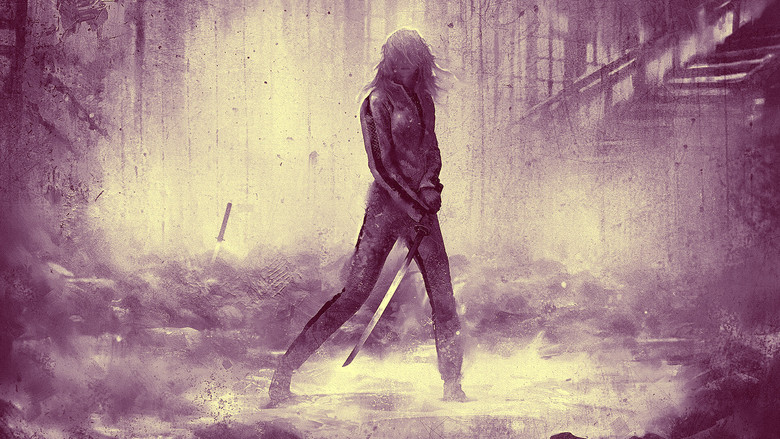
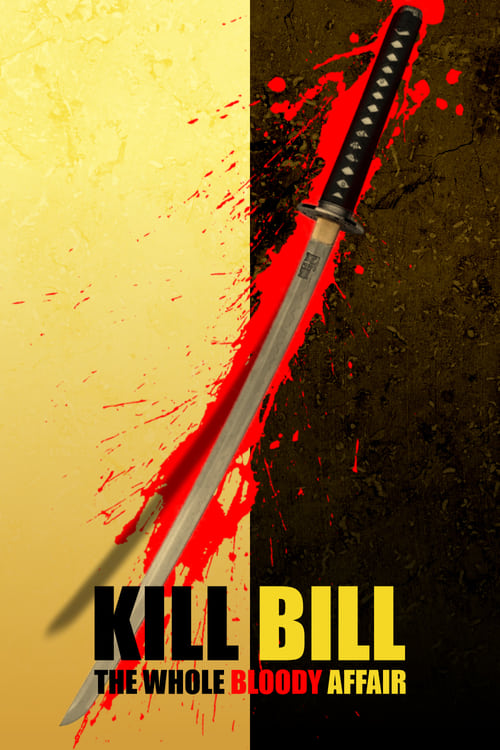
The Hattori Hanzō sword represents the pinnacle of craftsmanship, honor, and righteous purpose. It is more than a weapon; it is an instrument of destiny. For Hanzō to break his vow and forge one for The Bride signifies his belief in the righteousness of her cause. It symbolizes her singular focus and serves as the physical manifestation of her will to exact revenge.
The Bride travels to Okinawa specifically to obtain a sword from the legendary, retired swordsmith Hattori Hanzō. After she proves her worthiness and reveals her target is his former student, Bill, he agrees to make her his finest sword. He claims that if she were to encounter God on her journey, God himself would be cut.
The Yellow Tracksuit
The yellow tracksuit is a direct homage to the one worn by Bruce Lee in his final film, "Game of Death." Symbolically, the vibrant yellow makes The Bride a constant, unmissable beacon of vengeance. It stands in stark, bloody contrast to the carnage she creates, representing her relentless drive and making her an iconic figure of survival and retribution.
The Bride wears the iconic yellow-and-black tracksuit during her assault on the House of Blue Leaves in Tokyo. It is her battle uniform for the film's largest and most violent confrontation, where she single-handedly defeats the Crazy 88 and confronts O-Ren Ishii.
The Five Point Palm Exploding Heart Technique
This mythical martial arts move symbolizes ultimate, inescapable death and the culmination of The Bride's training and power. It represents a level of mastery that even Bill, her former mentor, cannot defend against. It is the secret weapon she holds, a testament to her skill and the final, poetic justice she delivers to her ultimate target.
The Bride learns this forbidden technique from her master, Pai Mei. It is a legendary move that involves five swift strikes to pressure points on the chest, causing the victim's heart to explode after they take five steps. She uses this technique to kill Bill in their final confrontation, granting him a more intimate and poetic death than a simple sword stroke.
Black and White
The use of black and white serves multiple purposes. Primarily, it was used to tone down the graphic violence of the House of Blue Leaves massacre to avoid a stricter rating from the MPAA. Narratively, it functions as a stylistic choice that heightens the dramatic impact of the scene, creating a stark, brutal, and visually distinct sequence that separates it from the rest of the film's vibrant color palette.
During the climactic battle at the House of Blue Leaves in Volume 1, the film suddenly shifts from color to black and white as The Bride begins her rampage against the Crazy 88. The Japanese release of the film notably features this entire sequence in full color.
Philosophical Questions
Is revenge a justifiable or ultimately hollow pursuit?
The film opens by championing revenge as a noble cause, a "dish best served cold." The Bride's quest is initially portrayed as righteous and satisfying. However, as the story progresses, the cost of her vengeance becomes apparent. Characters like Budd question the cycle they are all a part of. The final confrontation with Bill is less a triumphant slaughter and more a somber, philosophical debate, followed by an intimate execution. The film's final moments, focusing on The Bride's tears of relief and her new life with her daughter, suggest that while revenge might be achieved, true peace and happiness are only found by leaving that violent world behind, implying that the pursuit itself is ultimately an empty one compared to the fulfillment of love and family.
Can a person truly escape a violent past?
Beatrix's entire motivation for leaving Bill was to escape the life of an assassin for the sake of her child. Her past violently pulls her back in, forcing her to become more brutal than ever to secure a future. The film explores whether one's nature is fixed. Bill calls her a "natural born killer," suggesting she can't change. However, her final decision to walk away from it all and become simply "Mommy" is a powerful argument for the possibility of redemption and change. The question remains open-ended, as she has taught her daughter that killing can sometimes be a solution, and she has invited the possibility of future retribution from Nikki.
What is the nature of honor among killers?
The film presents a complex and often contradictory code of honor among its assassins. O-Ren Ishii demands respect and faces The Bride in a formal duel. Hattori Hanzō operates under a sworn oath, which he breaks out of a sense of responsibility. Even The Bride shows a form of honor by apologizing for killing Vernita in front of her daughter. This is contrasted sharply with the dishonorable actions of Elle Driver, who uses deceit and poison. The film constantly examines the moral lines that even the most violent characters draw for themselves, questioning whether concepts like honor and respect can coexist with a life of murder.
Core Meaning
At its heart, "Kill Bill" is an exploration of the consuming nature of revenge and the path to reclaiming one's identity. The director, Quentin Tarantino, uses the framework of a hyper-stylized revenge thriller to examine deeper themes of motherhood, betrayal, and resilience. The film posits that while vengeance can be a powerful and seemingly righteous motivator, it is ultimately a destructive force.
The true meaning of The Bride's journey shifts from a simple quest for retribution to a fight for survival and, ultimately, a mother's instinct to protect her child. The revelation that her daughter is alive transforms her mission. Her ultimate victory is not just killing Bill, but escaping the cycle of violence to build a new life. Tarantino's message suggests that true strength lies not in the ability to destroy, but in the capacity for love and the will to create a future beyond the pain of the past.