"Here comes the bride."
Kill Bill: Vol. 1 - Symbolism & Philosophy
Symbols & Motifs
The Yellow Jumpsuit
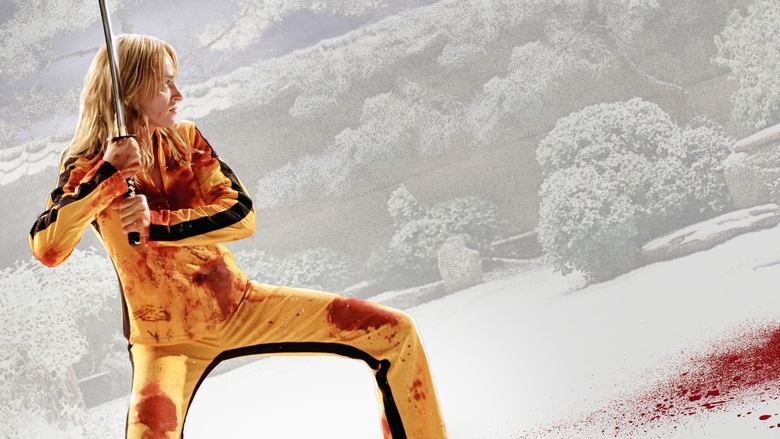
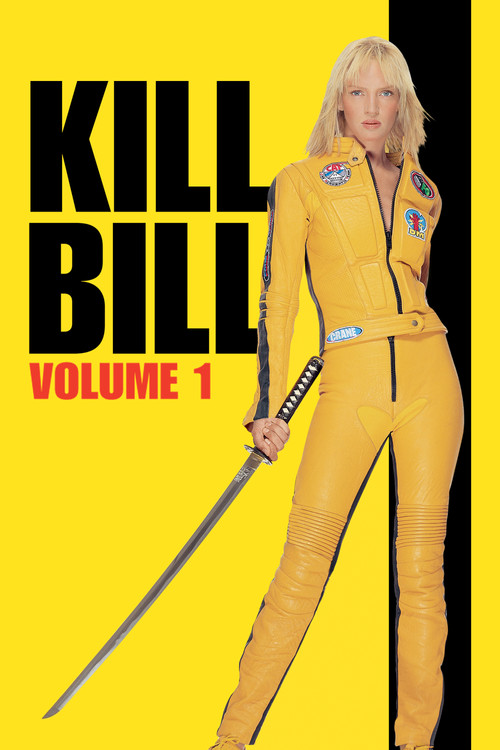
The Bride's yellow-and-black striped jumpsuit symbolizes her identity as a hunter and warrior. It is a direct and iconic homage to the outfit worn by Bruce Lee in his final, unfinished film "Game of Death" (1978). By wearing it, she channels the spirit of one of cinema's greatest martial artists, marking her as an unstoppable force of vengeance. The bright yellow color makes her a constant, unmissable target, signifying her refusal to hide and her bold confrontation of her enemies.
The Bride dons the jumpsuit before traveling to Tokyo to confront O-Ren Ishii. It becomes her signature attire for the film's climactic battle at the House of Blue Leaves, where she faces off against the Crazy 88 and O-Ren herself.
Hattori Hanzō's Sword
The sword crafted by Hattori Hanzō represents more than just a weapon; it is a symbol of ultimate quality, honor, and righteous purpose. Hanzō, a legendary swordsmith who had sworn off making instruments of death, is moved by The Bride's cause and agrees to forge his finest blade for her. He tells her, "If on your journey, you should encounter God, God will be cut." The sword is thus imbued with a mythic, almost divine power, legitimizing her quest for revenge as a matter of great importance and destiny.
The Bride travels to Okinawa specifically to obtain a sword from Hanzō. He presents it to her in a reverential ceremony, and it becomes her primary weapon in her duel against O-Ren Ishii and her army. O-Ren herself is the only victim killed by the sword in Vol. 1.
The Color Red
The color red is ubiquitously used to symbolize violence, rage, and death. It appears most prominently in the form of exaggerated, high-pressure blood sprays during the fight scenes, a stylistic choice borrowed from samurai films. Beyond the blood, red filters are used to heighten moments of intense emotion, such as flashing over The Bride's eyes before an attack, visually representing her consuming fury.
Red is pervasive throughout the film, from the blood spilled in the opening chapel massacre to the arterial sprays during the House of Blue Leaves battle. It is also used in the set design, notably in the red hallway where the Crazy 88 emerge.
Black and White Cinematography
The sudden shift to black and white during the Crazy 88 fight sequence serves two purposes. Firstly, it is an homage to American television broadcasts of 1970s kung-fu movies, which were often shown in black and white to tone down the violence for censors. Secondly, Tarantino used the technique for the same practical reason: to avoid an NC-17 rating from the MPAA due to the scene's extreme gore, without having to cut any of the action.
In the midst of the chaotic battle at the House of Blue Leaves, as The Bride is surrounded by dozens of Yakuza members, the film drains of color and switches to high-contrast black and white for a significant portion of the fight, returning to color for the final showdowns.
Philosophical Questions
What is the nature of revenge, and can it be a moral or even righteous act?
The film delves into this question by presenting The Bride's quest not as a dark, corrupting obsession but as a justified, almost holy mission. The line, "When fortune smiles on something as violent and ugly as revenge, it seems proof like no other that not only does God exist, you're doing his will," explicitly frames her actions as divinely sanctioned. The film contrasts different codes of honor: Bill's refusal to kill a defenseless Bride versus his initial betrayal, and Hattori Hanzō's sympathy for her aim despite his vow against creating weapons. It forces the audience to consider whether the brutality of her revenge is proportional to the brutality of the crime committed against her, and whether "getting even" can ever truly restore balance.
Can one truly escape a violent past?
This question is explored primarily through the character of Vernita Green. She has shed her assassin identity ("Copperhead") for a quiet suburban life as a wife and mother. However, the film makes it clear that such a transformation is superficial. The moment The Bride arrives, Vernita's killer instincts and training immediately resurface. Their brutal fight in her pristine home symbolizes the violent past crashing into and destroying the peaceful present. Her death in front of her daughter demonstrates the cyclical and inescapable nature of violence, suggesting that past deeds will always find a way to demand a reckoning.
Core Meaning
The core meaning of "Kill Bill: Vol. 1" is an exploration of revenge as an all-consuming, transformative force. Director Quentin Tarantino frames vengeance not as a simple act of retribution, but as a righteous, almost spiritual quest that gives the protagonist a singular, epic purpose. The film's opening quote, "Revenge is a dish best served cold," sets the tone for a journey that is deliberate, patient, and brutally satisfying. The film doesn't necessarily moralize on the righteousness of revenge but rather presents it as a powerful narrative engine, examining the honor codes and consequences within a world of assassins. It is a cinematic celebration of genre filmmaking, using the framework of a revenge plot to pay homage to the movies that inspired Tarantino.