Kill Bill: Vol. 1
A blood-soaked symphony of stylized vengeance, where a wronged woman's fury cuts a path of beautiful destruction through a hyper-real world of cinematic homage.
Kill Bill: Vol. 1

Kill Bill: Vol. 1

"Here comes the bride."

10 October 2003 United States of America 111 min ⭐ 8.0 (18,193)
Director: Quentin Tarantino
Cast: Uma Thurman, Lucy Liu, Vivica A. Fox, Daryl Hannah, David Carradine
Crime Action
Revenge Feminine Power and Agency Homage and Pastiche The Aesthetics of Violence
Budget: $30,000,000
Box Office: $180,906,076

Overview

"Kill Bill: Vol. 1" introduces The Bride, a former member of the Deadly Viper Assassination Squad, left for dead on her wedding day by her former master, Bill, and his associates. After awakening from a four-year coma, she discovers the loss of her unborn child and embarks on a relentless quest for revenge against those who wronged her.

Her mission is structured by a death list, and the film follows her as she hunts down the first two names: Vernita Green, now a suburban mother, and O-Ren Ishii, the new leader of the Tokyo Yakuza. The narrative is presented in a non-linear fashion, blending genres from martial arts films, samurai cinema, and spaghetti westerns into a unique, stylized whole. The Bride's journey is one of brutal, meticulously choreographed violence as she cuts her way through armies of assassins to reach her targets.

Core Meaning

The core meaning of "Kill Bill: Vol. 1" is an exploration of revenge as an all-consuming, transformative force. Director Quentin Tarantino frames vengeance not as a simple act of retribution, but as a righteous, almost spiritual quest that gives the protagonist a singular, epic purpose. The film's opening quote, "Revenge is a dish best served cold," sets the tone for a journey that is deliberate, patient, and brutally satisfying. The film doesn't necessarily moralize on the righteousness of revenge but rather presents it as a powerful narrative engine, examining the honor codes and consequences within a world of assassins. It is a cinematic celebration of genre filmmaking, using the framework of a revenge plot to pay homage to the movies that inspired Tarantino.

Thematic DNA

Revenge 40%
Feminine Power and Agency 30%
Homage and Pastiche 20%
The Aesthetics of Violence 10%

Revenge

Revenge is the film's central driving force. The Bride's entire existence is singularly focused on her "death list." The narrative treats her quest not as a descent into madness, but as a noble and necessary undertaking. The film opens with the proverb "Revenge is a dish best served cold," underlining the methodical and calculated nature of her mission. Her journey is portrayed as proof that "when fortune smiles on something as violent and ugly as revenge, it seems proof like no other that not only does God exist, you're doing his will." Each confrontation is a ritualistic step towards her ultimate goal: killing Bill.

Feminine Power and Agency

The film is a showcase of powerful female characters who defy traditional roles. The Bride is an archetypal warrior, driven by a maternal fury over the loss of her child. Her adversaries, O-Ren Ishii and Vernita Green, are equally formidable women who have achieved power in male-dominated worlds—O-Ren as the head of the Yakuza and Vernita as a seemingly perfect suburban mother with a deadly past. The film subverts the typical action hero trope by placing a determined woman at the center of its hyper-violent narrative, reclaiming her agency through force.

Homage and Pastiche

"Kill Bill: Vol. 1" is a love letter to the history of genre cinema. Tarantino borrows and remixes elements from various film styles: the Shaw Brothers' martial arts movies (explicitly referenced with the ShawScope logo), Japanese samurai (jidaigeki) films like "Lady Snowblood," spaghetti westerns, and blaxploitation films. This isn't mere imitation; it's a pastiche where these different styles are blended to create a unique cinematic language. The animated sequence for O-Ren's backstory is a direct homage to Japanese anime.

The Aesthetics of Violence

Violence in the film is highly stylized and choreographed, treated more as a form of brutal ballet than a realistic depiction of horror. The gushing sprays of blood and elaborate fight sequences, particularly the battle against the Crazy 88, are designed for cinematic impact rather than gritty realism. Tarantino uses violence as a narrative tool and an art form, elevating it beyond mere spectacle to express the intensity of The Bride's rage and the code of her assassin world.

Character Analysis

The Bride (Beatrix Kiddo)

Uma Thurman

Archetype: Antihero / The Avenger
Key Trait: Unyielding Determination

Motivation

Her primary motivation is to exact revenge on Bill and the Deadly Viper Assassination Squad for attempting to murder her, killing her fiancé, and, as she believes, killing her unborn child. This quest is fueled by a profound sense of betrayal and loss.

Character Arc

In Vol. 1, The Bride's arc is one of rebirth and reclamation. She transforms from a helpless victim, comatose in a hospital bed, into an instrument of pure vengeance. Her journey is not about moral discovery but about rediscovering her deadly skills and channeling her grief and rage into a singular, focused purpose. She systematically relearns to walk and fight, culminating in her bloody triumph in Tokyo, re-establishing herself as the formidable assassin she once was.

O-Ren Ishii

Lucy Liu

Archetype: The Rival / Tragic Villain
Key Trait: Ruthless Ambition

Motivation

O-Ren's initial motivation is revenge against the Yakuza boss who murdered her parents. This evolves into a broader ambition for power and control, leading her to become the head of the Tokyo underworld. Her immediate motivation in the film is to defend her position and life against The Bride's challenge.

Character Arc

O-Ren's arc is presented through a stunning anime flashback. She evolves from a traumatized child who witnessed her parents' murder into a deadly assassin who avenges them and rises to become the powerful, feared leader of the Tokyo Yakuza. Her story mirrors The Bride's in its theme of revenge. By the time The Bride confronts her, O-Ren is at the pinnacle of her power, a queen in her own kingdom, only to be brought down by a ghost from her past.

Vernita Green (Jeannie Bell)

Vivica A. Fox

Archetype: The Reformed Killer
Key Trait: Protective

Motivation

Her primary motivation is to protect her new life and, most importantly, her daughter from the consequences of her past actions as a Deadly Viper. She fights The Bride not for honor or ego, but for survival and to preserve the domestic world she has built.

Character Arc

Vernita's arc is one of attempted redemption cut short. Having left the assassin life behind, she has successfully integrated into suburbia, assuming a new identity and dedicating herself to her young daughter, Nikki. However, her violent past catches up to her in the form of The Bride. Her arc demonstrates that escape from one's past sins is impossible, culminating in a brutal kitchen knife fight that shatters her peaceful facade.

Bill

David Carradine

Archetype: The Mastermind / The Unseen Antagonist
Key Trait: Enigmatic

Motivation

His motivations in Vol. 1 are unclear, adding to his mystique. He is the ultimate target of The Bride's revenge, the man responsible for her pain. However, his decision to spare her in the hospital and the revelation about her daughter suggest a more complicated emotional landscape than simple villainy.

Character Arc

In Vol. 1, Bill's character is established almost entirely through dialogue and his brief, unseen presence. He is the enigmatic leader who orchestrated the massacre. His arc is one of mystery. We see a glimpse of his twisted code of honor when he calls off Elle Driver's attempt to kill the comatose Bride, stating it would "lower us." The film's final line reveals a shocking layer to his character: he has been raising The Bride's daughter, setting up his complex motivations for Vol. 2.

Symbols & Motifs

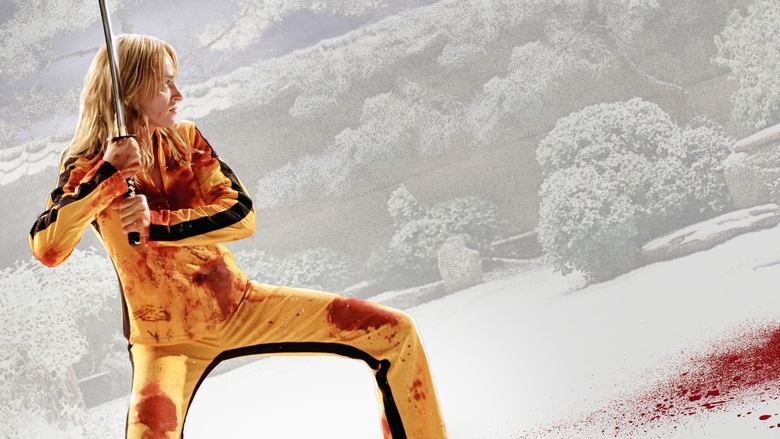
The Yellow Jumpsuit

Meaning:

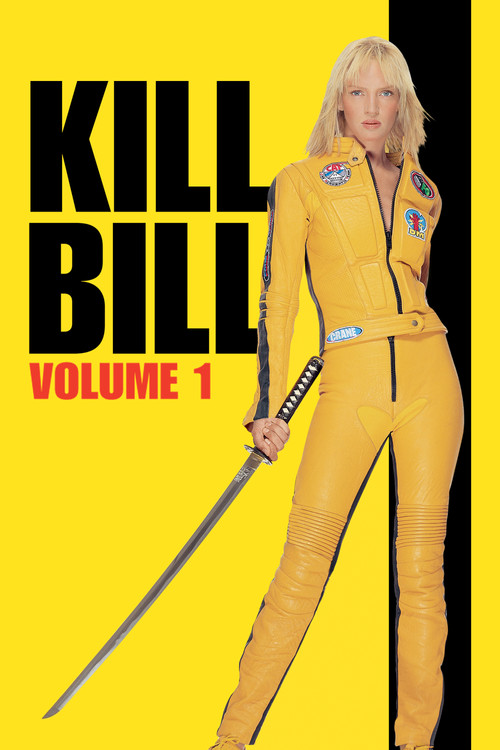
The Bride's yellow-and-black striped jumpsuit symbolizes her identity as a hunter and warrior. It is a direct and iconic homage to the outfit worn by Bruce Lee in his final, unfinished film "Game of Death" (1978). By wearing it, she channels the spirit of one of cinema's greatest martial artists, marking her as an unstoppable force of vengeance. The bright yellow color makes her a constant, unmissable target, signifying her refusal to hide and her bold confrontation of her enemies.

Context:

The Bride dons the jumpsuit before traveling to Tokyo to confront O-Ren Ishii. It becomes her signature attire for the film's climactic battle at the House of Blue Leaves, where she faces off against the Crazy 88 and O-Ren herself.

Hattori Hanzō's Sword

Meaning:

The sword crafted by Hattori Hanzō represents more than just a weapon; it is a symbol of ultimate quality, honor, and righteous purpose. Hanzō, a legendary swordsmith who had sworn off making instruments of death, is moved by The Bride's cause and agrees to forge his finest blade for her. He tells her, "If on your journey, you should encounter God, God will be cut." The sword is thus imbued with a mythic, almost divine power, legitimizing her quest for revenge as a matter of great importance and destiny.

Context:

The Bride travels to Okinawa specifically to obtain a sword from Hanzō. He presents it to her in a reverential ceremony, and it becomes her primary weapon in her duel against O-Ren Ishii and her army. O-Ren herself is the only victim killed by the sword in Vol. 1.

The Color Red

Meaning:

The color red is ubiquitously used to symbolize violence, rage, and death. It appears most prominently in the form of exaggerated, high-pressure blood sprays during the fight scenes, a stylistic choice borrowed from samurai films. Beyond the blood, red filters are used to heighten moments of intense emotion, such as flashing over The Bride's eyes before an attack, visually representing her consuming fury.

Context:

Red is pervasive throughout the film, from the blood spilled in the opening chapel massacre to the arterial sprays during the House of Blue Leaves battle. It is also used in the set design, notably in the red hallway where the Crazy 88 emerge.

Black and White Cinematography

Meaning:

The sudden shift to black and white during the Crazy 88 fight sequence serves two purposes. Firstly, it is an homage to American television broadcasts of 1970s kung-fu movies, which were often shown in black and white to tone down the violence for censors. Secondly, Tarantino used the technique for the same practical reason: to avoid an NC-17 rating from the MPAA due to the scene's extreme gore, without having to cut any of the action.

Context:

In the midst of the chaotic battle at the House of Blue Leaves, as The Bride is surrounded by dozens of Yakuza members, the film drains of color and switches to high-contrast black and white for a significant portion of the fight, returning to color for the final showdowns.

Memorable Quotes

Revenge is a dish best served cold.

— Opening Title Card

Context:

This is the very first text that appears on screen after the opening studio logos, serving as the movie's epigraph and thematic mission statement.

Meaning:

Attributed as an "Old Klingon Proverb," this quote establishes the film's central theme from the outset. It suggests that The Bride's vengeance will be methodical, patient, and devoid of heated passion, making it all the more chilling and effective. It sets the tone for a calculated and epic quest for retribution.

Silly rabbit... Trix are for kids.

— O-Ren Ishii and The Bride

Context:

In the snowy garden of the House of Blue Leaves, after a grueling fight, O-Ren mocks The Bride's chances. O-Ren says, "Silly rabbit," and The Bride thinks to herself, "Trix are for..." before O-Ren finishes the line with a condescending, "...kids."

Meaning:

This quote, exchanged during their final duel, is a darkly humorous and surreal moment that highlights the pop culture-infused world Tarantino has created. O-Ren's line is a taunt, dismissing The Bride as foolish. The Bride's mental completion of the famous cereal tagline is a moment of defiant levity, showing her unshakeable focus even in a life-or-death battle.

Those of you lucky enough to have your lives, take them with you. However, leave the limbs you've lost. They belong to me now.

— The Bride

Context:

After slaughtering most of the Crazy 88 at the House of Blue Leaves, The Bride addresses the few terrified survivors who are maimed on the floor, asserting her authority before she pursues her next target.

Meaning:

This line showcases The Bride's cold, commanding presence after her victory. It's a declaration of her total dominance and a grim warning. She is not just a killer but a conqueror who claims the spoils of her battle—the severed limbs of her enemies—as a testament to her power and a message to Bill.

If, on your journey, you should encounter God, God will be cut.

— Hattori Hanzō

Context:

Hattori Hanzō says this to The Bride as he presents her with the finest sword he has ever made, completing his part in her journey of revenge.

Meaning:

This quote elevates The Bride's sword to a mythical status. It is Hattori Hanzō's ultimate endorsement of his own craftsmanship and, by extension, The Bride's mission. He is stating that the weapon is so perfect and her cause so just that she is now equipped to challenge any power in the universe, even a divine one.

Is she aware her daughter is still alive?

— Bill

Context:

After The Bride has tortured Sofie Fatale for information, Bill finds Sofie. In a phone call, he asks this question, revealing the massive secret he has been keeping from The Bride.

Meaning:

This is the final line of the film and its most shocking twist. It completely reframes the narrative and The Bride's motivation. Her quest was fueled by the belief that she had lost everything. This revelation changes the stakes entirely, transforming a simple revenge story into a potential rescue mission and setting up a far more complex emotional conflict for Vol. 2.

Philosophical Questions

What is the nature of revenge, and can it be a moral or even righteous act?

The film delves into this question by presenting The Bride's quest not as a dark, corrupting obsession but as a justified, almost holy mission. The line, "When fortune smiles on something as violent and ugly as revenge, it seems proof like no other that not only does God exist, you're doing his will," explicitly frames her actions as divinely sanctioned. The film contrasts different codes of honor: Bill's refusal to kill a defenseless Bride versus his initial betrayal, and Hattori Hanzō's sympathy for her aim despite his vow against creating weapons. It forces the audience to consider whether the brutality of her revenge is proportional to the brutality of the crime committed against her, and whether "getting even" can ever truly restore balance.

Can one truly escape a violent past?

This question is explored primarily through the character of Vernita Green. She has shed her assassin identity ("Copperhead") for a quiet suburban life as a wife and mother. However, the film makes it clear that such a transformation is superficial. The moment The Bride arrives, Vernita's killer instincts and training immediately resurface. Their brutal fight in her pristine home symbolizes the violent past crashing into and destroying the peaceful present. Her death in front of her daughter demonstrates the cyclical and inescapable nature of violence, suggesting that past deeds will always find a way to demand a reckoning.

Alternative Interpretations

While "Kill Bill: Vol. 1" is largely a straightforward revenge epic on its surface, its rich stylistic and thematic layers allow for alternative interpretations. One prominent reading is a feminist interpretation, which sees the film as a powerful allegory for female rage and empowerment. In this view, The Bride's rampage is not just personal revenge but a symbolic destruction of patriarchal structures. She literally cuts down legions of men (the Crazy 88) to reach O-Ren Ishii, another woman who achieved power in a man's world. The film can be seen as an exploration of how women navigate and survive in a world of extreme violence, often inflicted upon them by men like Bill.

Another interpretation focuses on the film as a commentary on the nature of cinematic violence and genre itself. Rather than being a story that happens to use violence, it is a story *about* the language of violent movies. Every fight sequence is a self-conscious homage to a specific film tradition. In this reading, the characters are less realistic individuals and more like archetypes inhabiting a universe constructed entirely from other films. The Bride's journey is a tour through cinematic history, and her violence is a way of communicating in a world where the rules are defined by movie logic, not reality.

Cultural Impact

"Kill Bill: Vol. 1" was released in 2003 to both critical acclaim and commercial success, marking a significant moment in 21st-century action cinema. Its primary cultural impact lies in its masterful blend of genres and its unabashed celebration of cinematic history. Tarantino created a "movie-movie," a film deeply aware of its own cinematic lineage, referencing everything from Japanese samurai epics like "Lady Snowblood" and Hong Kong kung fu to spaghetti westerns and blaxploitation films. This postmodern approach helped to popularize the concept of pastiche for a mainstream audience.

The film's visual style, characterized by its vibrant color palette, highly choreographed and stylized violence, and non-linear narrative, has been widely influential. It revitalized interest in practical effects for action sequences in an era increasingly dominated by CGI. The character of The Bride became a feminist icon of the 2000s, a powerful female protagonist in a genre typically dominated by men. Her quest for revenge, fueled by maternal rage, offered a complex alternative to the standard action hero. The film's aesthetic, particularly The Bride's yellow jumpsuit, has become iconic and is frequently referenced and parodied in pop culture.

Critically, the film was praised for its technical mastery, visual flair, and entertaining energy, though some critics debated its emphasis on style over substance and its level of violence. For audiences, it became a beloved cult classic, solidifying Tarantino's reputation as one of the most distinctive and influential filmmakers of his generation.

Audience Reception

"Kill Bill: Vol. 1" was met with widespread positive reception from audiences upon its release. Viewers were captivated by its high-octane, stylishly choreographed action sequences, particularly the climactic battle at the House of Blue Leaves. The film's unique visual aesthetic, genre-bending narrative, and eclectic soundtrack were frequently praised. Uma Thurman's performance as The Bride was lauded as iconic, creating a powerful and memorable action hero.

The main points of criticism from some audience members centered on the film's perceived lack of emotional depth compared to Tarantino's earlier works like "Pulp Fiction," with some feeling it was style over substance. The extreme and graphic violence was also a point of contention for some viewers. The most controversial aspect for many was the abrupt cliffhanger ending, which left the story feeling incomplete and served as a clear setup for Vol. 2. Despite this, the overall verdict was overwhelmingly positive, with many considering it a masterful and wildly entertaining piece of cinema that has since become a beloved cult classic.

Interesting Facts

  • Quentin Tarantino and Uma Thurman conceived the character of The Bride and the opening scene on the set of "Pulp Fiction" (1994).
  • Production was delayed for a year because Uma Thurman became pregnant. Tarantino refused to recast the role, believing she was essential to the film.
  • The role of Bill was originally written for Warren Beatty, who turned it down but suggested David Carradine for the part.
  • The climactic battle at the House of Blue Leaves, which was planned to take two weeks to film, ended up taking eight weeks to complete.
  • Tarantino insisted on using practical effects for the blood, refusing CGI. Over 450 gallons of fake blood were used, sometimes deployed via condoms filled with the liquid to create the desired splatter effect upon impact.
  • The animated sequence detailing O-Ren Ishii's backstory was created by Production I.G, a Japanese studio famous for works like "Ghost in the Shell".
  • The film was shot in chronological order.
  • To prepare for the role, Tarantino had Uma Thurman watch three films: "The Killer," "Coffy," and "A Fistful of Dollars."
  • Japanese martial arts legend Sonny Chiba, who plays the master swordsmith Hattori Hanzō, also played the same historical character in the Japanese TV series "Shadow Warriors," a favorite of Tarantino's.

Easter Eggs

The opening quote, "Revenge is a dish best served cold," is attributed to an "Old Klingon Proverb."

This is a direct reference to the film "Star Trek II: The Wrath of Khan" (1982), where the villain Khan attributes the saying to the Klingons. It immediately establishes Tarantino's playful, pop-culture-referencing style.

The Bride's yellow tracksuit with black stripes.

This iconic outfit is a direct homage to the one worn by martial arts legend Bruce Lee in his final, unfinished film "Game of Death" (1978). It's one of the film's most recognizable visual references.

The Shaw Brothers Studio logo, "Shaw Scope," appears at the beginning of the film.

This is a tribute to the legendary Hong Kong film studio that produced hundreds of iconic kung-fu movies in the 1970s, a major influence on the film's style and action choreography.

The Bride's real name, Beatrix Kiddo, is visible on her plane ticket to Tokyo.

Throughout Vol. 1, her name is bleeped out whenever it is spoken, creating a sense of mystery akin to classic Western heroes like "The Man with No Name." This brief visual reveal is a subtle clue for eagle-eyed viewers before the official reveal in Vol. 2.

Tarantino's signature "trunk shot" appears.

A shot from the perspective of inside a car's trunk is a directorial trademark that appears in nearly all of Tarantino's films. In this movie, it's used when The Bride speaks to Sofie Fatale, who is lying in the trunk.

The use of a split-screen sequence when Elle Driver prepares to assassinate the comatose Bride.

This is a stylistic homage to director Brian De Palma, particularly his 1976 film "Carrie," which famously used split-screen to build tension during its prom scene.

⚠️ Spoiler Analysis

Click to reveal detailed analysis with spoilers

Frequently Asked Questions

Explore More About This Movie

Dive deeper into specific aspects of the movie with our detailed analysis pages

Comments (0)

Leave a comment

No comments yet. Be the first to share your thoughts!