
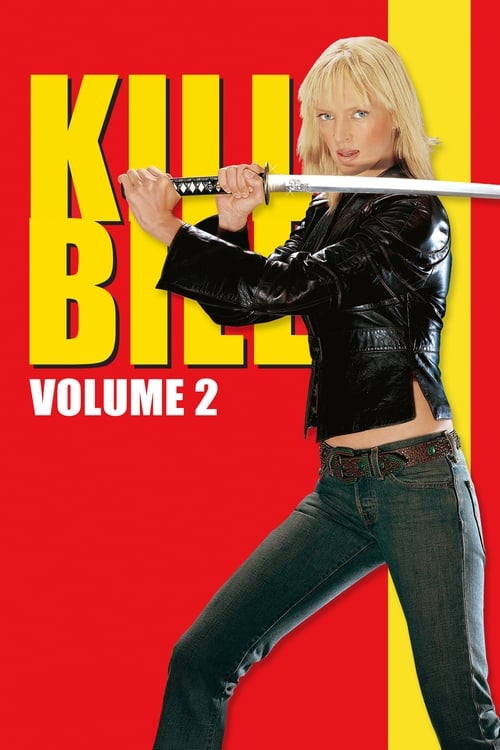
"The bride is back for the final cut."
Kill Bill: Vol. 2 - Symbolism & Philosophy
Symbols & Motifs
The Hattori Hanzō Sword
The Hattori Hanzō sword represents the pinnacle of warrior craftsmanship and the legitimacy of The Bride's quest. It is a tool of righteous revenge, forged by a master who had sworn off making instruments of death. In "Vol. 2," Budd pawning his own Hanzo sword symbolizes his rejection of the warrior code and his descent into a life of shame and regret.
The Bride carries her Hanzō sword throughout her quest. Budd's admission that he pawned his is a key character moment. He later reveals he still has it, showing his lingering connection to his past. Elle Driver's desire to possess The Bride's sword highlights her jealousy and sense of inferiority.
The Five Point Palm Exploding Heart Technique
This mythical death blow symbolizes the ultimate mastery of martial arts and a secret power dynamic. It represents knowledge so deadly that it is rarely taught. That Pai Mei chose to teach it to Beatrix signifies his profound, albeit begrudging, respect for her. It becomes the key to her victory over Bill, a victory achieved not through a prolonged, bloody battle, but through a single, precise, and almost intimate act.
Bill tells Beatrix the legend of the technique during a flashback. Beatrix uses it on Bill in their final confrontation. His surprise that she knows it is his final acknowledgment of her as his superior warrior.
Black and White Cinematography
The use of black and white serves multiple purposes. It acts as an homage to classic samurai and western films. It's also used to visually punctuate significant moments in the narrative, often those of great emotional weight or violence, such as the wedding chapel massacre. This stylistic choice can also represent the stark, moral clarity of The Bride's mission: to kill or be killed.
The opening scene depicting the wedding chapel rehearsal and subsequent massacre is shown in black and white. This stylistic choice sets a somber and serious tone for the events that drive the entire narrative.
The Superman Monologue
Bill's monologue about Superman and his alter ego, Clark Kent, is a complex metaphor for identity and nature. Bill argues that Superman's true self is the superhero, and Clark Kent is the disguise. He uses this to assert that Beatrix's true self is 'The Bride,' a killer, and her attempt at a normal life was just a costume. It symbolizes his inability to accept her transformation and his justification for his actions.
Bill delivers this monologue to Beatrix in their final confrontation, moments before their duel. It is the philosophical climax of the film, laying bare the central conflict of their relationship and The Bride's internal struggle.
Philosophical Questions
Can a person truly escape their inherent nature?
The film delves into this question through Bill's Superman monologue. He posits that Beatrix, like Superman, is a "natural born killer" and her attempt at a normal life is just a costume. The film explores whether her violent rampage is a return to her true self or a necessary evil she must perform to protect the new self she wants to become—a mother. The ending leaves this question open: is she finally at peace, or is the 'killer bee' merely dormant?
What is the true nature of justice and revenge?
"Kill Bill" moves beyond a simple "eye for an eye" morality. Budd's line, "That woman deserves her revenge, and we deserve to die. But then again, so does she," highlights the moral ambiguity. The film forces the audience to question if The Bride's actions are truly just or simply a continuation of a cycle of violence. Is her rampage a righteous quest, or is she, as Bill suggests, just a killer doing what killers do?
Can love and extreme violence coexist?
The central relationship between Beatrix and Bill is defined by both genuine affection and murderous betrayal. Bill's actions are framed as those of a spurned lover, a "crime of passion." The film explores the dark side of love, where passion curdles into a possessiveness that leads to horrific violence. Their final confrontation is filled with a palpable sense of shared history and sorrow, complicating the simple hero-villain dynamic and asking how two people who loved each other could inflict so much pain.
Core Meaning
At its heart, "Kill Bill: Vol. 2" is an exploration of the complexities of love, betrayal, and the cyclical nature of violence. While on the surface it is a revenge epic, its core meaning delves into the idea that revenge is not a simple, satisfying act but a painful and transformative journey. Director Quentin Tarantino uses the framework of a revenge plot to deconstruct the very nature of his protagonist, Beatrix Kiddo. He poses the question of whether a "natural born killer" can ever truly escape their inherent nature to find a life of peace and domesticity.
The film ultimately suggests that while the past can never be erased, a different future is possible. The driving force of the narrative shifts from pure vengeance to a powerful maternal instinct, suggesting that the desire to protect and nurture can be a more potent motivator than hatred. The conclusion is not one of triumphant celebration, but of a somber and emotionally complex resolution, implying that the cost of violence is always high, even for the one who survives.