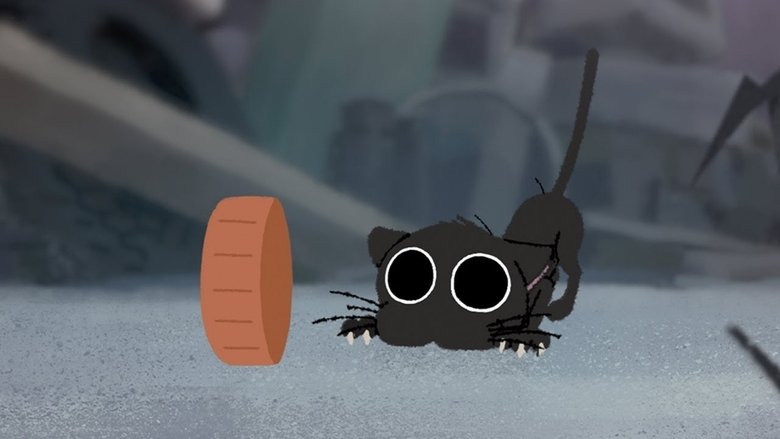

The narrative of "Kitbull" follows a stray kitten who is initially terrified of a pit bull that moves into its junkyard territory. A key turning point occurs when the kitten, caught in a six-pack plastic ring, is helped by the pit bull, though the kitten reacts with a fearful scratch. The true climax begins after the pit bull's owner viciously throws the wounded dog out into the rain after a fight. Witnessing this cruelty, the kitten's fear transforms into profound empathy. It approaches the whimpering dog in its doghouse and offers comfort by nuzzling against it.
This act solidifies their bond, and they become friends, playing together with a bottle cap. When the abusive owner returns, the kitten, now protective of its friend, helps the pit bull break free from its chain. They escape the yard together by climbing a fence. The ending reveals their ultimate fate: they are found by a kind woman and her partner. Although initially hesitant, the animals are won over by her gentle approach. The final shot shows the kitten and the pit bull happy and safe in a new, loving home, playing together in a sunny park with their new owners, providing a hopeful and emotionally cathartic conclusion.