
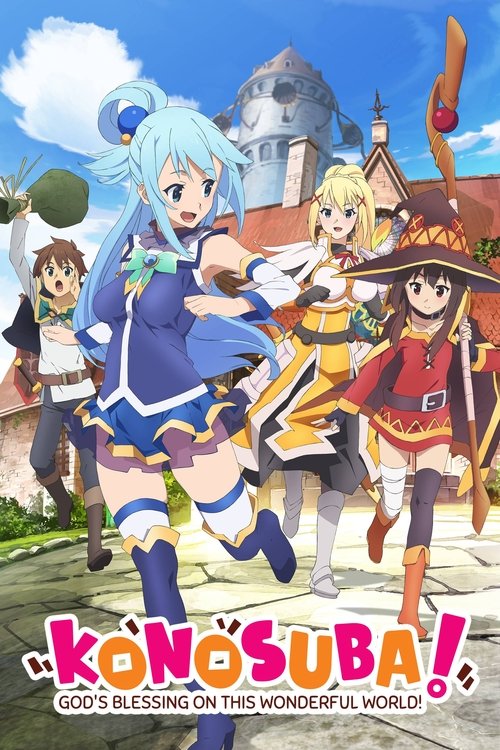
この素晴らしい世界に祝福を!
KONOSUBA - God's blessing on this wonderful world! - Symbolism & Philosophy
Symbols & Motifs
Explosion Magic
Explosion magic symbolizes ultimate, impractical power and obsessive passion. It's the single most powerful spell, capable of wiping out formidable foes, but it's also completely inefficient, draining all of Megumin's mana in one go and leaving her useless. It represents a commitment to a single, beloved ideal, regardless of its practicality or consequences.
Used by Megumin in nearly every major battle throughout the series. Her daily ritual of casting Explosion on an abandoned castle becomes a running gag. The spell is often the party's trump card, solving problems that conventional tactics cannot, such as destroying the mobile fortress Destroyer or defeating Demon King's generals.
The Town of Axel
Axel, the town for beginner adventurers, symbolizes home and the mundane reality that undercuts grand fantasy adventures. It is not a stepping stone to a greater journey but the destination itself. It represents the comfortable, static life that Kazuma secretly craves, a place where even the most epic quests end with returning to the same guild hall for a drink.
The party is based in Axel for the entirety of the series. Despite their occasional forays to other locations (like the hot springs town of Alcanretia or Megumin's home village), they always return. It's where they take on quests, accumulate debt, and live their daily lives, grounding their fantasy existence in a familiar, almost suburban reality.
Kazuma's Green Tracksuit
Kazuma's tracksuit symbolizes his connection to his former life as a shut-in (NEET) on Earth and his persistent identity as an outsider in the fantasy world. He never fully sheds his old self, retaining his cynical, modern-world perspective. The tracksuit is a visual reminder that he is not a traditional fantasy hero, but a regular, lazy person thrown into extraordinary circumstances.
Kazuma wears his green tracksuit from the moment he arrives in the new world. While he occasionally wears armor over it, the tracksuit remains his primary attire. It stands in stark contrast to the typical fantasy garb of other adventurers, visually marking him as different and reinforcing his pragmatic, unheroic nature.
Philosophical Questions
What is the true nature of happiness and fulfillment?
The series constantly poses this question by contrasting the grand, heroic destiny offered by the world (defeating the Demon King) with the mundane, chaotic life the characters actually lead. Kazuma and his party achieve a strange form of happiness not by pursuing greatness, but by embracing their failures and finding joy in their dysfunctional companionship. It suggests that fulfillment is not tied to achievement or purpose, but to finding a place where one's flawed self is accepted.
Does power have any inherent value without practical application?
KONOSUBA explores this through its characters' abilities. Aqua is a goddess with immense divine power, yet she is functionally useless due to her low intelligence. Megumin has the ultimate offensive spell but can only use it once a day. Darkness is invincibly durable but can't land a blow. The series questions the traditional RPG focus on 'power levels', arguing that raw power is meaningless if it can't be applied effectively or if the wielder is too flawed to use it properly. It values cleverness, luck, and unorthodox thinking (personified by Kazuma) over sheer strength.
Core Meaning
The core meaning of KONOSUBA is a satirical celebration of imperfection and the joy of finding belonging in unexpected places. The series aggressively subverts the power-fantasy tropes common in the isekai (another world) genre. Instead of an overpowered protagonist, it presents Kazuma, who is cynical, pragmatic, and surrounded by a party of utterly useless specialists. The message is that you don't need to be perfect, powerful, or heroic to find happiness and build meaningful relationships. It suggests that a life filled with chaotic, flawed, but loyal companions can be more fulfilling than a solitary quest for greatness. The series champions the idea of embracing one's flaws, laughing at misfortune, and appreciating the messy, wonderful, and often ridiculous journey of life, even in a fantasy world.