怪談
"In the tradition of "RASHOMON" and "GATE OF HELL.""
Kwaidan - Symbolism & Philosophy
Symbols & Motifs
Black Hair
Symbolizes enduring attachment, resentment, and the physical manifestation of a grudge that survives death.
In the first segment, the wife's hair becomes an independent living entity, entrapping the samurai who betrayed her.
The Eye in the Sky
Represents the surreal, all-seeing presence of the supernatural or the indifferent universe watching human frailty.
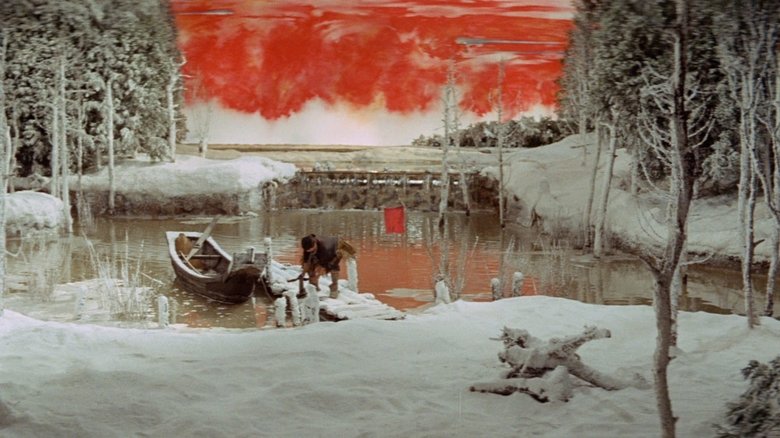
Featured in the backdrop of "The Woman of the Snow", giant painted eyes on the cyclorama watch the woodcutter in the blizzard.
The Biwa
A vessel for history and sorrow, capable of bridging the gap between the living and the dead through sound.
Hoichi uses the instrument to recount the tragic fall of the Heike clan, effectively summoning their restless spirits.
Cup of Tea
A portal between dimensions; the mundane act of drinking becomes an invitation for a haunting.
A samurai sees a smiling face in his tea cup but drinks it anyway, internalizing the ghost and sealing his fate.
Philosophical Questions
Are we prisoners of our past actions?
The film suggests that karma is inescapable. In "The Black Hair" and "Hoichi", the past (a betrayed wife, a fallen clan) literally refuses to die, physically marking and attacking the living. It asks if redemption is possible or if some debts can only be paid with suffering.
What is the relationship between the observer and the observed?
In "In a Cup of Tea", the samurai sees a face because he looks; the writer is trapped because he writes. The film questions whether supernatural phenomena exist independently or are summoned by the act of witnessing them.
Core Meaning
At its heart, Kwaidan explores the friction between the material world and the spiritual realm. Kobayashi uses the supernatural not just for scares, but to visualize mujō (impermanence) and the consequences of human folly. The film suggests that the spiritual world is always present, indifferent to human suffering, and bound by strict, often cruel laws that mortals infringe upon at their peril. It transforms folklore into a meditation on the power of art, memory, and the inevitable return of the past.