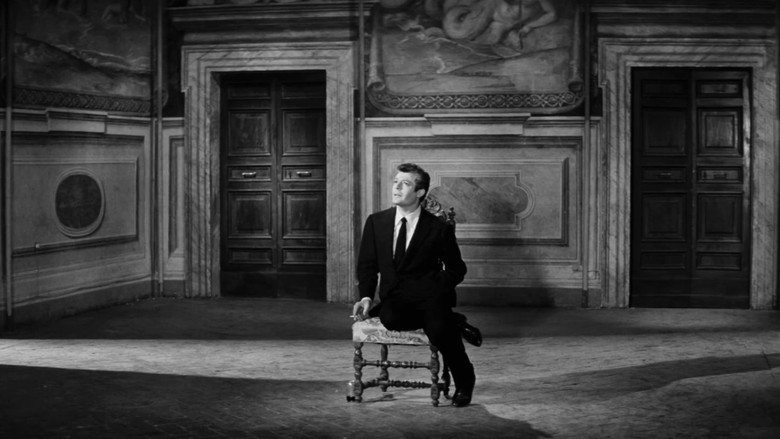

The narrative structure of "La Dolce Vita," being episodic, doesn't rely on a single major plot twist, but rather on a cumulative portrait of moral and spiritual decay, with a key tragic event acting as the point of no return. Throughout the film, Marcello flirts with the idea of a more meaningful life, symbolized by his intellectual friend, Steiner. Steiner represents everything Marcello aspires to be: a respected intellectual with a beautiful family and a serene, cultured home. Marcello sees Steiner's life as a refuge from the chaos and superficiality of his own.
The critical turning point of the film is the revelation that Steiner has killed his two children and then himself. This horrific act completely shatters Marcello's illusions. The man he idolized, the embodiment of the perfect, intellectual life, was secretly harboring an immense despair. This tragedy reveals that the perceived 'sanctuary' of a stable, intellectual life offers no real protection from existential dread; in fact, it may hide an even deeper 'hell'. This event serves as the final catalyst for Marcello's descent. Having lost his only role model for a better life, he abandons his literary ambitions entirely and dives headfirst into the debauchery he once only chronicled. In the final episode, he is no longer an observer but the ringleader of a pathetic orgy, his soul seemingly deadened.
The film's ending reinforces this spiritual death. On the beach after the orgy, the partygoers find a monstrous, dead fish. As Marcello stares into its lifeless eye, he sees a reflection of his own soullessness. Across a small channel, Paola, the young, innocent waitress he met earlier, calls out to him. The noise of the sea and wind prevents him from hearing her; he is literally and figuratively unable to comprehend the language of innocence anymore. He shrugs, turns his back on her, and rejoins the remnants of the party. This final act confirms his surrender to the 'sweet life' and his complete alienation from the possibility of redemption or purity. Paola's final, enigmatic smile to the camera suggests that innocence still exists, but it is a world Marcello can no longer enter.