La Dolce Vita
A satirical drama's hypnotic descent into the beautiful emptiness of Roman high society, mirroring a soul's search for meaning in a world of fleeting pleasures.
La Dolce Vita

La Dolce Vita

La dolce vita

"The world’s most talked about movie today!"

05 February 1960 France 176 min ⭐ 8.1 (1,964)
Director: Federico Fellini
Cast: Marcello Mastroianni, Anita Ekberg, Anouk Aimée, Yvonne Furneaux, Magali Noël
Drama Comedy
The Emptiness of Excess Love vs. Lust The Corruption of Modern Society The Search for Meaning
Box Office: $19,647,000

Overview

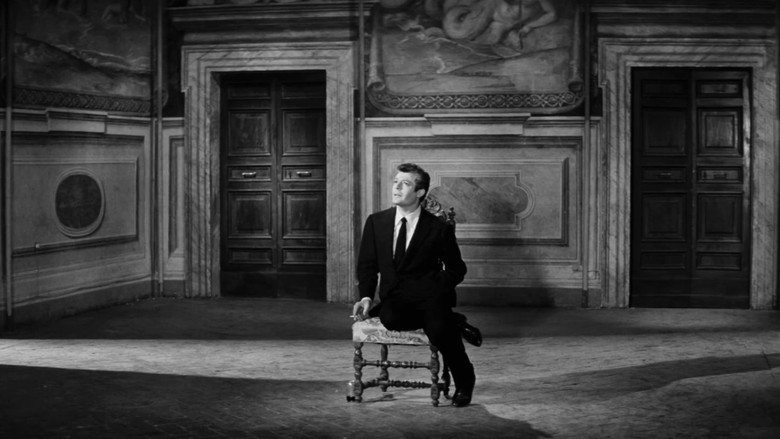
"La Dolce Vita" follows Marcello Rubini (Marcello Mastroianni), a journalist and aspiring writer in Rome, over seven days and nights. The film is structured episodically, with a prologue, seven major episodes, an intermezzo, and an epilogue. Marcello chronicles the lives of the rich and famous, attending lavish parties, and pursuing fleeting romances while struggling with his own existential emptiness and the superficiality of the world he inhabits.

His life is a whirlwind of encounters: with the voluptuous American actress Sylvia (Anita Ekberg), which culminates in the iconic scene at the Trevi Fountain; with a disillusioned intellectual friend, Steiner (Alain Cuny), who appears to have the perfect life Marcello craves; and with his possessive and unstable fiancée, Emma (Yvonne Furneaux). Through these vignettes, the film paints a portrait of a society grappling with modernity, fame, and a loss of traditional values, all seen through the eyes of a man searching for a more meaningful existence amidst the chaos of "the sweet life."

Core Meaning

The core meaning of "La Dolce Vita" is a profound critique of a society consumed by superficiality, decadence, and the loss of genuine connection. Director Federico Fellini explores the emptiness that lies beneath a glamorous facade, suggesting that the relentless pursuit of pleasure and fame leads not to happiness, but to moral and spiritual decay. The film's title, "The Sweet Life," is deeply ironic, as it portrays a world where characters are unable to find true fulfillment despite their immersion in luxury and hedonism. Ultimately, Fellini questions the very definition of a "good life," contrasting the seductive allure of modern excess with a yearning for innocence, authenticity, and a deeper sense of purpose that remains just out of reach.

Thematic DNA

The Emptiness of Excess 35%
Love vs. Lust 25%
The Corruption of Modern Society 20%
The Search for Meaning 20%

The Emptiness of Excess

A central theme is the excessive and decadent lifestyle of Roman high society. Marcello is surrounded by lavish parties, wealth, and constant stimulation, yet this opulence only highlights a profound inner void. The characters' pursuit of hedonistic pleasures serves as a distraction from their existential angst and inability to form meaningful connections, ultimately showcasing a world that is glamorous on the surface but spiritually bankrupt underneath.

Love vs. Lust

The film constantly explores the dichotomy between genuine love and fleeting lust. Marcello is caught between his smothering, maternal love for his fiancée Emma and his numerous, passionless affairs with other women like Maddalena and Sylvia. His inability to commit to true love and his constant search for new romantic conquests reflect his deeper inability to find personal fulfillment and happiness.

The Corruption of Modern Society

"La Dolce Vita" serves as an allegory for the moral decay of post-war Italian society. The film juxtaposes sacred religious symbols with profane, modern behavior, suggesting a loss of traditional values in the face of economic boom and consumerism. The rise of celebrity culture and the intrusive nature of the paparazzi further illustrate this societal corruption and the loss of authenticity.

The Search for Meaning

At its heart, the film is about Marcello's fruitless search for meaning and happiness in his life. He is a man with literary aspirations who has been seduced by the easy money and glamour of tabloid journalism. Throughout the film, he grapples with his choices, yearns for a more authentic existence, and is ultimately left disillusioned and unable to connect with the purity and innocence that might offer salvation.

Character Analysis

Marcello Rubini

Marcello Mastroianni

Archetype: Antihero
Key Trait: Disillusioned

Motivation

Marcello is motivated by a conflicted desire for both the fleeting pleasures of Rome's high society and a deeper, more authentic existence. He craves excitement, women, and fame, yet is simultaneously disgusted by the emptiness of this lifestyle and yearns for the intellectual and stable life he believes his friend Steiner possesses.

Character Arc

Marcello begins as a disillusioned journalist with lingering literary ambitions, caught in a world of superficial glamour. He does not experience a traditional redemptive arc; instead, he spirals deeper into a life of hedonism and self-loathing. By the end of the film, after the tragic suicide of his intellectual friend Steiner, Marcello abandons his aspirations and fully embraces the debauchery he once only observed, becoming a publicity agent. His final inability to understand the innocent Paola signifies his complete disconnection from a more meaningful life.

Sylvia

Anita Ekberg

Archetype: The Temptress / The Ideal
Key Trait: Voluptuous

Motivation

Sylvia is motivated by the pursuit of pleasure and sensation. She is a creature of impulse, whether it's dancing wildly in the Baths of Caracalla, climbing the dome of St. Peter's, or wading into the Trevi Fountain. Her motivations are simple and immediate, contrasting with Marcello's complex internal conflicts.

Character Arc

Sylvia is a larger-than-life American movie star who represents the ultimate fantasy of the "sweet life." Her character is more symbolic than developmental. She appears as a force of nature—uninhibited, sensual, and seemingly carefree. She serves as a catalyst for one of Marcello's most significant escapades into pure fantasy, but her presence is fleeting, and she ultimately remains an unattainable ideal for him.

Maddalena

Anouk Aimée

Archetype: The Femme Fatale
Key Trait: Jaded

Motivation

Maddalena is motivated by a desperate need to escape her own boredom. She seeks excitement and novelty, whether it's spending the night in a prostitute's apartment or exploring a dilapidated castle. Her wealth provides no fulfillment, leaving her in a constant state of jaded dissatisfaction.

Character Arc

Maddalena is a wealthy, beautiful, and perpetually bored heiress. Like Sylvia, her character does not have a significant arc but rather represents a particular facet of the decadent society Marcello inhabits. She is restless and constantly seeking new sensations to escape her ennui. Her relationship with Marcello is purely physical and thrill-seeking, as shown when she loses interest in him moments after proposing marriage.

Emma

Yvonne Furneaux

Archetype: The Martyr / The Confidante
Key Trait: Possessive

Motivation

Emma's primary motivation is to possess Marcello completely. She wants a conventional life with him—a husband, a home, and children. Her love is described as aggressive and maternal, and her actions, from her suicide attempt to her constant arguments, are all driven by her desperate desire to hold on to a man who is emotionally unavailable.

Character Arc

Emma is Marcello's long-suffering fiancée. Her character remains largely static throughout the film, defined by her possessive, all-consuming love for Marcello. She experiences moments of extreme crisis, such as her suicide attempt at the beginning of the film, but her fundamental character and her dysfunctional dynamic with Marcello do not change. She represents a form of domestic life and traditional love that Marcello finds suffocating and ultimately rejects.

Steiner

Alain Cuny

Archetype: The Mentor / The Broken Ideal
Key Trait: Intellectual

Motivation

Steiner's motivations are complex and ultimately rooted in a profound existential fear. He confesses to Marcello his fear of peace, seeing it as a fragile facade hiding the chaos of life. He seeks a detached, harmonious existence beyond passion but is ultimately consumed by a darkness that leads him to commit an unthinkable act to protect his children from the life he dreads.

Character Arc

Steiner is a wealthy intellectual whom Marcello admires and sees as an ideal. He has a beautiful wife, children, a home filled with art and intelligent friends—everything Marcello thinks he wants. However, Steiner's arc is tragic and shocking. Beneath his serene exterior, he harbors a deep despair about the future, which culminates in him murdering his two children and committing suicide. This act shatters Marcello's idealized view and serves as a major catalyst for his final descent into nihilism.

Symbols & Motifs

The Statue of Christ

Meaning:

The statue of Christ being flown over Rome by helicopter symbolizes the clash between the sacred and the profane in modern society. It represents the foundations of Catholicism in Italian society, but its commercialized transportation suggests a society that has become detached from its spiritual roots.

Context:

This is the opening scene of the film. Marcello follows in another helicopter, not out of religious reverence, but as a journalist covering a story, and he is easily distracted by sunbathing women below.

The Trevi Fountain

Meaning:

The Trevi Fountain symbolizes a moment of potential change and ephemeral beauty in Marcello's life. His wading into the fountain with Sylvia represents a fleeting, almost magical escape from the sordid reality of his existence, a baptism into a world of fantasy that cannot last.

Context:

In one of the film's most iconic scenes, the American actress Sylvia impulsively wades into the Trevi Fountain at dawn, and Marcello follows her. The fantasy is shattered when the fountain's water is turned off and Sylvia's fiancé arrives and assaults Marcello.

The Monstrous Fish

Meaning:

The dead sea monster pulled from the sea at the end of the film represents the monstrousness and decay of the society Marcello has embraced. Its dead, staring eye reflects Marcello's own spiritual emptiness and his inability to truly see or connect with the world anymore.

Context:

In the film's epilogue, after a night of debauchery, the partygoers gather on a beach where fishermen have caught a large, grotesque sea creature. Marcello stares into its dead eye before being called to by the innocent Paola across an estuary.

Water

Meaning:

Water appears frequently throughout the film as a powerful motif symbolizing life, rebirth, and fertility. However, it often appears in tainted or artificial forms, such as the Trevi Fountain or a prostitute's flooded apartment, suggesting a corrupted or unattainable purity.

Context:

Water is present in many key scenes: the Trevi Fountain sequence, the storm during the fake miracle, and the final scene at the beach by the sea.

Memorable Quotes

You are the first woman on the first day of creation. You are mother, sister, lover, friend, angel, devil, earth, home.

— Marcello Rubini

Context:

Marcello says this to Sylvia during their night together, as they wander through the streets of Rome, culminating in the iconic scene at the Trevi Fountain.

Meaning:

This quote, delivered to Sylvia, encapsulates Marcello's tendency to idealize women and project his own desires and fantasies onto them. It reveals his romantic but ultimately superficial view of love, seeing women not as individuals but as archetypes meant to fulfill his needs.

Even the most miserable life is better than a sheltered existence in an organized society where everything is calculated and perfected.

— Steiner

Context:

Steiner says this to Marcello during the party at his home, offering a chilling warning against the kind of stable, intellectual life that Marcello envies.

Meaning:

This line reveals the deep-seated existential dread beneath Steiner's seemingly perfect life. It serves as a dark premonition of his eventual tragic actions, suggesting that his fear of a meaningless, overly structured existence is what ultimately destroys him. It's a critique of a certain kind of sterile intellectualism that Marcello idealizes.

I don't believe in your aggressive, sticky, maternal love! I don't want it, I have no use for it! This isn't love, it's brutalization!

— Marcello Rubini

Context:

Marcello screams this at Emma during a heated argument in his car, after which he violently throws her out and leaves her on a deserted road.

Meaning:

This quote starkly reveals Marcello's feelings of suffocation in his relationship with Emma. It highlights the theme of love versus possession and his inability to accept the kind of domestic, dependent love that Emma offers, which he perceives as a trap that stifles his freedom.

Philosophical Questions

What constitutes 'the sweet life'?

The film relentlessly interrogates the meaning of a good or happy life. It presents a world dedicated to the pursuit of pleasure, wealth, and fame, only to reveal the profound emptiness and dissatisfaction this quest engenders. Through Marcello's journey and the tragic fate of Steiner, who seemingly has an ideal life but is secretly tormented, the film asks whether true happiness can be found in external circumstances or hedonistic pursuits, suggesting instead that it lies in a deeper sense of purpose and genuine human connection that the characters are unable to achieve.

Can one find authenticity in a superficial world?

Marcello is an aspiring writer trapped in the superficial world of tabloid journalism. His central conflict is the struggle between his desire for a more meaningful, authentic existence and the seductive allure of the easy, glamorous life he documents. The film explores whether it's possible to maintain one's soul and artistic integrity while being immersed in a culture that values spectacle over substance. Marcello's ultimate failure to write his novel and his descent into a more cynical profession suggest a deeply pessimistic answer.

How does modernity affect spirituality?

"La Dolce Vita" repeatedly juxtaposes religious iconography with modern decadence. From the opening scene of a statue of Christ being flown over modern Rome to the farcical media circus surrounding a supposed miracle, the film questions the place of faith and traditional morality in a rapidly modernizing, media-saturated society. It suggests that spirituality itself has become a commodity, another spectacle to be consumed, leaving a spiritual vacuum in its wake.

Alternative Interpretations

While the dominant interpretation sees "La Dolce Vita" as a critique of decadent society and a portrait of existential despair, alternative readings exist. Some view the film not just as a condemnation but also as an enchanted, albeit melancholic, celebration of the very life it portrays. Fellini's camera often seems seduced by the glamour and beauty of the world he is critiquing, creating an ambiguous tone where judgment is mixed with a certain fascination.

Another interpretation focuses on the ending's ambiguity. When Marcello cannot hear Paola, the young girl representing innocence, and turns back to his degenerate friends, it can be seen as his final damnation. However, some critics argue that his shrug is a moment of self-awareness and resignation, not total failure. The final shot is of Paola smiling at the camera, which could be interpreted as a glimmer of hope, suggesting that the possibility of innocence and purity still exists in the world, even if Marcello can no longer access it. This leaves the film's ultimate message open to debate: is it a story of complete spiritual death, or does it contain a subtle, lingering hope for salvation?

Cultural Impact

"La Dolce Vita" had an immense cultural impact both in Italy and worldwide, becoming a landmark of European cinema. Released during Italy's post-war "economic miracle," the film captured the zeitgeist of a nation grappling with newfound prosperity, consumerism, and a seismic shift in social values. It defined an era, making Rome's Via Veneto the epicenter of glamour, celebrity culture, and the carefree lifestyle that the film's title ironically describes. The film's influence on fashion was significant, with the sleek, tailored suits worn by Marcello Mastroianni and the glamorous dresses of Anita Ekberg cementing an image of Italian style that endures to this day.

Its influence on cinema was groundbreaking. Fellini's episodic, non-linear narrative structure broke from conventional storytelling and influenced countless directors. The term "Felliniesque" entered the cinematic lexicon to describe the film's unique blend of the surreal, the carnivalesque, and the poignant. Furthermore, the film gave the world the word "paparazzi," forever changing the language used to describe celebrity photographers. Despite being condemned by the Vatican upon its release, "La Dolce Vita" was a commercial and critical success, winning the Palme d'Or and solidifying Fellini's reputation as one of cinema's great auteurs.

Audience Reception

Upon its release, "La Dolce Vita" was met with both widespread acclaim and significant controversy. Audiences flocked to see it, making it a massive commercial success. Many were captivated by its stunning visuals, its depiction of a glamorous and decadent Rome, and Marcello Mastroianni's charismatic performance. However, its explicit portrayal of hedonism, sexuality, and moral ambiguity was shocking to many in 1960. The Catholic Church and the Vatican's official newspaper condemned the film as immoral, leading to calls for its censorship and banning in several countries, including Spain. This controversy, ironically, only fueled public interest. Critics were largely laudatory, praising Fellini's ambitious vision and stylistic innovation, culminating in the film winning the prestigious Palme d'Or at the Cannes Film Festival.

Interesting Facts

  • The film is credited with popularizing the term "paparazzi," which is derived from the name of the news photographer character, Paparazzo. The origin of the name itself is debated, with theories ranging from an Italian dialect word for a buzzing insect to a name found in a book by George Gissing.
  • The iconic Trevi Fountain scene was shot over a week during a cold winter. While Anita Ekberg reportedly had no issue standing in the cold water for hours, Marcello Mastroianni had to wear a wetsuit under his clothes and drank a bottle of vodka to stay warm.
  • Most of the film, including the famous Via Veneto scenes, was shot on elaborate sets built at Rome's Cinecittà Studios. Director Federico Fellini had a full-scale replica of the street constructed to have more control over the filming, which he paid for out of his own profits.
  • The film was a major international success and won the Palme d'Or at the 1960 Cannes Film Festival. However, it was condemned by the Vatican newspaper, L'Osservatore Romano, for its depiction of decadence and immorality, which led to it being censored or banned in some countries.
  • Fellini auditioned over 5,000 teenage girls to find the right actress for the small but symbolic role of Paola, the young waitress who represents innocence.

⚠️ Spoiler Analysis

Click to reveal detailed analysis with spoilers

Frequently Asked Questions

Explore More About This Movie

Dive deeper into specific aspects of the movie with our detailed analysis pages

Comments (0)

Leave a comment

No comments yet. Be the first to share your thoughts!