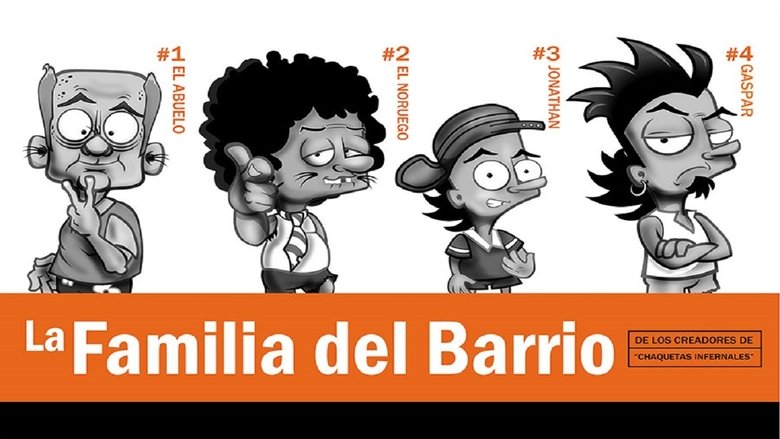
"La Familia del Barrio" does not rely on a serialized plot with major twists, but rather on a consistent sitcom formula where the status quo is largely restored by the end of each episode. The primary "spoilers" relate to the consistent reinforcement of the characters' core natures rather than transformative events. El Abuelo never finds redemption; he remains a lecherous, self-serving manipulator throughout all seasons. Any opportunity for him to show genuine affection is invariably revealed to be part of a selfish scheme, such as when he helps Peluzín with an inheritance only to try and steal it. Similarly, El Noruego never becomes responsible. In one episode, he gets face tattoos that symbolize murders in gang culture; when offered money to remove them, he instead uses it to get more tattoos, perfectly encapsulating his inability to make a good decision.
The overarching narrative across the series is cyclical. Gaspar will always be the frustrated voice of reason, and Jonathan will always be the mature child observing the chaos. The comedy and tragedy of the series, revealed fully only after watching multiple seasons, is its deliberate stasis. There is no escape for the characters from their environment or from themselves. The finale of any given storyline is almost always a return to their dysfunctional baseline, often with their situation being slightly worse than when they started. The ultimate revelation is that the characters are trapped in a self-perpetuating cycle of poverty and poor choices, and the humor is derived from the creative and absurd ways they fail time and time again.