
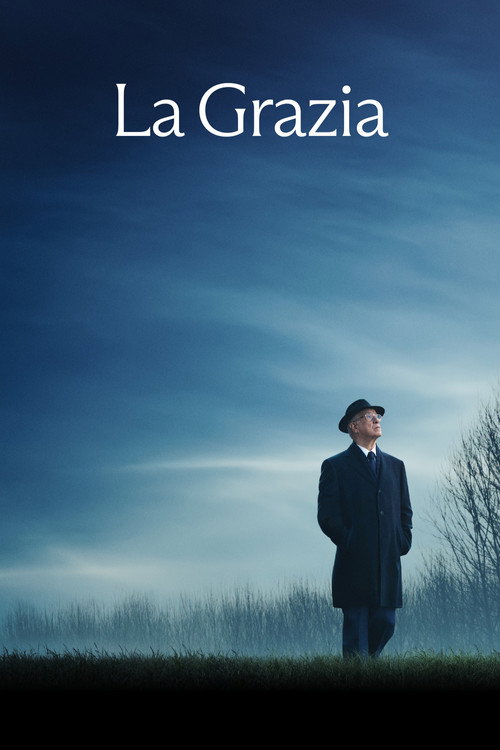
Note: the following reflects what the available reviews and festival materials state about the plot, plus interpretation where sources do not specify outcomes in detail.
The architecture. Mariano De Santis enters the film with six months of his final term remaining and three decisions pending: two petitions for presidential clemency and the promulgation of a euthanasia bill. The petitions are chosen with surgical intent. The first comes from a woman who killed an abusive husband — a case about a life defended. The second comes from a man who ended the life of his wife in the advanced stages of Alzheimer's — a case about a life released. Between them they exhaust the moral field the bill will legislate.
The trap. The euthanasia bill has been prepared and championed by his own daughter Dorotea. Every constitutional deliberation is therefore also a family argument, and every refusal to decide is also a refusal of her. Sorrentino sets this against the President's widowerhood: his marriage is the unfinished business the pardons keep reopening, and the Alzheimer's petitioner is explicitly his mirror — another husband forced to decide what love owes a dying wife. What looks like an ethics-of-the-state film is, structurally, a man being asked to relitigate his own grief in public, under seal.
The movement. The film's question, asked outright — who owns our days? — is answered late and with deliberate insufficiency: they are ours, but a lifetime is not enough to understand it. That formulation is the key to the ending. De Santis does not arrive at a doctrine; he arrives at permission to act without one. Reviewers consistently describe the destination as grace and forgiveness rather than resolution — the legal grazia he can grant to others finally coinciding with the theological grace he cannot grant himself and must simply receive.
What becomes clear afterwards. The title has been the answer the whole time. The two meanings of grazia are not a pun the film makes but the structure it is built on: the pardon plot and the mourning plot are the same plot in two registers. The rigour that made De Santis a great jurist is retroactively revealed as the mechanism by which he avoided his wife, his daughter and his own mortality — and his surrender of certainty at the close is not weakness but the first genuinely free act of his presidency. The expiring mandate, read back, was always a memento mori: the countdown was never to the end of a term.