"A man's obsession with an image of his past"
La Jetée - Symbolism & Philosophy
Symbols & Motifs
The Museum
The museum, filled with taxidermied animals and ancient statues, symbolizes time that has been artificially frozen and preserved. It represents a past kept in stasis, much like the photographs that constitute the film and the memories that haunt the protagonist.
The Man and the Woman wander through a natural history museum. In these scenes, they themselves appear as static as the exhibits, captured in still frames. This visually reinforces the idea that in returning to the past, they are visiting a world that is, from the protagonist's perspective, already dead and preserved only in memory.
The Jetty (Observation Deck)
The jetty at Orly Airport is the film's central location, a literal and metaphorical platform for departures and arrivals, both physical and temporal. It is a point of intersection between past, present, and future, and the site where the protagonist's life and death are inextricably linked.
The film begins and ends on the jetty. It is the location of the protagonist's foundational childhood memory—the image of the woman and the man's death. His final return to the past brings him back to this same spot, where he fulfills his destiny by being killed in front of his younger self.
The Sequoia Tree Slice
The cross-section of a sequoia tree, with its rings marking historical dates, symbolizes the vast, linear, and recorded nature of history. It is a tangible map of time that the characters can observe from the outside.
In a direct homage to Alfred Hitchcock's Vertigo, the couple looks at a slice of a sequoia tree. The woman points to dates within the rings, but the man from the future points to a spot outside the trunk, telling her, "This is where I come from." This act signifies his existence outside of her known timeline and history.
Eyes and Blindfolds
Eyes and vision are central motifs representing perception, memory, and the subjective nature of reality. The blindfolds used during the experiments symbolize a forced inward journey into the landscape of the mind, blocking out the external present to access the internal past.
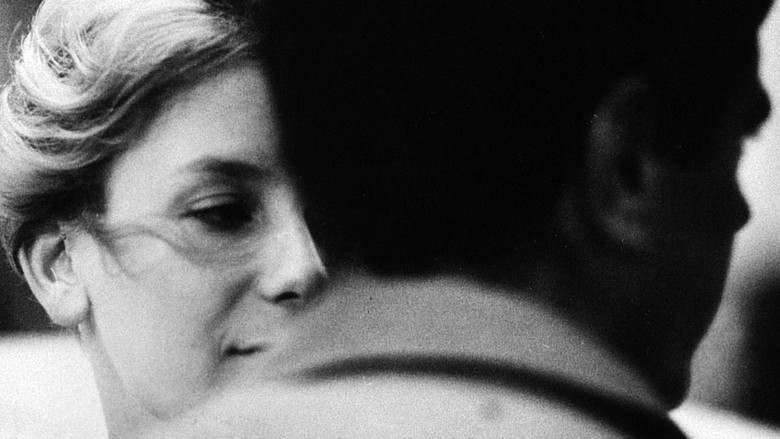
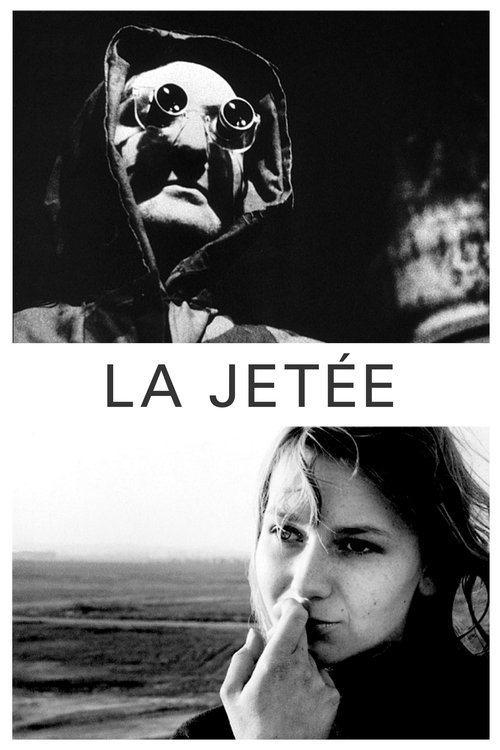
During the time-travel experiments, the protagonist's eyes are covered with padded devices. This sensory deprivation forces him to rely solely on his mental images. The one moment of true cinematic motion in the film is of the woman opening her eyes, a profound visual moment of life and consciousness breaking through the stasis of memory.
Philosophical Questions
Is our identity defined more by our memories than our present reality?
The film's protagonist is chosen for the experiment solely based on the strength of a single memory. His entire existence, his actions, and his ultimate fate are dictated by this one image from his past. "La Jetée" forces us to consider whether we are the sum of our experiences or if we are shaped more powerfully by the few, potent memories that we cling to, which may or may not be accurate representations of the past.
If you could revisit the past, would it be possible to truly live in it, or would you forever be a ghost?
The protagonist is described as the woman's 'ghost' when he visits her in the past. He is an observer, an anomaly who doesn't truly belong. The film explores the paradox of time travel, suggesting that even if one could physically return to a past moment, they would be alienated from it by their knowledge of the future and their inability to change events. The past is presented as a static museum that can be visited but never inhabited.
Are we free to choose our destiny, or are our lives predetermined?
This is the central philosophical question of the film. The protagonist's journey ends where it began, with his own death on the jetty. His every choice, including his final, seemingly free decision to return to the woman he loves, leads him inexorably to this fate. The film presents a deterministic universe, a closed loop where free will is an illusion and the end is written in the beginning.
Core Meaning
Chris Marker's "La Jetée" is a profound meditation on the nature of time, memory, and the human condition. The film posits that the past is not a place one can inhabit, but a collection of immutable images and scars that define our present and seal our future. The director suggests that our obsession with certain memories can become both a sanctuary and a prison. The protagonist's journey is not just through time, but through the landscape of his own mind, where a single, traumatic, yet beautiful image dictates his entire existence. Ultimately, the film delivers a fatalistic message: there is no escape from time's predetermined loop. The very memory that allows the protagonist to travel through time is the image of his own death, creating a perfect, unbreakable circle where the end is the beginning.