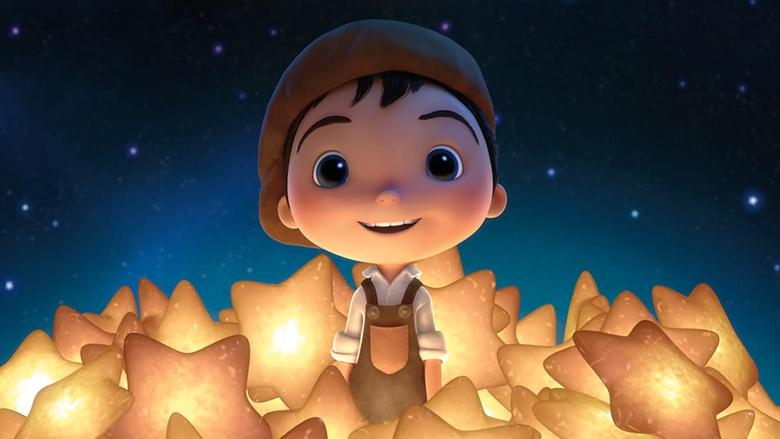
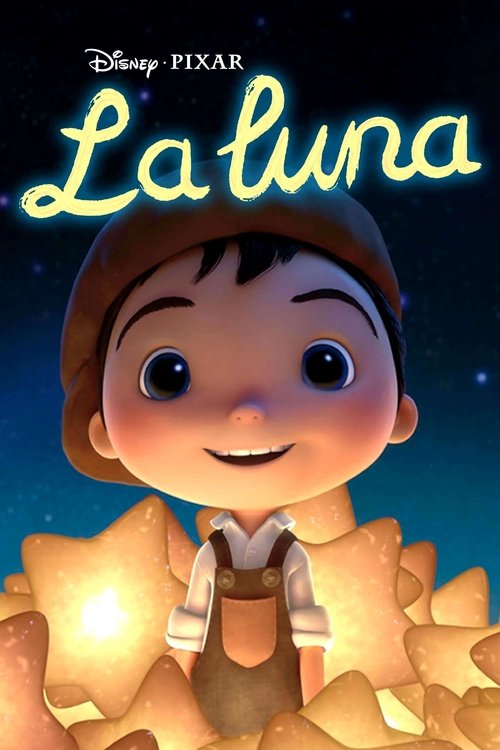
"A young boy discovers his family's most unusual line of work."
La luna - Symbolism & Philosophy
Symbols & Motifs
The Caps
The caps symbolize identity, tradition, and the rite of passage into the family profession. The conflicting ways Papà and Nonno insist Bambino should wear his cap represent their attempts to impose their own identities and traditions onto him. When Bambino turns his cap backwards, his own way, it's a clear declaration of his newfound independence and individuality.
At the beginning of their journey, Nonno gifts Bambino a cap. Papà immediately adjusts it to be worn low over the eyes, while Nonno pushes it back. This disagreement establishes their conflicting personalities. At the film's climax, Bambino decisively turns his cap backwards before tackling the giant star.
The Brooms and Rake
The different brooms represent the conflicting methodologies and ingrained habits of the older generations. Papà's modern push broom and Nonno's traditional besom broom are extensions of their personalities. Bambino's choice of a rake, a different tool entirely, symbolizes his innovative approach and his ability to think outside the established norms to find a more effective solution.
On the moon, Papà and Nonno argue over which of their brooms Bambino should use. Bambino observes that their mustaches even resemble their preferred brooms. When the large star falls, Bambino ignores both brooms and chooses a rake to clear the resulting smaller stars.
The Moon and Stars
The moon represents a magical, wondrous workplace and the canvas upon which the family tradition is carried out. The stars symbolize the work itself, but also wonder, light, and new beginnings. The giant star that falls represents an unprecedented challenge that forces a break from tradition and allows for innovation and personal growth.
The family's secret job is to climb a ladder to the moon and sweep the fallen stars from its surface. The entire setting is fantastical and dreamlike. The climax occurs when a massive star crashes onto the moon, too big for the men's traditional tools to move.
The Ladder
The impossibly long ladder that reaches the moon symbolizes the journey or transition from the ordinary world to the magical, and for Bambino, it represents his path to maturity and taking his place in the family's legacy.
After anchoring the boat, Papà unfurls a massive ladder for the three of them to climb from their boat to the surface of the moon.
Philosophical Questions
To what extent should we honor tradition versus forging our own path?
"La Luna" directly confronts this question through Bambino's dilemma. He is presented with two conflicting traditions by his father and grandfather, both of whom believe their way is the only correct way. The film suggests that blindly following tradition can lead to stagnation and conflict. However, it doesn't advocate for abandoning tradition entirely. Bambino doesn't reject the family job; he revolutionizes it. The film proposes a synthesis: that the younger generation has a responsibility to learn from the past but also a right to innovate and adapt those traditions to new challenges, ultimately finding a "middle way" that respects both heritage and individuality.
How do families resolve deeply ingrained conflicts between generations?
The film explores how non-verbal conflicts and stubbornness can create tension within a family. The father and grandfather never truly argue with words, but their actions and competing instructions create an uncomfortable environment for the child caught in the middle. "La Luna" suggests that resolution doesn't come from one side winning the argument, but from an external event—a shared problem—that forces collaboration. It is the younger generation's fresh perspective that ultimately bridges the divide, showing that a common goal and a willingness to accept new ideas can lead to harmony and mutual respect.
Core Meaning
The central message of "La Luna" is about the importance of finding one's own identity and path, especially when caught between conflicting family traditions and expectations. Director Enrico Casarosa drew from his own childhood experiences of being caught between his father and grandfather who didn't get along. The film explores how a younger generation can respect their heritage while forging a new way forward. Bambino's ultimate solution to a problem neither his father nor grandfather can solve alone demonstrates that innovation and individuality can unite and improve upon tradition. It's a coming-of-age story that champions trusting one's instincts and finding a middle way that honors the past while embracing a personal vision for the future.