La luna
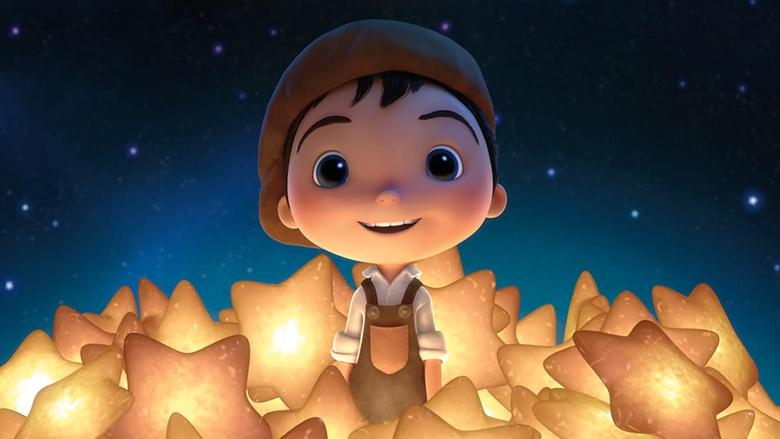
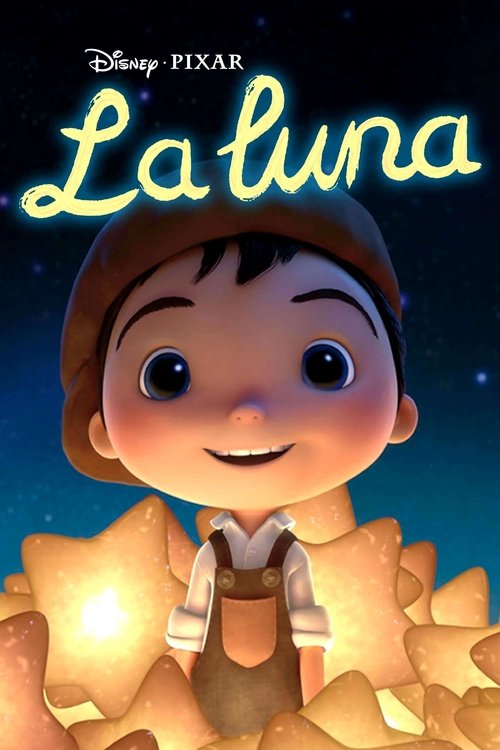
A whimsical, dialogue-free fable capturing the emotional warmth of a young boy finding his own way, illuminated by the enchanting glow of fallen stars on the moon.
La luna

La luna

"A young boy discovers his family's most unusual line of work."

10 February 2012 United States of America 7 min ⭐ 7.8 (820)
Director: Enrico Casarosa
Cast: Tony Fucile, Krista Sheffler, Phil Sheridan
Animation Family Fantasy
Coming of Age and Individuality Intergenerational Conflict and Harmony Tradition vs. Innovation

Overview

"La Luna" is a timeless and enchanting fable about a young boy named Bambino who, for the first time, accompanies his father, Papà, and grandfather, Nonno, on their nightly work. They row far out to sea in a small wooden boat, and to Bambino's surprise, they anchor next to the full moon itself. The core of the story revolves around the generational conflict between Papà and Nonno, who have differing, stubborn opinions on how their traditional family job should be done.

As Bambino climbs a ladder to the lunar surface, he discovers their magical occupation: sweeping fallen stars off the moon. Caught between his father's and grandfather's conflicting methods and tools, Bambino must navigate their bickering and the weight of tradition to find his own unique approach to the family business. The film beautifully captures the boy's sense of wonder as he is introduced to this fantastical world.
Core Meaning

The central message of "La Luna" is about the importance of finding one's own identity and path, especially when caught between conflicting family traditions and expectations. Director Enrico Casarosa drew from his own childhood experiences of being caught between his father and grandfather who didn't get along. The film explores how a younger generation can respect their heritage while forging a new way forward. Bambino's ultimate solution to a problem neither his father nor grandfather can solve alone demonstrates that innovation and individuality can unite and improve upon tradition. It's a coming-of-age story that champions trusting one's instincts and finding a middle way that honors the past while embracing a personal vision for the future.

Thematic DNA

Coming of Age and Individuality 40%
Intergenerational Conflict and Harmony 35%
Tradition vs. Innovation 25%

Coming of Age and Individuality

The film is fundamentally a coming-of-age story. Bambino is initiated into the family business, a rite of passage symbolized by receiving his own cap. He is caught between the rigid, opposing traditions of his father and grandfather. The central conflict lies in his struggle to find his own way instead of simply mimicking his elders. His decision to turn his cap his own way and use a different tool to solve the problem of the giant star signifies his maturation and the forging of his own identity.

Intergenerational Conflict and Harmony

The dynamic between Papà and Nonno is defined by their constant, albeit gentle, bickering over the "right" way to do things—from how Bambino should wear his cap to which broom is superior. This conflict represents the clash between different generations and their adherence to tradition. The film suggests that this conflict can be resolved not by one side winning, but by a new perspective. Bambino's innovative solution ultimately brings them together, working in harmony to clear the moon.

Tradition vs. Innovation

Papà and Nonno represent two different, established traditions. They each believe their method is the only correct one. Bambino is faced with the choice of which tradition to follow. The arrival of the giant, unmovable star symbolizes a new problem that old methods cannot solve. Bambino's creative thinking—using a hammer to break the large star into manageable pieces and a rake to sweep them—represents innovation that respects the overall goal of the tradition (clearing the moon) but revolutionizes the method.

Character Analysis

Bambino

Krista Sheffler

Archetype: The Innocent/The Hero
Key Trait: Inquisitive and Innovative

Motivation

Initially, his motivation is to please his father and grandfather and learn the family trade. Ultimately, his motivation shifts to solving the problem at hand and, in doing so, resolving the conflict between his elders and defining his own identity.

Character Arc

Bambino begins as a timid and observant child, caught uncomfortably between the conflicting wills of his father and grandfather. He initially mimics their gestures, trying to please both. His journey to the moon is a rite of passage. Faced with a challenge that stumps his elders, he transitions from a follower to a leader, trusting his own intuition to find a creative solution. He finds his own voice and establishes his own way of carrying on the family tradition, earning the respect of his father and grandfather.

Papà

Tony Fucile

Archetype: The Pragmatist
Key Trait: Headstrong and Proud

Motivation

His primary motivation is to perform the family job efficiently and to pass down his specific methods and traditions to his son, whom he clearly loves but struggles to connect with past his own stubbornness.

Character Arc

Papà is a proud and somewhat rigid man who believes in his more modern, straightforward methods. He is characterized by his large mustache that resembles his preferred push broom. Throughout the film, he is in constant, low-grade conflict with Nonno. His arc is one of learning to accept a new way of doing things. He witnesses his son's ingenuity and, along with Nonno, comes to respect and adopt Bambino's innovative method, showing pride in his son's growth.

Nonno

Phil Sheridan

Archetype: The Traditionalist
Key Trait: Stubborn and Traditional

Motivation

He is motivated by a desire to see the family's ancestral traditions preserved and passed down correctly to the next generation. He wants to ensure Bambino learns the 'proper' way, as he sees it.

Character Arc

Nonno is the elder, representing the old, time-honored traditions of the family. He is just as stubborn as Papà, insisting on his classic methods, symbolized by his traditional besom broom and the way he wants Bambino to wear his cap. His arc mirrors Papà's; he also must let go of his rigid adherence to the past and recognize the value of his grandson's new ideas. His final expression is one of pride and acceptance, realizing the family tradition is in good hands.

Symbols & Motifs

The Caps

Meaning:

The caps symbolize identity, tradition, and the rite of passage into the family profession. The conflicting ways Papà and Nonno insist Bambino should wear his cap represent their attempts to impose their own identities and traditions onto him. When Bambino turns his cap backwards, his own way, it's a clear declaration of his newfound independence and individuality.

Context:

At the beginning of their journey, Nonno gifts Bambino a cap. Papà immediately adjusts it to be worn low over the eyes, while Nonno pushes it back. This disagreement establishes their conflicting personalities. At the film's climax, Bambino decisively turns his cap backwards before tackling the giant star.

The Brooms and Rake

Meaning:

The different brooms represent the conflicting methodologies and ingrained habits of the older generations. Papà's modern push broom and Nonno's traditional besom broom are extensions of their personalities. Bambino's choice of a rake, a different tool entirely, symbolizes his innovative approach and his ability to think outside the established norms to find a more effective solution.

Context:

On the moon, Papà and Nonno argue over which of their brooms Bambino should use. Bambino observes that their mustaches even resemble their preferred brooms. When the large star falls, Bambino ignores both brooms and chooses a rake to clear the resulting smaller stars.

The Moon and Stars

Meaning:

The moon represents a magical, wondrous workplace and the canvas upon which the family tradition is carried out. The stars symbolize the work itself, but also wonder, light, and new beginnings. The giant star that falls represents an unprecedented challenge that forces a break from tradition and allows for innovation and personal growth.

Context:

The family's secret job is to climb a ladder to the moon and sweep the fallen stars from its surface. The entire setting is fantastical and dreamlike. The climax occurs when a massive star crashes onto the moon, too big for the men's traditional tools to move.

The Ladder

Meaning:

The impossibly long ladder that reaches the moon symbolizes the journey or transition from the ordinary world to the magical, and for Bambino, it represents his path to maturity and taking his place in the family's legacy.

Context:

After anchoring the boat, Papà unfurls a massive ladder for the three of them to climb from their boat to the surface of the moon.

Philosophical Questions

To what extent should we honor tradition versus forging our own path?

"La Luna" directly confronts this question through Bambino's dilemma. He is presented with two conflicting traditions by his father and grandfather, both of whom believe their way is the only correct way. The film suggests that blindly following tradition can lead to stagnation and conflict. However, it doesn't advocate for abandoning tradition entirely. Bambino doesn't reject the family job; he revolutionizes it. The film proposes a synthesis: that the younger generation has a responsibility to learn from the past but also a right to innovate and adapt those traditions to new challenges, ultimately finding a "middle way" that respects both heritage and individuality.

How do families resolve deeply ingrained conflicts between generations?

The film explores how non-verbal conflicts and stubbornness can create tension within a family. The father and grandfather never truly argue with words, but their actions and competing instructions create an uncomfortable environment for the child caught in the middle. "La Luna" suggests that resolution doesn't come from one side winning the argument, but from an external event—a shared problem—that forces collaboration. It is the younger generation's fresh perspective that ultimately bridges the divide, showing that a common goal and a willingness to accept new ideas can lead to harmony and mutual respect.

Alternative Interpretations

While the primary interpretation of "La Luna" focuses on the coming-of-age journey and the resolution of intergenerational conflict, some viewers and critics have explored other layers of meaning. One perspective is to view the film as a metaphor for the creative process itself. The father and grandfather represent established, rigid methods of creation, while the boy represents the innovative artist who must find a new technique to solve a creative problem (the giant star). His solution—breaking it down and using a new tool—can be seen as a metaphor for artistic breakthrough.

Another interpretation views the film through a mythological lens, presenting a charming origin story for the phases of the moon. The family's work of clearing away the glowing stars directly results in the moon changing from full to a crescent, offering a whimsical, folkloric explanation for a natural phenomenon. This reading emphasizes the film's connection to classic fables and myths that seek to explain the cosmos in human terms.

Cultural Impact

Though a short film, "La Luna" had a significant cultural impact, earning an Academy Award nomination and praise for its poetic, heartfelt storytelling. It represented a departure from Pixar's more comedy-focused shorts, embracing a quieter, more lyrical, and artistic tone. Director Enrico Casarosa brought a distinctly personal and Italian sensibility to the studio, drawing inspiration from Italian writers like Italo Calvino and filmmakers like Fellini, which contrasted with more typically American narratives.

Its unique visual style, which aimed to blend the precision of CG animation with the warmth of hand-drawn watercolor textures, was seen as a pivotal artistic development for Pixar. This aesthetic choice influenced subsequent animated shorts and demonstrated a nostalgia for traditional animation techniques within the digital medium. The film's themes of intergenerational harmony and finding one's own path resonated universally with audiences and critics, making it a favorite for educational settings to teach concepts like symbolism and theme. Furthermore, "La Luna" served as a proving ground for Casarosa, who would later direct the critically acclaimed feature film "Luca," which shares many of "La Luna's" visual and thematic elements.

Audience Reception

Audience reception for "La Luna" has been overwhelmingly positive. Viewers frequently describe the film as "beautiful," "enchanting," "magical," and "heartwarming." The stunning, dream-like animation and unique visual style, with its warm, glowing palette, are consistently praised. Michael Giacchino's gentle, Italian-inflected score is also highlighted as a key component of the film's emotional resonance. The dialogue-free narrative is widely seen as a strength, allowing the story's universal themes of family, tradition, and individuality to be understood and appreciated by all ages. While a small minority of viewers found the plot to be too simple or lacking in depth, the vast majority were captivated by its charm and poetic quality. An anecdote shared by one reviewer noted that an audience for an R-rated action film, shown "La Luna" by mistake, protested when the theater tried to stop it, demanding to see the ending—a testament to its broad and powerful appeal.

Interesting Facts

  • The film is dialogue-free, relying on expressive pantomime, gibberish, and Michael Giacchino's score to tell the story.
  • Director Enrico Casarosa was inspired by his own childhood, growing up with his father and grandfather who did not get along.
  • The story was also influenced by the writings of Italo Calvino, particularly his short story collection "Cosmicomics," and Antoine de Saint-Exupéry's "The Little Prince."
  • The visual style was inspired by the work of Japanese animation director Hayao Miyazaki and Italian cartoonist Osvaldo Cavandoli.
  • To achieve a unique, handmade look, the production team used real watercolor and pastel paintings for textures and backgrounds.
  • "La Luna" was nominated for the Academy Award for Best Animated Short Film at the 84th Academy Awards.
  • The short film premiered in 2011 at the Annecy International Animated Film Festival and was theatrically released with Pixar's feature film "Brave" in 2012.
  • A significant technical challenge for the animators was creating the characters' large, expressive facial hair, something Pixar had not tackled to this extent before.

Easter Eggs

The character design of Papà, particularly his large build and prominent mustache, is a clear precursor to the character of Massimo in Enrico Casarosa's later feature film, "Luca" (2021).

This connection highlights a consistency in Casarosa's artistic style and character archetypes. Massimo in "Luca" is essentially an evolution of the Papà character from "La Luna," sharing a similar physical presence and Italian paternal archetype.

In the Pixar film "Inside Out" (2015), a poster can be seen in Riley's classroom that appears to be a stylized depiction of "La Luna," showing a person reaching for pudgy, glowing stars.

This is a subtle nod to the beloved short film, following Pixar's tradition of hiding references to their previous works within their feature films.

⚠️ Spoiler Analysis

Click to reveal detailed analysis with spoilers

Frequently Asked Questions

Explore More About This Movie

Dive deeper into specific aspects of the movie with our detailed analysis pages

Comments (0)

Leave a comment

No comments yet. Be the first to share your thoughts!