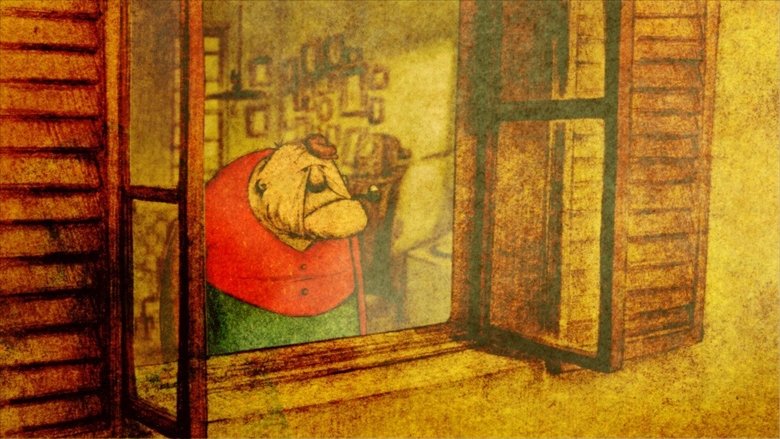
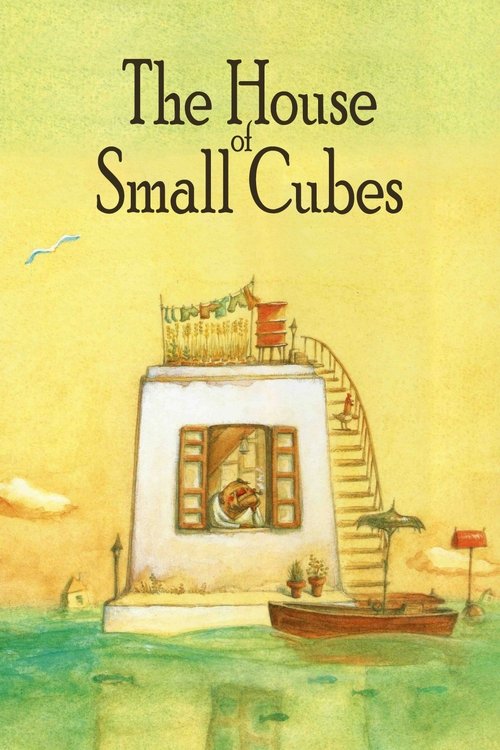
The entirety of "La Maison en Petits Cubes" is a journey into the past, with the main 'twist' being the emotional depth and completeness of the life revealed. The film's narrative is structured as a reverse chronology of the old man's life, triggered by his descent through his house.
As he goes down, each floor reveals a key life stage. The first level down shows him caring for his wife in her sickbed. The next reveals a happy family gathering with his grown daughter, her husband, and their child. Descending further, he relives his daughter's wedding day. Below that, he sees memories of her as a young child, playing in a house that is now closer to the water level, in a town that looks more like Venice. The next floor down holds the memory of bringing his infant daughter home for the first time. Finally, at the very bottom, on what was once dry land, he relives his own childhood: meeting a young girl who would become his wife, sharing a juice box with her, and building their first home together.
The ending provides a powerful emotional resolution. After resurfacing, the old man, now back in his solitary room at the top of the tower, sits down to drink. Instead of pouring one glass as he did at the beginning, he pours two. He raises his glass and gently clinks it against the empty one, a toast to his late wife. This final act reveals the profound impact of his journey. He is no longer just a lonely old man; he is a man full of love and memories, who has reconnected with his wife in spirit. The initial melancholy of his solitude is transformed into a peaceful, bittersweet acceptance. He has found comfort and companionship not by escaping his loneliness, but by embracing the memories that define him.