La Maison en Petits Cubes
A poignant, dialogue-free animation where a widower's journey into his flooded home becomes a beautifully melancholic descent into the layered memories of a lifetime.
La Maison en Petits Cubes

La Maison en Petits Cubes

つみきのいえ

10 June 2008 Japan 12 min ⭐ 7.9 (445)
Director: Kunio Katou
Cast: Masami Nagasawa
Animation
Memory and Nostalgia The Passage of Time and Impermanence Love and Loss Adaptation and Survival

Overview

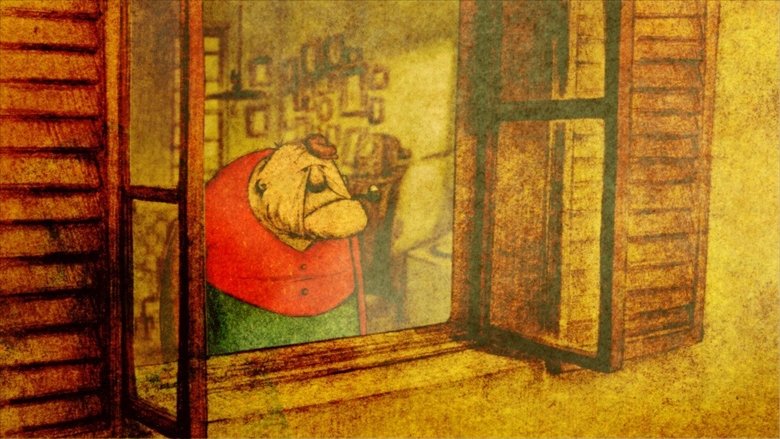
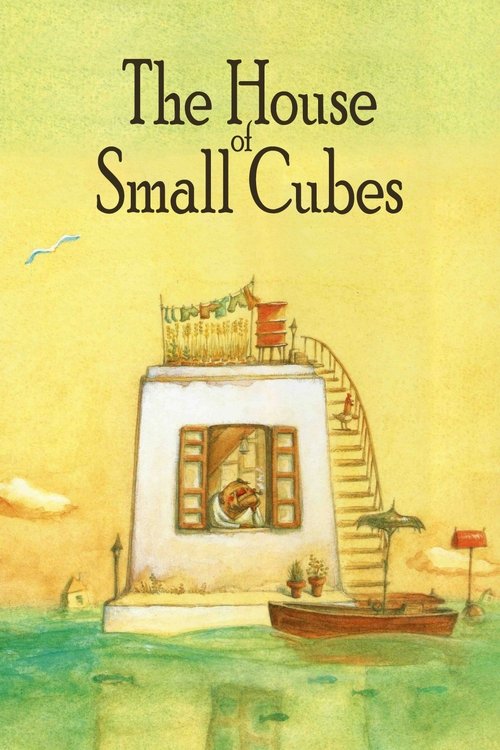
"La Maison en Petits Cubes" tells the story of an elderly widower living a solitary life in a town completely submerged by water. As the water level continuously rises, he is forced to build new levels, or "cubes," on top of his house to stay dry. His home has become a tall, precarious tower, a physical representation of his long life.

One day, while moving his belongings to his newly built top floor, he accidentally drops his favorite smoking pipe, and it falls through the trapdoor into the submerged lower levels. He decides to rent scuba gear to retrieve it. This practical quest transforms into a profound journey through his past. As he descends through each floor of his sunken home, he relives vivid memories associated with that space: his wife's final days, his daughter's wedding, raising his child, and the day he and his wife moved in together.

The film, devoid of any dialogue, uses its beautiful, sketch-like animation and a moving musical score to convey a powerful story about memory, loss, and the passage of time. Each submerged room is a preserved chapter of his life, and the journey downward becomes a poignant exploration of a life lived and the love that filled it.


Core Meaning

The central meaning of "La Maison en Petits Cubes" is the exploration of memory as the foundation of identity and the carrier of love, even in the face of loss and the relentless passage of time. Director Kunio Katou uses the physical structure of the ever-growing house to externalize the internal world of the protagonist. Each "cube" is not just a living space but a vessel for memories. By diving into the physical depths of his home, the old man is diving into the depths of his own consciousness and personal history.

The film suggests that while time, symbolized by the rising water, may erode the present and force us to constantly adapt and move on, our memories remain as a permanent, accessible sanctuary. The final scene, where he toasts with two glasses—one for himself and one for his departed wife—after his journey into the past, signifies that he has reconnected with his love and found solace. It conveys the message that those we have lost continue to live on within us through our memories, and that acknowledging and revisiting this past is not about dwelling on sadness, but about reaffirming the love and joy that has shaped our lives.

Thematic DNA

Memory and Nostalgia 40%
The Passage of Time and Impermanence 30%
Love and Loss 20%
Adaptation and Survival 10%

Memory and Nostalgia

The film is a profound meditation on how memory shapes our existence. The old man's physical descent into his submerged home is a literal journey down memory lane. Each floor triggers a flashback to a significant life event, presented in warm, vibrant colors that contrast with the muted, melancholic tones of the present. This visual distinction highlights the warmth and vividness of the past in the landscape of his mind. The film portrays memory not as a static record, but as an immersive, emotional experience that brings comfort and meaning to his solitary present.

The Passage of Time and Impermanence

The constantly rising water serves as a powerful metaphor for the inexorable passage of time. It washes away the physical world, forcing the protagonist to continually build higher, leaving old parts of his life behind. This theme speaks to the impermanence of life and the inevitability of change and loss. The vertical structure of the house becomes a timeline of his life, with the lowest, earliest levels buried deep in the past. The film captures a feeling of "mono no aware," a Japanese term for the gentle sadness or pathos of things, acknowledging that beauty is heightened by its transience.

Love and Loss

At its heart, the film is a love story. The memories the old man revisits are all centered around his family, especially his wife. We see their life together, from their youth to her illness. His solitary existence in the present is defined by her absence. However, the film suggests that love transcends physical presence. By the end, after reliving their shared life, he toasts to her, finding a sense of connection and peace. It's a poignant depiction of grieving and the enduring power of love that continues to provide comfort long after a person is gone.

Adaptation and Survival

On a narrative level, the film is about survival. The old man is a resilient figure who constantly adapts to his changing environment by building new homes. This can be seen as a metaphor for human resilience in the face of life's challenges and the aging process. He doesn't abandon his home; he builds upon it, just as people build new experiences and realities upon the foundations of their past. This theme also has an ecological undertone, suggesting humanity's struggle to survive in a world altered by environmental changes, possibly of its own making.

Character Analysis

The Old Man

N/A (dialogue-free)

Archetype: The Sage / Everyman
Key Trait: Resilient

Motivation

His initial motivation is purely practical: to retrieve his cherished pipe. However, this simple goal quickly becomes a deeper, more subconscious need to reconnect with his past and the loved ones who are no longer with him. His journey is ultimately driven by a desire to feel the warmth and love of his family again, to reaffirm a life that feels distant in his lonely present.

Character Arc

The Old Man begins the film in a state of quiet, lonely routine, seemingly resigned to his solitary existence. His life is a cycle of building, eating, and sleeping. The accidental loss of his pipe disrupts this routine and forces him to confront his past directly. As he journeys deeper into his memories, his initial stoicism gives way to a profound emotional experience. He rediscovers the joy, love, and sorrow that have filled his life. His arc is one of reconnection and acceptance. He returns to the surface not with a sense of sadness for what is lost, but with a renewed appreciation for the richness of his life. He transforms from a man simply surviving to one who is at peace with his past and finds companionship in his memories.

The Wife

N/A (dialogue-free)

Archetype: The Lost Love
Key Trait: Loving

Motivation

Her motivation, as seen through the flashbacks, is to build a life and a family with her husband. She is a constant source of love and support in his memories. Her presence is the anchor for the most significant moments of his past.

Character Arc

The Wife's story is told entirely through the Old Man's memories. We see her as a young woman, a new mother, a loving partner, and eventually as an elderly woman being cared for by her husband. Her arc is a complete, remembered life cycle. She is the emotional core of the film's flashbacks, representing the love and companionship that defined the Old Man's life. Though she is absent in the present, her presence is felt throughout the film, culminating in the final toast.

Symbols & Motifs

The House of Cubes

Meaning:

The house itself is the central symbol, representing the old man's life and his accumulated memories. Each cube is a distinct chapter of his life—a repository of experiences, joys, and sorrows. The vertical, stacked nature of the house visualizes the layers of time, with the past forming the foundation for the present. The ever-shrinking size of the newer cubes can also symbolize the narrowing of one's world with age and loss.

Context:

The entire film is set within and around this symbolic structure. The act of building a new cube shows the progression of time, while the act of diving into the lower cubes is the exploration of memory.

The Rising Water

Meaning:

The water is a multifaceted symbol. Primarily, it represents the relentless and unstoppable passage of time, which gradually submerges the past. It also symbolizes oblivion and loss, as it has claimed the man's town and separates him from his memories. On a more literal level, it can be interpreted as a symbol of climate change and rising sea levels, representing an environmental catastrophe. Metaphorically, it can also represent the encroaching nature of old age and mortality.

Context:

The rising water is the constant environmental pressure in the film, forcing the main character to continually build higher and setting the stage for his eventual journey downwards.

The Pipe

Meaning:

The dropped pipe is the catalyst for the entire story. It represents a tangible link to the past and a cherished object filled with personal significance. Its loss prompts the journey of remembrance. The pipe can be seen as a symbol for any small object or sensation—a song, a smell, a taste—that can unexpectedly trigger a flood of memories. In a way, the pipe is the key that unlocks the treasure chest of his past.

Context:

The film's main plot is initiated when the old man drops his pipe into the submerged levels of his house. His decision to retrieve it, rather than replace it, underscores its sentimental value and triggers his introspective journey.

The Wine Glasses

Meaning:

The wine glasses symbolize companionship and shared moments. At the beginning of the film, the old man drinks alone, emphasizing his solitude. In flashbacks, we see him sharing a toast with his wife. The final scene brings this symbol full circle.

Context:

In the film's closing scene, after returning from his journey through memory, the old man sits down for a drink. He pours wine into two glasses, placing one for his absent wife. He then clinks his glass against hers. This powerful gesture symbolizes his renewed connection with her memory and the understanding that she is still with him in spirit, transforming his solitude into a shared, albeit remembered, moment.

Philosophical Questions

What is the relationship between our memories and our identity?

The film explores the idea that we are, in essence, the sum of our memories. The old man's identity is not defined by his present, solitary state, but by the rich tapestry of his past experiences that he revisits. His physical house is a direct metaphor for his mind, with the foundations being his earliest memories. The film seems to ask: if our memories were to be submerged and inaccessible, how much of our 'self' would remain?

How do we find meaning in the face of loss and the passage of time?

The film tackles the universal human experience of outliving loved ones and seeing the world we knew disappear. It suggests that meaning is not lost with the passage of time, but is preserved in memory. The old man finds solace and companionship not by trying to replicate the past, but by honoring it and integrating it into his present. The final toast signifies that meaning is found in the enduring power of love, which continues to exist within us even after physical separation.

Can one be truly alone if they are rich in memories?

The film presents a character who is physically isolated but emotionally connected to a vibrant past. It raises the question of whether loneliness is purely a condition of physical solitude. The old man's journey suggests that a rich inner life, filled with cherished memories of loved ones, can serve as a powerful antidote to loneliness. By the end, he is still by himself, but he doesn't seem as alone as he did at the beginning.

Alternative Interpretations

While the most direct interpretation of the film centers on memory and the passage of time, several alternative readings have been proposed by critics and viewers.

A Metaphor for Aging and Mortality: The rising water can be seen as the encroaching finality of life, and the constant building of new levels as the struggle to stay alive, to continue on in the face of inevitable decline. The journey downwards, then, is not just a review of life, but a form of acceptance of the end, a coming to terms with one's entire existence before passing on. The widower's ascent into the sky at times has been symbolically linked to Jacob's Ladder and a slow ascent into the heavens.

An Allegory for Climate Change: A very direct interpretation is that the film is a commentary on global warming and rising sea levels. The flooded world is a literal depiction of a potential future, and the old man is one of the last survivors clinging to a world that is disappearing. His personal story becomes a poignant illustration of the human cost of environmental disaster, where entire histories and cultures are submerged.

An Existential Fable: The film can be viewed through an existential lens, where the old man's solitary existence in a vast sea represents the human condition. His house is his self-constructed world of meaning, built from the memories and relationships that define him. His journey is an internal one, a confrontation with his own life and choices in a seemingly indifferent universe. He finds meaning not in some external purpose, but in the love and experiences he has accumulated.

Cultural Impact

"La Maison en Petits Cubes" achieved significant international acclaim, culminating in its Oscar win, which brought widespread attention to Kunio Katou's work and to Japanese independent animation. Its success demonstrated that a short, dialogue-free film could convey a universally resonant and deeply emotional story, influencing other animators to explore powerful narratives through visual storytelling alone.

Critically, the film was lauded for its unique art style, which resembles illustrations from a sketchbook or a children's book, and its powerful use of metaphor. It has been praised for its ability to tackle profound themes like memory, aging, and loss with a delicate and subtle touch, making it accessible to a wide audience. Audiences have consistently responded to its emotional depth, with many viewers describing it as a moving and tear-inducing experience. The film's themes have also led to discussions about climate change and its potential human cost, adding another layer to its cultural relevance.

Audience Reception

Audience reception for "La Maison en Petits Cubes" has been overwhelmingly positive, with viewers frequently describing it as 'touching,' 'heartwarming,' and 'profoundly moving.' A common sentiment shared in online reviews and comments is that the film's ability to tell such a deep and emotional story without any dialogue is a testament to its masterful storytelling. Many viewers admit to being brought to tears by the film, particularly by the poignant depiction of the old man's life and the film's ending.

The main points of praise are often directed at its unique, painterly animation style, the beautiful and melancholic musical score, and its universally relatable themes of love, memory, and loss. Viewers appreciate the subtlety of its metaphors, which allow for personal interpretation. There is very little criticism to be found for the film; however, a few viewers have noted that the story, while beautiful, can be seen as somewhat simple or predictable. Despite this, the consensus is that its emotional impact far outweighs any perceived narrative simplicity, making it a beloved and highly recommended short film.

Interesting Facts

  • The film won the Academy Award for Best Animated Short Film at the 81st Academy Awards in 2009.
  • The initial concept for the film originated from a painting Kunio Katou created during his time at Tama Art University.
  • The film is dialogue-free, relying entirely on its visuals and Kenji Kondo's musical score to convey the narrative and emotion.
  • Following the 2011 Tōhoku earthquake and tsunami in Japan, some viewers discussed the film's perceived premonitory character regarding catastrophic flooding.
  • The film was adapted into an illustrated children's book, with text by Kenya Hirata and illustrations by Kunio Katou, which allowed them to expand upon the story.

⚠️ Spoiler Analysis

Click to reveal detailed analysis with spoilers

Frequently Asked Questions

Explore More About This Movie

Dive deeper into specific aspects of the movie with our detailed analysis pages

Comments (0)

Leave a comment

No comments yet. Be the first to share your thoughts!