つみきのいえ
La Maison en Petits Cubes - Symbolism & Philosophy
Symbols & Motifs
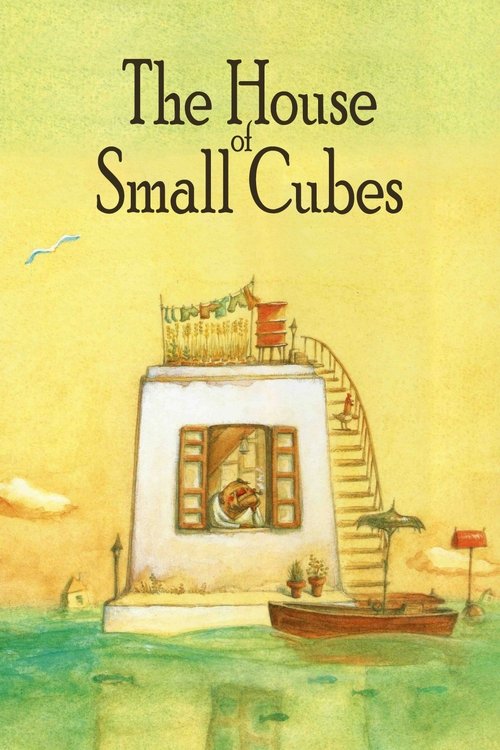
The House of Cubes
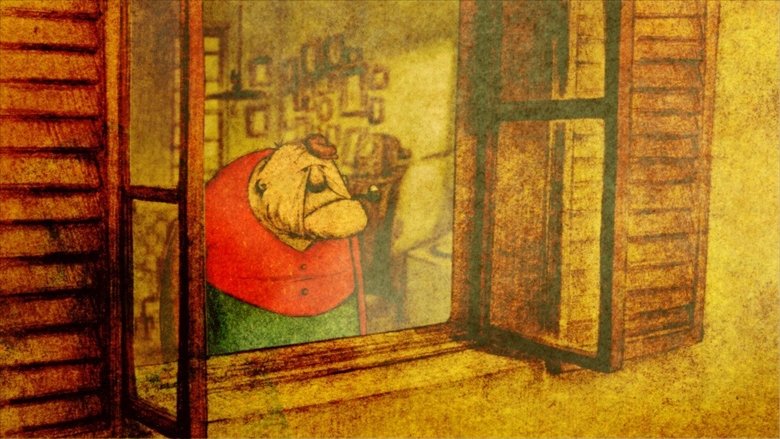
The house itself is the central symbol, representing the old man's life and his accumulated memories. Each cube is a distinct chapter of his life—a repository of experiences, joys, and sorrows. The vertical, stacked nature of the house visualizes the layers of time, with the past forming the foundation for the present. The ever-shrinking size of the newer cubes can also symbolize the narrowing of one's world with age and loss.
The entire film is set within and around this symbolic structure. The act of building a new cube shows the progression of time, while the act of diving into the lower cubes is the exploration of memory.
The Rising Water
The water is a multifaceted symbol. Primarily, it represents the relentless and unstoppable passage of time, which gradually submerges the past. It also symbolizes oblivion and loss, as it has claimed the man's town and separates him from his memories. On a more literal level, it can be interpreted as a symbol of climate change and rising sea levels, representing an environmental catastrophe. Metaphorically, it can also represent the encroaching nature of old age and mortality.
The rising water is the constant environmental pressure in the film, forcing the main character to continually build higher and setting the stage for his eventual journey downwards.
The Pipe
The dropped pipe is the catalyst for the entire story. It represents a tangible link to the past and a cherished object filled with personal significance. Its loss prompts the journey of remembrance. The pipe can be seen as a symbol for any small object or sensation—a song, a smell, a taste—that can unexpectedly trigger a flood of memories. In a way, the pipe is the key that unlocks the treasure chest of his past.
The film's main plot is initiated when the old man drops his pipe into the submerged levels of his house. His decision to retrieve it, rather than replace it, underscores its sentimental value and triggers his introspective journey.
The Wine Glasses
The wine glasses symbolize companionship and shared moments. At the beginning of the film, the old man drinks alone, emphasizing his solitude. In flashbacks, we see him sharing a toast with his wife. The final scene brings this symbol full circle.
In the film's closing scene, after returning from his journey through memory, the old man sits down for a drink. He pours wine into two glasses, placing one for his absent wife. He then clinks his glass against hers. This powerful gesture symbolizes his renewed connection with her memory and the understanding that she is still with him in spirit, transforming his solitude into a shared, albeit remembered, moment.
Philosophical Questions
What is the relationship between our memories and our identity?
The film explores the idea that we are, in essence, the sum of our memories. The old man's identity is not defined by his present, solitary state, but by the rich tapestry of his past experiences that he revisits. His physical house is a direct metaphor for his mind, with the foundations being his earliest memories. The film seems to ask: if our memories were to be submerged and inaccessible, how much of our 'self' would remain?
How do we find meaning in the face of loss and the passage of time?
The film tackles the universal human experience of outliving loved ones and seeing the world we knew disappear. It suggests that meaning is not lost with the passage of time, but is preserved in memory. The old man finds solace and companionship not by trying to replicate the past, but by honoring it and integrating it into his present. The final toast signifies that meaning is found in the enduring power of love, which continues to exist within us even after physical separation.
Can one be truly alone if they are rich in memories?
The film presents a character who is physically isolated but emotionally connected to a vibrant past. It raises the question of whether loneliness is purely a condition of physical solitude. The old man's journey suggests that a rich inner life, filled with cherished memories of loved ones, can serve as a powerful antidote to loneliness. By the end, he is still by himself, but he doesn't seem as alone as he did at the beginning.
Core Meaning
The central meaning of "La Maison en Petits Cubes" is the exploration of memory as the foundation of identity and the carrier of love, even in the face of loss and the relentless passage of time. Director Kunio Katou uses the physical structure of the ever-growing house to externalize the internal world of the protagonist. Each "cube" is not just a living space but a vessel for memories. By diving into the physical depths of his home, the old man is diving into the depths of his own consciousness and personal history.
The film suggests that while time, symbolized by the rising water, may erode the present and force us to constantly adapt and move on, our memories remain as a permanent, accessible sanctuary. The final scene, where he toasts with two glasses—one for himself and one for his departed wife—after his journey into the past, signifies that he has reconnected with his love and found solace. It conveys the message that those we have lost continue to live on within us through our memories, and that acknowledging and revisiting this past is not about dwelling on sadness, but about reaffirming the love and joy that has shaped our lives.