La notte
"A new genre of motion picture... to make you think and feel."
La Notte - Symbolism & Philosophy
Symbols & Motifs
Milan's Architecture
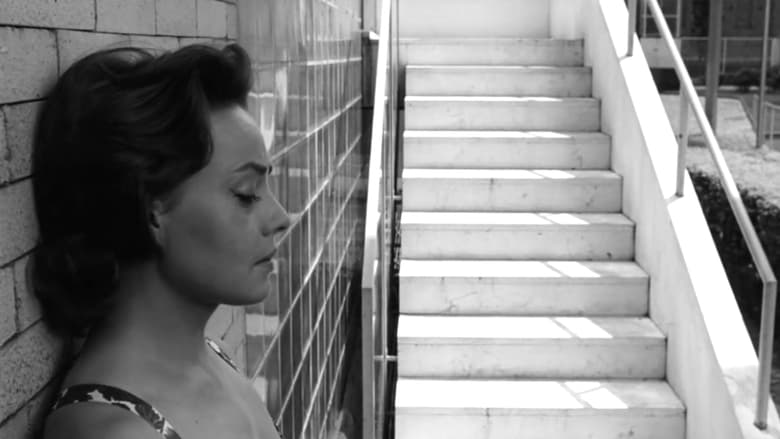
The architecture of Milan serves as a visual metaphor for the characters' emotional states. The cold, geometric lines of the modern skyscrapers reflect their alienation, emptiness, and the sterile nature of their lives. In contrast, the older, more dilapidated parts of the city Lidia wanders through evoke a sense of a lost past and decaying emotion.
The film opens with the camera descending a glass skyscraper, immediately establishing a theme of modern alienation. Lidia is often framed against vast, impersonal buildings, emphasizing her solitude and insignificance in this modern world.
The Dying Friend, Tommaso
Tommaso represents the death of love and intellectual honesty. His physical decay mirrors the decay of Giovanni and Lidia's marriage. He was a figure from their past who, unlike Giovanni, seems to have retained his integrity, and his death marks the final, undeniable end of an era for the couple.
The film begins with the couple visiting the terminally ill Tommaso in the hospital. His death is announced to Lidia during the party, which precipitates her final confrontation with Giovanni about the state of their relationship.
The Party
The lavish all-night party symbolizes the superficiality, decadence, and moral emptiness of the upper class. It's a world of frivolous games, intellectual posturing, and fleeting, meaningless encounters designed to distract from deeper existential anxieties. Despite being surrounded by people, the main characters have never felt more alone.
The second half of the film is almost entirely set at the Gherardini villa. It is here that Giovanni's flirtation with Valentina intensifies and Lidia receives the news of Tommaso's death, bringing the couple's crisis to a head amidst the hedonism.
Giovanni's Love Letter
The love letter that Giovanni wrote to Lidia years ago symbolizes the passionate, hopeful love they once shared. It is a tangible relic of a past that feels completely disconnected from their present reality.
In the final scene, as dawn breaks, Lidia reads the letter aloud. Giovanni, moved, doesn't even recognize his own words, highlighting how completely he has become detached from his former self and his feelings for her. The act of reading it is a final, painful acknowledgment of what has been lost.
Philosophical Questions
Can love survive in a world of profound spiritual emptiness and materialism?
The film relentlessly explores this question through Giovanni and Lidia. Their initial love, born in a simpler past, cannot withstand the pressures of success, societal expectations, and the internal void that has grown within them. The opulent but soulless environment they inhabit offers no nourishment for genuine emotion, suggesting that modern life itself, with its focus on surfaces and distractions, is toxic to deep, lasting connection.
What is the role of art and the artist in a society that seems to have lost its way?
Giovanni, a successful writer, embodies this dilemma. His art has brought him fame and fortune but has left him creatively and morally bankrupt. He is offered a position by an industrialist who views culture as another commodity. The film questions whether art can retain its meaning and integrity in a capitalist society or if the artist is destined to become another entertainer for a bored and decadent elite.
How do our physical surroundings shape our inner lives?
Antonioni makes the urban landscape of Milan a central character. The film posits that the cold, impersonal nature of modern architecture directly contributes to human alienation and the breakdown of communication. The characters are dwarfed by vast, empty spaces and framed by sterile, geometric structures, visually arguing that our environment can isolate us and mirror our own emotional desolation.
Core Meaning
"La Notte" is a profound meditation on the erosion of love and the spiritual emptiness of modern bourgeois life. Director Michelangelo Antonioni uses the crumbling marriage of Giovanni and Lidia as a microcosm to explore broader themes of alienation, incommunicability, and existential ennui in a rapidly modernizing society. The film suggests that material success and a sophisticated social life often mask a deep-seated emotional void and an inability to truly connect with others. Antonioni critiques a world where genuine feeling has been replaced by superficiality and intellectualism, leaving individuals adrift in a landscape that is both physically and emotionally sterile. The film doesn't offer easy answers but rather presents a stark, poignant diagnosis of a modern malaise.