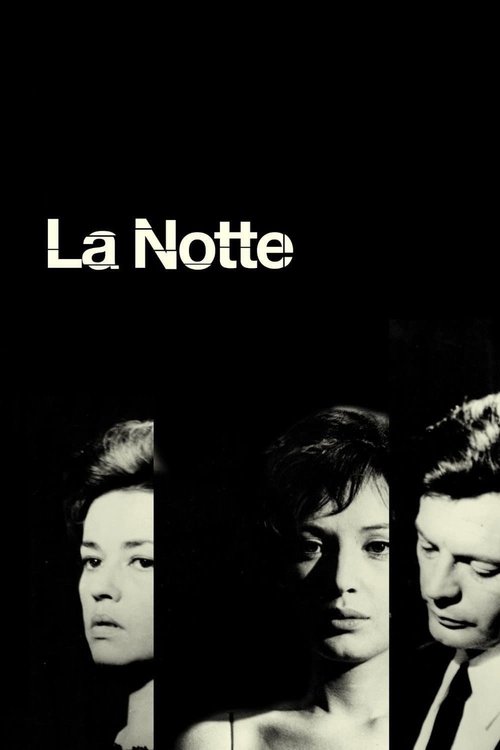
La notte
"A new genre of motion picture... to make you think and feel."
Director: Michelangelo Antonioni
Cast: Marcello Mastroianni, Jeanne Moreau, Monica Vitti, Bernhard Wicki, Rosy Mazzacurati
La Notte — Movie Quotes
Memorable Quotes
Se stasera ho voglia di morire, è perché non ti amo più. Sono disperata per questo.
Context
Spoken to Giovanni in the final scene, on the golf course at dawn, after the party has ended and she has just informed him of Tommaso's death. It is her final, unambiguous declaration of their marriage's end.
Meaning
"If tonight I feel like dying, it's because I don't love you anymore. I'm desperate because of it." This line is the raw, devastating climax of Lidia's journey. It's not an angry accusation but a statement of profound sorrow and hopelessness, equating the death of love with a personal death wish.
Chi l'ha scritta?
Context
In the final scene, immediately after Lidia finishes reading his old love letter to him. Her simple, devastating reply is, "You did."
Meaning
"Who wrote that?" Giovanni's question, after Lidia reads aloud the passionate love letter he wrote years ago, is the ultimate confirmation of his alienation. He is so disconnected from his past emotions that he cannot even recognize his own words, revealing the depth of his spiritual and emotional amnesia.
Non ho più idee, io. Ho solo ricordi.
Context
Giovanni says this to Valentina during the party, confessing the creative 'crisis' that he feels is affecting his entire life.
Meaning
"I no longer have ideas. I only have memories." This statement encapsulates Giovanni's creative and existential crisis. As a writer, his inability to generate new ideas signifies a kind of spiritual death. He is trapped in the past, unable to create or feel anything new, which explains his constant search for external stimuli.
Explore More About This Movie
Dive deeper into specific aspects of the movie with our detailed analysis pages