The film’s narrative tension is built on the reality that no character is safe. The death of Wilhelm early on sets the stakes, but the death of Werner (one of the twins) is the structural turning point. It shatters the group's morale and leads to the film's darkest sequence: Ernst’s suicide. Ernst, unable to cope with his brother's death, intentionally walks into an uncleared section of the beach to join him, a moment that finally breaks Rasmussen’s resolve. The ending reveals the ultimate betrayal by the Danish military: after clearing the beach, the four survivors are told they will be sent to another minefield instead of being sent home. Rasmussen’s final act—driving them to the border and telling them to run—is his definitive break from the cycle of hate, a personal sacrifice that acknowledges the boys have paid their 'debt' many times over.
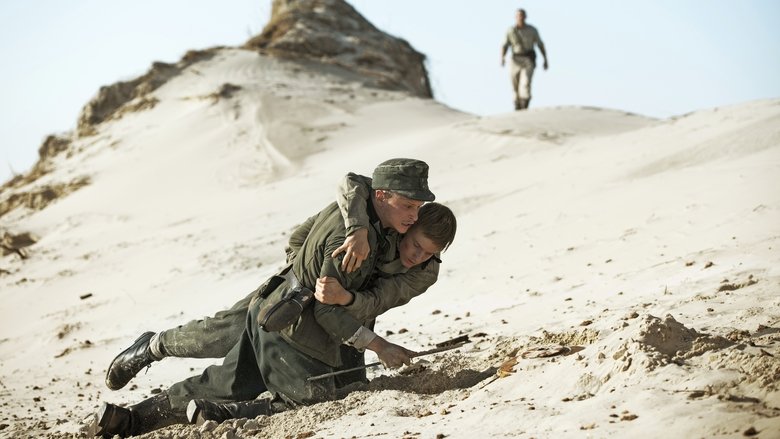

Under sandet
"They survived the second World War, now they must survive the cleanup"
Director: Martin Zandvliet
Cast: Roland Møller, Louis Hofmann, Mikkel Boe Følsgaard, Joel Basman, Laura Bro
Land of Mine — Ending Explained
⚠️ Spoiler Analysis
Alternative Interpretations
Critics have debated the film's ending, which some interpret as an earned redemption and others as a sentimental fantasy. One reading suggests that the ending, where Rasmussen lets the survivors run for the border, is a rejection of the state's authority in favor of human morality. However, an alternative, more cynical interpretation posits that this 'happy' ending is a narrative device to alleviate the audience's guilt, potentially downplaying the fact that historically, nearly half of these boys died or were maimed. Some viewers also see the film as a metaphor for modern refugee crises, where youth are forced to 'clean up' the messes of global powers they have no control over.
Explore More About This Movie
Dive deeper into specific aspects of the movie with our detailed analysis pages