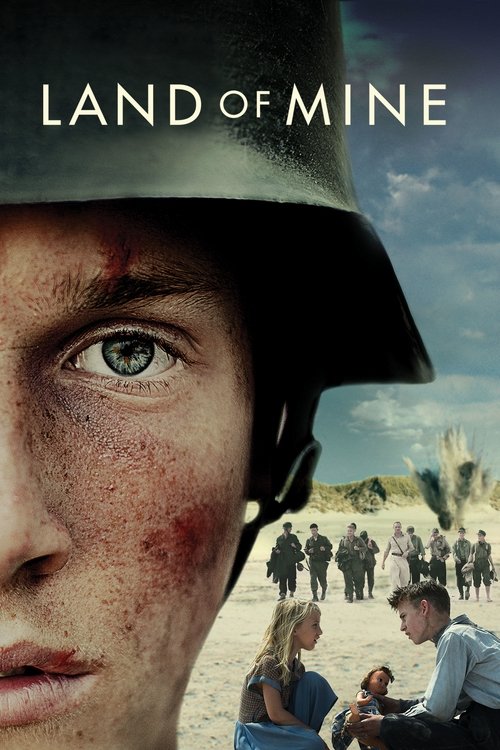
Under sandet
"They survived the second World War, now they must survive the cleanup"
Land of Mine - Symbolism & Philosophy
Symbols & Motifs
The Sand
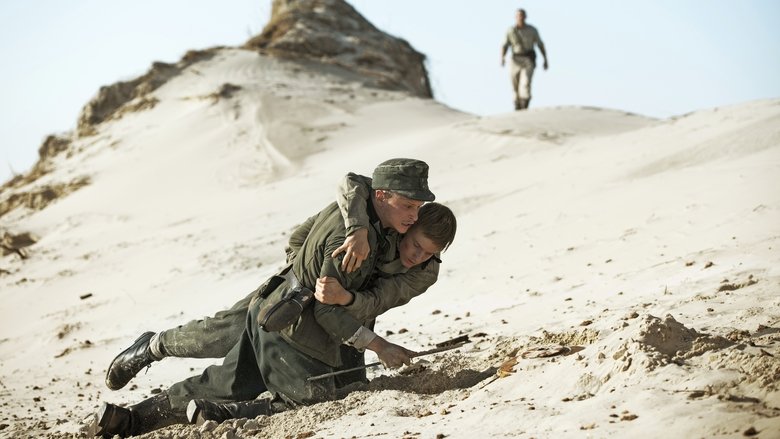
Symbolizes repressed history and hidden danger. On the surface, the beaches are beautiful and serene, but beneath lies a lethal truth that must be painstakingly uncovered.
Used as the primary setting; the title Under sandet (Under the Sand) highlights that the past is buried but never truly gone until it is confronted.
The Twins (Ernst and Werner)
Represent the duality of hope and despair. Their bond is the emotional anchor for the group's humanity.
When Werner is killed, Ernst's subsequent loss of the will to live symbolizes the total destruction of the spirit caused by the war's aftermath.
Otto the Dog
Symbolizes Rasmussen's internal empathy and the fragile nature of trust.
Otto's death in a "cleared" zone causes Rasmussen to momentarily regress into his old hatred, showing how easily peace can be shattered by a single spark of tragedy.
The Beetle / The Mouse
Small, fragile life amidst vast destruction; they represent the boys' own vulnerability and desire for gentleness.
The boys are shown tenderly playing with or protecting these small creatures during moments of rest.
Philosophical Questions
Can an individual be held responsible for the crimes of their collective?
The film explores this by showing young boys, who likely saw no combat, being punished for the atrocities of the Nazi regime. It asks if 'justice' is served by subjecting children to the same cruelty their nation once inflicted.
What is the distinction between justice and revenge in the aftermath of trauma?
The film examines this through the Danish officers' treatment of the POWs. It questions whether the state's 'eye for an eye' policy is an act of cleansing or simply the continuation of war by other means.
Is empathy a choice or an inevitable consequence of proximity?
Through Rasmussen, the film suggests that hatred requires distance. Once he is forced to live and work with the boys, their shared humanity becomes an undeniable force that overrides his military indoctrination.
Core Meaning
The core of the film is an exploration of the transition from collective hatred to individual empathy. Director Martin Zandvliet uses this historical war crime—the forced labor of POWs in violation of the 1929 Geneva Convention—to question whether a nation can maintain its moral superiority while seeking vengeance. It suggests that the "sins of the fathers" should not be paid for by their children and that true peace requires the difficult, active choice of forgiveness over the cycle of retribution. The film serves as a mirror to Denmark's own national narrative, challenging the simplistic image of the country as a purely innocent victim of occupation.