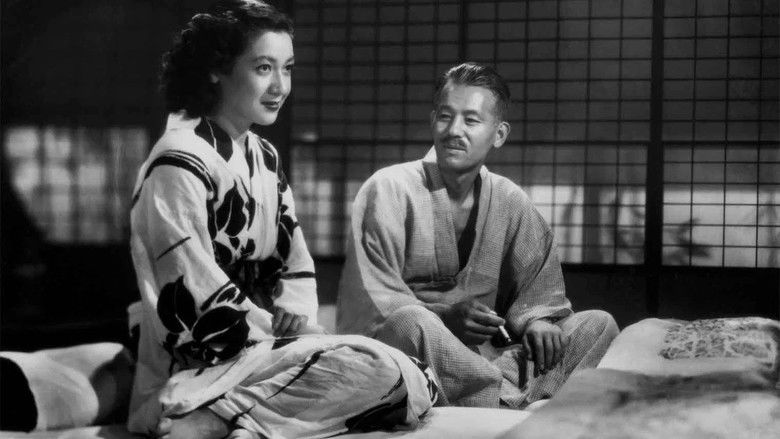
The central twist of "Late Spring" is the revelation that the father, Shukichi, has been lying about his intention to remarry. His entire story about marrying the widow Mrs. Miwa was a fabrication, a "pious lie" designed to give his daughter, Noriko, the emotional freedom to marry and start her own life without worrying about leaving him alone. Noriko agrees to the marriage believing she is making way for her father's new happiness. This lie is the emotional crux of the film's tragedy.
The ending reveals the profound consequences of this deception. After Noriko's wedding, her father's friend visits and asks about his supposed new life, to which Shukichi quietly admits it was all a ruse. The final scenes show Shukichi returning to his now silent, empty house. He sits alone to peel an apple, a simple domestic act that becomes a portrait of utter desolation. The apple peel, which he tries to keep in one piece, breaks, and he bows his head in a moment of crushing, silent grief. The loving sacrifice he made for his daughter has resulted in his own profound loneliness. Noriko has been pushed into a new life she never wanted, and her father is left to face his remaining years alone, revealing the heartbreaking cost of their mutual, misguided sacrifices.