Late Spring
A quiet drama of profound emotional depth, capturing the bittersweet sorrow of familial duty through the serene, yet heartbreaking, image of a daughter's sacrifice.
Late Spring

Late Spring

晩春

13 September 1949 Japan 108 min ⭐ 8.0 (443)
Director: Yasujirō Ozu
Cast: Chishū Ryū, Setsuko Hara, Yumeji Tsukioka, Haruko Sugimura, Hōhi Aoki
Drama
Familial Duty vs. Personal Happiness Tradition vs. Modernity in Post-War Japan The Passage of Time and Inevitable Change The Nature of Marriage

Overview

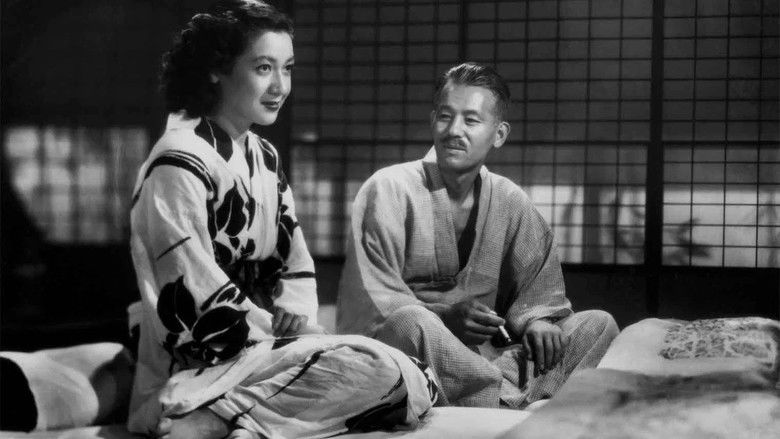
"Late Spring" chronicles the life of Noriko Somiya, a devoted 27-year-old woman living contentedly with her aging, widowed father, Shukichi. Their tranquil existence is gently disrupted by her aunt, Masa, who insists it is time for Noriko to marry, a prospect Noriko resists to avoid leaving her father alone.

As societal and familial pressure mounts, Shukichi, believing it is in his daughter's best interest, concocts a "pious lie"—he tells Noriko that he plans to remarry so that she will not worry about his loneliness after she is gone. Faced with this revelation and her father's gentle persuasion, Noriko reluctantly agrees to an arranged marriage, leading to a poignant exploration of sacrifice, the inescapable passage of time, and the deep, unspoken love between a parent and child.

Core Meaning

The central message of "Late Spring" revolves around the painful yet perceived necessity of sacrifice for the sake of family and adherence to life's cyclical nature. Director Yasujirō Ozu explores the quiet tragedy inherent in societal expectations, particularly the institution of marriage, which forces a loving father and daughter apart. The film suggests that happiness is not a passive state but something that must be actively created, even if it arises from profound personal loss. It is a deeply melancholic meditation on the dissolution of a family unit and the lonely acceptance of life's inevitable changes, questioning whether the fulfillment of duty truly leads to happiness or simply a beautifully rendered sorrow.

Thematic DNA

Familial Duty vs. Personal Happiness 40%
Tradition vs. Modernity in Post-War Japan 25%
The Passage of Time and Inevitable Change 20%
The Nature of Marriage 15%

Familial Duty vs. Personal Happiness

The core conflict of the film is Noriko's desire to remain with her father versus the societal and familial expectation that she marry. Both Noriko and her father ultimately sacrifice their shared happiness out of a sense of duty. The father lies about his own remarriage to push her toward a new life, and she accepts marriage to appease him, leading to a conclusion filled with profound regret.

Tradition vs. Modernity in Post-War Japan

Set during the American occupation, the film subtly contrasts lingering Japanese traditions with encroaching Western modernity. This is seen in characters' clothing, the presence of Coca-Cola signs, and discussions of baseball. The central theme of arranged marriage itself is a traditional concept clashing with the emerging idea of individual choice in post-war society.

The Passage of Time and Inevitable Change

Ozu poignantly captures the universal sorrow of life's transitions. The title itself, "Late Spring," refers to Noriko being at an age where she is considered past the prime marrying season. The film treats the separation of the family unit not as a singular event, but as a natural, albeit heartbreaking, part of life's cycle, akin to the changing of seasons.

The Nature of Marriage

The film presents a complex and often critical view of marriage. Noriko sees the remarriage of her father's friend as "filthy," reflecting her desire for things to remain unchanged. Her own arranged marriage is treated as a social necessity rather than a romantic fulfillment. Her father's advice suggests that happiness in marriage is not guaranteed but must be built through effort over many years.

Character Analysis

Noriko Somiya

Setsuko Hara

Archetype: The Dutiful Daughter
Key Trait: Devoted

Motivation

Her primary motivation is the love and care for her father. She wishes to prevent him from being lonely and helpless, a desire so strong that she initially rejects all notions of marriage. Her eventual decision to marry is motivated by the belief that it is the only way to allow her father to move on with his own life.

Character Arc

Noriko begins in a state of contentment, perfectly happy to devote her life to caring for her widowed father. Her arc is one of reluctant acceptance and sacrifice. Pushed by societal expectations and her father's perceived desire to remarry, she foregoes her own happiness for what she believes is her duty, transitioning from a state of blissful domesticity to a future of quiet, heartbreaking resignation.

Shukichi Somiya

Chishū Ryū

Archetype: The Sacrificial Mentor/Father
Key Trait: Self-sacrificing

Motivation

Shukichi is motivated by a deep-seated belief in the natural order of life—that a daughter must eventually marry and start her own family. He fears that keeping Noriko at home would be selfish and unnatural, and he is willing to endure loneliness to ensure she follows the traditional path toward what he hopes will be her future happiness.

Character Arc

Shukichi starts as a content widower cared for by his daughter. His arc involves making a painful sacrifice for what he perceives to be his daughter's long-term happiness. He transitions from a state of comfortable companionship to one of profound loneliness, brought on by his own actions. He orchestrates Noriko's marriage by lying about his own intentions, an act of love that results in his solitary grief.

Aya Kitagawa

Yumeji Tsukioka

Archetype: The Modern Friend/Foil
Key Trait: Pragmatic

Motivation

Aya is motivated by a mix of genuine friendship for Noriko and a worldly, somewhat jaded perspective. Having experienced a failed marriage, she wants her friend to embrace life's possibilities without being paralyzed by fear or duty, urging her to take a chance on a new life.

Character Arc

Aya represents a more modern, pragmatic view of marriage and life. As a divorcée, she is a foil to the traditional and hesitant Noriko. Her arc is static; she remains a cheerful but cynical realist throughout, encouraging Noriko to try marriage with the casual advice that she can simply leave if it doesn't work out. She provides an alternative, less idealized perspective on the film's central theme.

Masa Taguchi

Haruko Sugimura

Archetype: The Catalyst/Meddler
Key Trait: Conventional

Motivation

Masa is motivated entirely by traditional social conventions. She believes it is improper for a 27-year-old woman to remain unmarried and sees it as her familial duty to arrange a suitable match for Noriko, thereby ensuring the continuation of social order.

Character Arc

Masa is a static character who acts as the primary catalyst for the plot. As Noriko's aunt, she embodies the voice of societal convention. From the beginning, she pushes relentlessly for Noriko's marriage, introducing the prospective groom and concocting the idea of Shukichi's remarriage. Her role is to disrupt the status quo and enforce traditional norms.

Symbols & Motifs

The Vase

Meaning:

The vase is a powerful and multi-layered symbol. On one level, it represents traditional Japanese aesthetics and femininity. More profoundly, it symbolizes the stasis and unspoken emotions of Noriko. In a famous sequence, a shot of the vase separates a shot of Noriko smiling from one of her on the verge of tears, suggesting a profound internal emotional shift that remains unarticulated. It is an empty object waiting to be filled, reflecting Noriko's transition from one stage of life to another.

Context:

The most discussed appearance is during the trip to Kyoto. After Noriko expresses a change of heart about marriage, her father falls asleep. Ozu cuts to a lengthy, static shot of a vase in the dark room before cutting back to Noriko, whose expression has changed from a smile to one of sadness. This "pillow shot" suspends the narrative to evoke a deep, internal emotional state.

Peeling the Apple

Meaning:

In the final scene, the act of Shukichi peeling an apple symbolizes his profound loneliness and vulnerability. As he finishes, the long, continuous peel breaks, mirroring the breaking of his family unit and his composure. The peeled apple is stripped bare, much like he is now stripped of his daughter's companionship, left exposed to his grief.

Context:

This occurs in the film's final moments. After Noriko's wedding, Shukichi returns to his empty home. He sits alone and begins to peel an apple. When the peel breaks, he bows his head in sorrow, a quiet, devastating final image of his sacrifice.

Trains and Bicycles

Meaning:

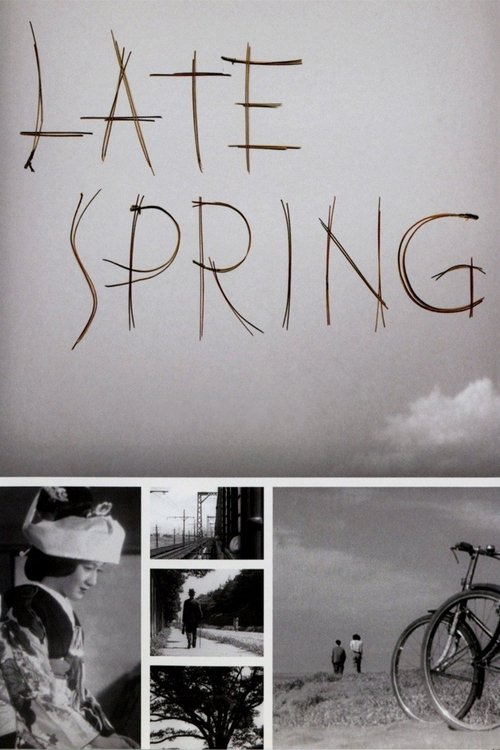
Trains and bicycles represent journeys, transitions, and the passage of time. The opening shots of train tracks establish this theme of movement and change. The bicycle ride Noriko shares with her father's assistant, Hattori, symbolizes a fleeting moment of youthful freedom and a potential, unpursued path in her life, set against the backdrop of a modernizing, American-influenced Japan (indicated by a Coca-Cola sign).

Context:

The film begins with shots of a train station. Later, Noriko and Hattori go for a bicycle ride along the coast, a scene noted for its rare camera movement in an Ozu film and its prominent placement of a Coca-Cola advertisement.

Noh Theatre

Meaning:

The Noh performance represents tradition, unspoken emotion, and a pivotal moment of realization for Noriko. The highly stylized and formal nature of Noh mirrors the emotional restraint of the characters. It is during the performance that Noriko witnesses her father acknowledging Mrs. Miwa, which solidifies her belief that he intends to remarry, thus sealing her own fate.

Context:

Shukichi and Noriko attend a Noh play. During the performance, Shukichi smiles and nods at Mrs. Miwa. Noriko observes this interaction, and her subtle change in expression reveals her inner turmoil and resignation to the coming changes in her life.

Memorable Quotes

幸せは待ってるもんじゃなくてやっぱり自分たちで作り出すものなんだよ。

— Shukichi Somiya

Context:

This is said during their final trip together in Kyoto, as Shukichi tries to comfort and encourage a reluctant Noriko about her impending marriage. He is trying to impart the wisdom that marriage requires work and effort to become a source of happiness.

Meaning:

Translated as, "Happiness isn't something you wait around for. It's something you create yourself." This line encapsulates the film's core philosophical message. Shukichi says this to convince Noriko that she must actively build a new life and find happiness within her marriage, rather than clinging to her current state of contentment. It is both a piece of fatherly advice and a rationalization for the painful separation he is engineering.

If he's no good, leave him. It's simple, I tell you.

— Aya Kitagawa

Context:

Aya says this while conversing with Noriko, trying to persuade her friend that marriage is not an irreversible, terrifying step. She speaks from her own experience as a divorcée, offering a perspective that is both supportive and stripped of romanticism.

Meaning:

Aya's blunt advice to Noriko reflects a modern, pragmatic, and somewhat cynical view of marriage that contrasts sharply with Noriko's fear and Shukichi's traditionalism. It highlights the changing social landscape of post-war Japan, where divorce was becoming a more conceivable option, and underscores the different paths available to women.

Philosophical Questions

Is personal happiness subservient to familial duty and societal expectation?

The film's central conflict forces both Noriko and her father to choose between their personal desire to stay together and their perceived duty to follow life's traditional path. They both sacrifice their happiness for this ideal, but the film's sorrowful conclusion leaves the audience questioning the virtue and outcome of this sacrifice. It suggests that fulfilling one's duty does not guarantee happiness and may, in fact, lead to profound loneliness and regret.

What is the nature of happiness?

Shukichi tells Noriko that happiness isn't something one simply finds or waits for; it must be actively created through effort. The film explores this by contrasting Noriko's passive contentment in her life with her father against the uncertain, effortful happiness she must now try to build in a marriage. It challenges the romantic notion of marriage as an automatic source of joy, presenting it instead as a difficult, long-term project.

How do we reconcile tradition with the inevitability of change?

"Late Spring" is set in a Japan caught between ancient traditions and modern influences. The narrative itself—an arranged marriage forcing a family to change—is a microcosm of this larger cultural shift. The film doesn't offer an easy answer but portrays the transition with a deep sense of melancholy, suggesting that while change is an inescapable part of life, it is always accompanied by a sense of loss for what came before.

Alternative Interpretations

While the dominant reading sees the film as a tragedy of sacrifice, alternative interpretations exist. Some critics view the father's actions not as purely selfless, but as subtly coercive, enforcing a patriarchal tradition that ultimately causes immense pain. Is his "pious lie" a necessary act of parental love, or a misguided enforcement of convention that leads to lifelong unhappiness for both? Another interpretation focuses on Noriko's psychology, suggesting her deep attachment to her father borders on an Electra complex, and her disgust at the idea of older people remarrying is a sign of her arrested development. The ending can also be read less as a tragedy and more as a poignant acceptance of the inevitable life cycle, where the dissolution of one family unit is a necessary precursor to the creation of another, reflecting a Buddhist-like acceptance of impermanence and loss.

Cultural Impact

"Late Spring" is considered a masterpiece of world cinema and marks the beginning of Ozu's celebrated final creative period. Released in 1949, during the American occupation, the film subtly navigates the tensions between traditional Japanese values and the rapid modernization and Westernization of the era. It is a prime example of the shomin-geki genre, which focuses on the daily lives of the middle and working classes. Critically acclaimed upon its release in Japan, its reputation grew internationally over the decades, influencing countless filmmakers like Wim Wenders and Hou Hsiao-hsien with its formal rigor, emotional restraint, and profound humanism. The film's quiet, devastating portrayal of family dynamics resonated universally, cementing its status as one of the greatest films ever made and a cornerstone of Japanese cinema.

Audience Reception

"Late Spring" is universally regarded by critics as one of the greatest films ever made. It is praised for its emotional depth, Yasujirō Ozu's masterful and restrained direction, and the powerful, nuanced performance of Setsuko Hara. Critics laud its profound exploration of universal themes like family, sacrifice, and the passage of time, achieved through a deceptively simple plot. Ozu's signature visual style—the low-angle "tatami shots," static camera, and meticulous composition—is consistently highlighted as being integral to the film's quiet power. While some modern viewers might find the pacing slow, the overwhelming consensus is that the film's deliberate rhythm builds to a devastatingly emotional and unforgettable conclusion. It is celebrated as a work of sympathetic, respectful clarity and a surgical strike to the heart.

Interesting Facts

  • "Late Spring" is the first film in director Yasujirō Ozu's informal "Noriko Trilogy." The other two are "Early Summer" (1951) and "Tokyo Story" (1953). In all three, actress Setsuko Hara plays a character named Noriko, though they are distinct and unrelated characters.
  • This was the first of six collaborations between director Yasujirō Ozu and iconic actress Setsuko Hara.
  • The film was made during the Allied occupation of Japan, and the script was subject to official censorship. Censors initially objected to the theme of arranged marriage, viewing it as feudalistic, but eventually allowed it.
  • Due to her frequent roles as dutiful, unmarried women in Ozu's films, Setsuko Hara became known in Japanese pop culture as “the Eternal Virgin.”
  • The devastating final shot of the father peeling an apple was not in the original script; Ozu added it during production to give the emotional climax more finality.
  • Ozu famously shot almost exclusively with a 50mm lens, which he believed most closely approximated the human field of vision, contributing to the film's naturalistic feel.
  • After Ozu's death in 1963, Setsuko Hara abruptly retired from acting and public life, choosing to live in seclusion in Kamakura, the city where much of "Late Spring" takes place and near Ozu's grave.

Easter Eggs

A prominent advertisement for Coca-Cola is visible during the bicycle ride scene.

This is widely interpreted as a symbol of the American occupation and the encroaching Westernization of Japan. Ozu's deliberate placement of the logo is seen by critics as a subtle commentary on the cultural shifts occurring in post-war Japanese society, subtly contrasting with the traditional themes of the film.

A character mentions that the prospective groom looks like the American actor Gary Cooper.

The comparison of a Japanese suitor to a famous American movie star is another nod to the influence of Western, particularly American, culture in post-war Japan. It adds a layer of humor while also grounding the film in a specific historical moment where American pop culture was becoming a reference point.

⚠️ Spoiler Analysis

Click to reveal detailed analysis with spoilers

Frequently Asked Questions

Explore More About This Movie

Dive deeper into specific aspects of the movie with our detailed analysis pages

Comments (0)

Leave a comment

No comments yet. Be the first to share your thoughts!